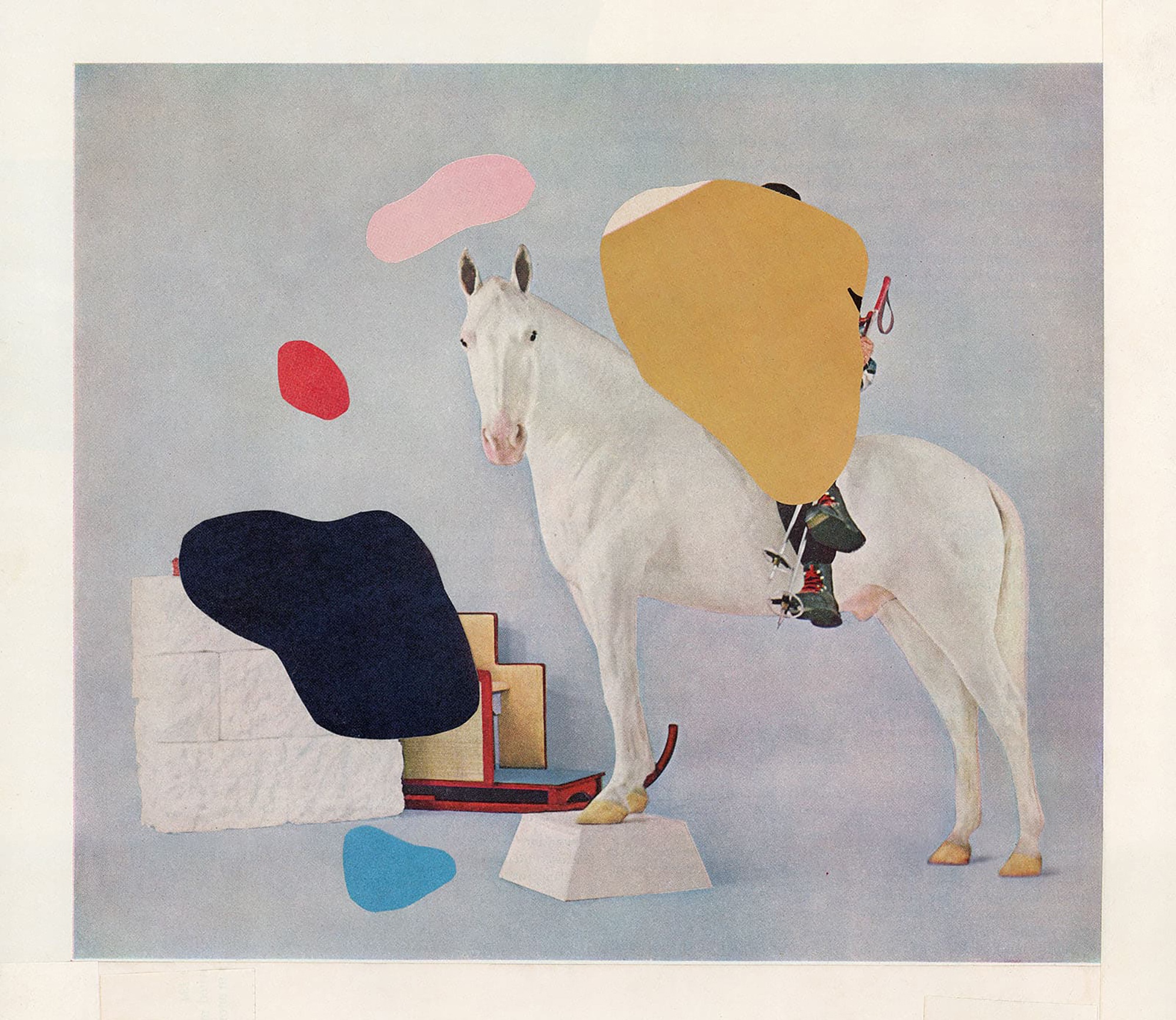
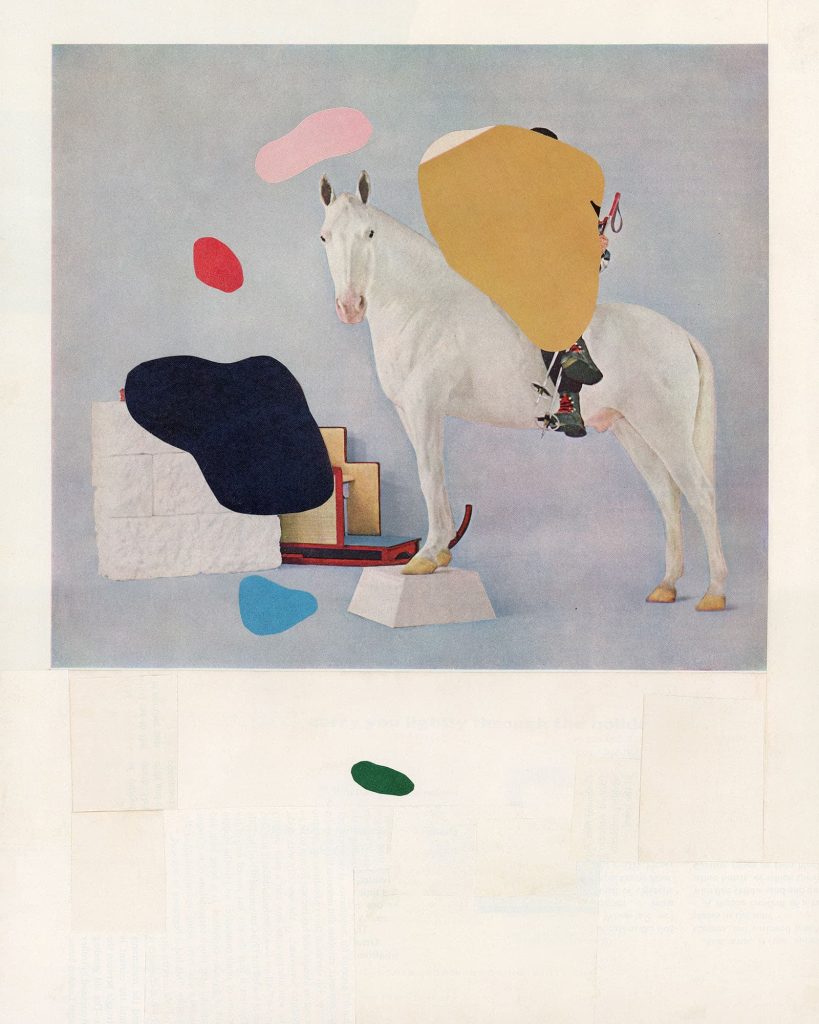
Jack Felice explores the connections between visuals and poetry. His collages begin with found images, then he silences the source, exposing the tension between presence and erasure. Each one of his four limited-edition prints and two original artworks exhibited in Phantom Tigers & Parallel Papers, is an entry to the visual poetics of Jack’s overlapping narrative. Visit them in TWSG. Collage deserves to be collected!
Available in 4 sizes
Edition varies by size
Buy this limited edition print on TWS Gallery
TWS- Hi Jack, how has 2025 been for you? What have been your highlights so far, and how does Phantom Tigers & Parallel Papers fit into your year?
JF- 2025 has been great in the collage world. I’ve been lucky enough to have some collages in Contemporary Collage Magazine’s new coffee table book, along with a few other projects that are in the works currently. I feel as if the closer we get to the end of the year, all these collage projects pop up. I’m always so honored to be included or invited to participate. Phantom Tigers and Parallel Papers is just the cherry on top of the sundae in my opinion.
9.75 x 13 in
Paper Collage
Buy this original artwork on TWS Gallery
TWS- You work with found images—vintage magazines, old print matter. But you’ve said that what draws you now are the imperfections: dog-ears, blemishes, discolorations, things you used to discard. When did that shift happen? What changed in how you see materials?
JF- This shift definitely happened organically. The longer you create collages, the more intimate your relationship gets with the source material you use. I have piles and piles of magazines and books that have been endlessly leafed through and cut up. I got to a certain point where I just shifted my focus to the pieces left behind or discarded because of blemishes. In the modern world, there is such a focus on the pristine and easily digestible aspects of art. For me, the imperfections are what set artists apart while giving a sense of reality.
TWS- Can you describe the pieces you’re showing in this exhibition? Walk me through what we’ll encounter.
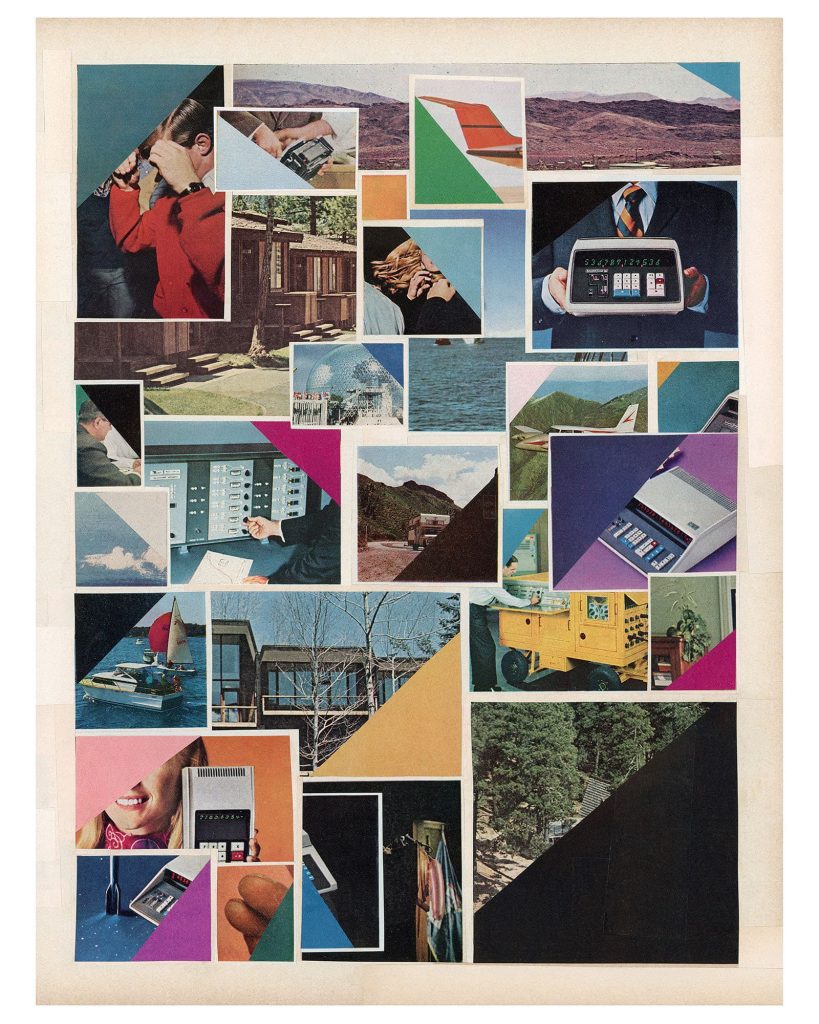
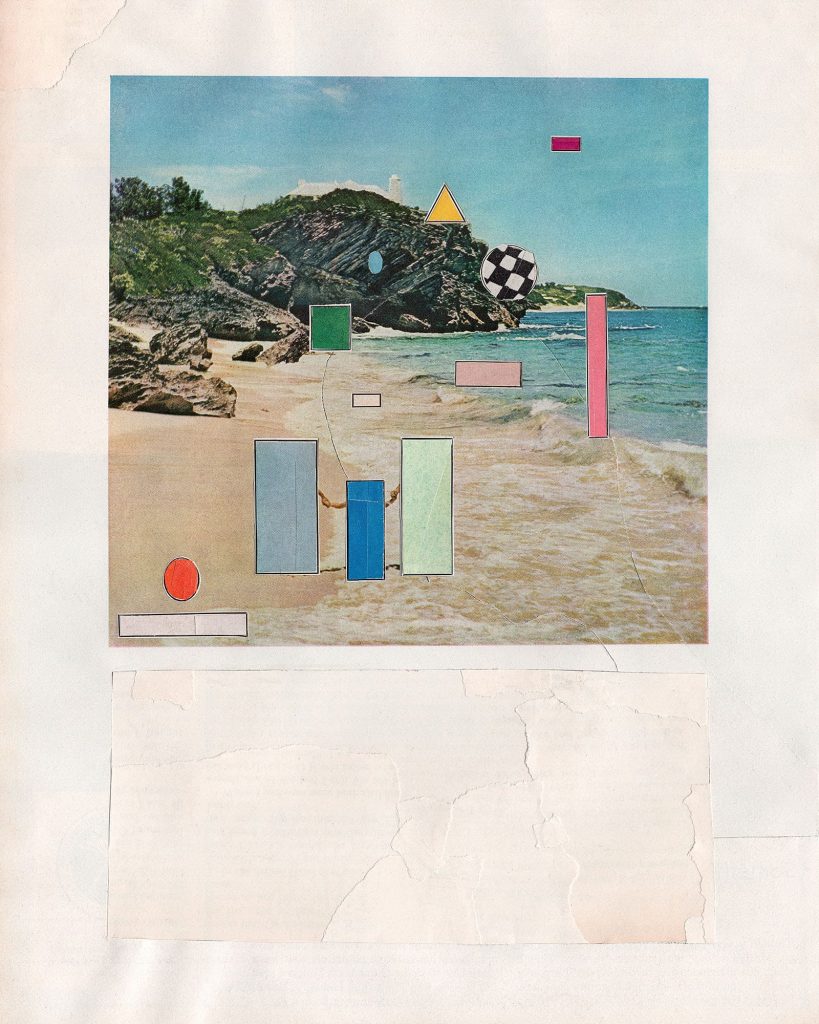
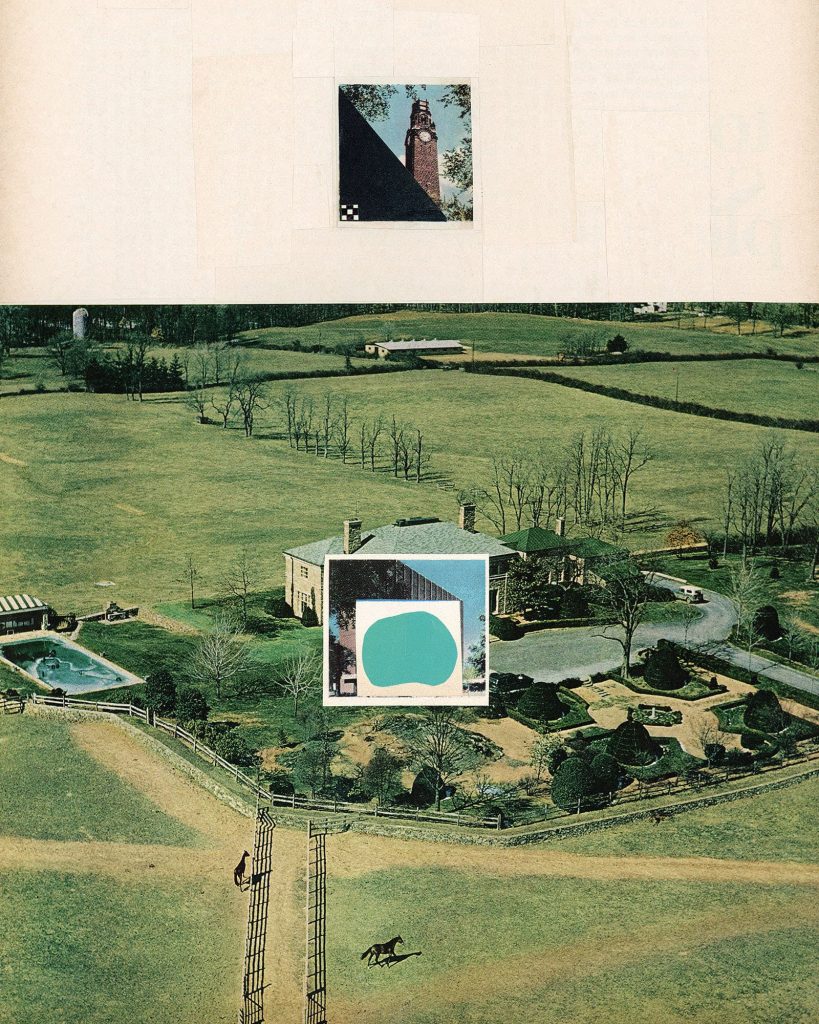
JF- The collages that I am showcasing were all created within the last few years; however they do offer a glimpse into transitional phases of my relationship with collage. From a focus on geometric shapes to free form “blobs” of color, each collage compliments the other in a way. I’m my mind the main thing that brings all my collages together is the poetic merging of art with loose narrative.
Available in 4 sizes
Edition varies by size
Buy this limited edition print on TWS Gallery
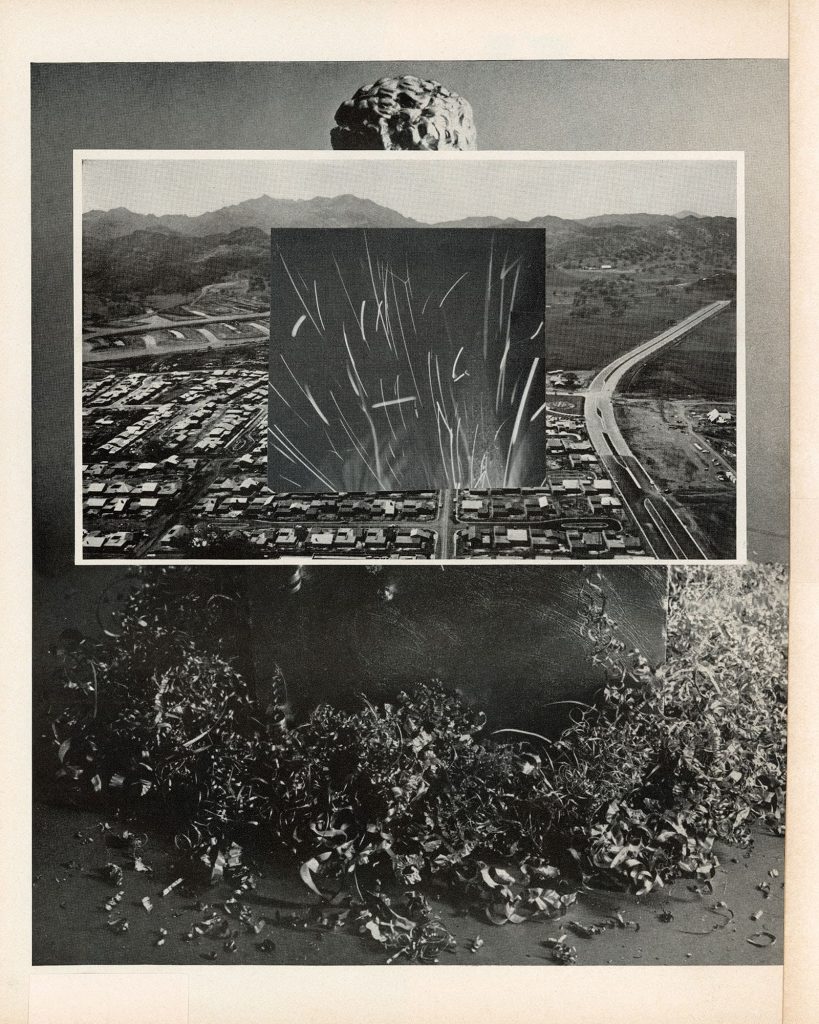
TWS- For one of the pieces in the show, you’ve described layering magazine pages and cutting away rectangular shapes, then pasting new layers into those spaces. Sometimes they line up perfectly, sometimes you’re left with faint outlines. Can you walk me through this process? How much do you plan versus discover as you work?
JF- One thing I’ve learned in the years of making collages is that if you plan too much at the beginning, you box yourself in and don’t allow yourself to experiment or surprise yourself. The wonderful thing about collage (and art in general) is that the process of creating something is a journey, it isn’t something that you automatically know will turn out a certain way. To me, that is what makes collage so exciting. I very rarely plan ahead of time, but rather rely on the mood the collage brings to me throughout the creation process.
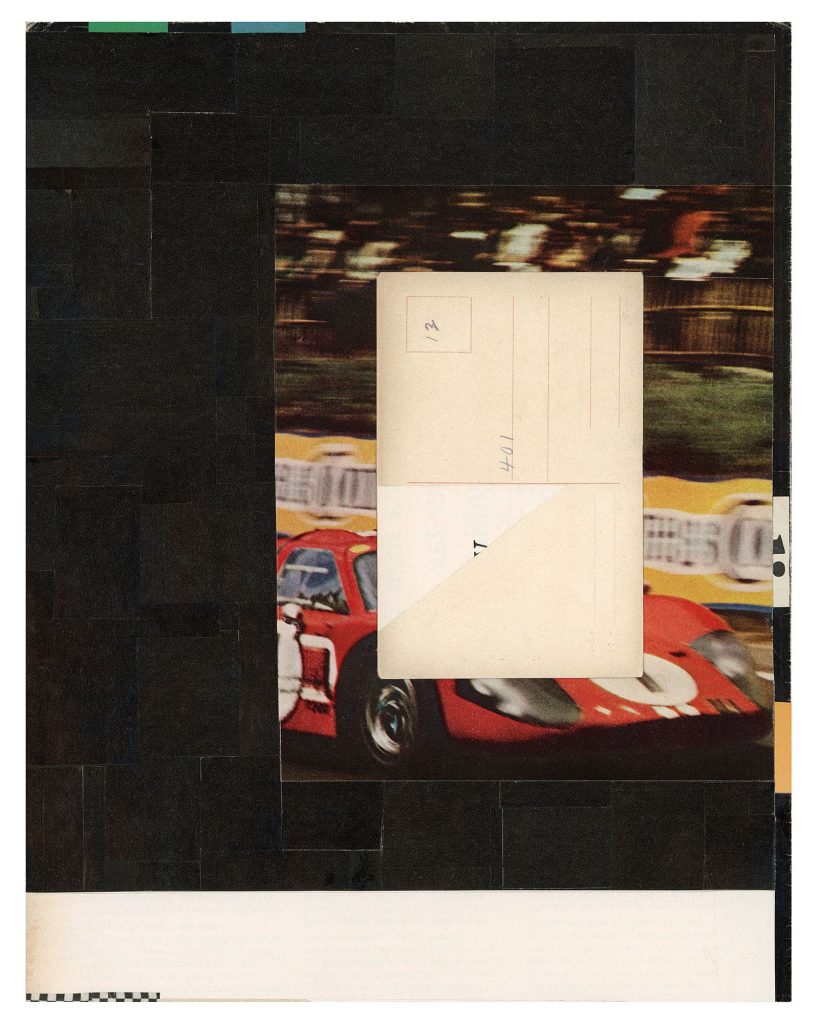
TWS- You also work with discarded postcards, but you’re drawn to the reverse side—the pencil marks, the imperfections—rather than the photographs. What is it about these traces of use, these marks of someone else’s hand, that interests you?
JF- I am drawn to the human element the reverse sides of the postcards provide. Similar to being interested in the imperfections of found source material, I’m interested in the activity beneath the surface. There is a mystery in the pencil marks. If you look at the front of a postcard, everything is given to you, the image of a lighthouse or a monument, but the other side offers just as much beauty and individuality if you take the time to look. I also enjoyed how the white rectangle of the reverse side paired well with a more chaotic background. The reverse side of the postcard is almost like a place for the viewer to rest their eyes while also digging deeper.
Available in 4 sizes
Edition varies by size
Buy this limited edition print on TWS Gallery
TWS- There’s this tension in your work between what’s visible and what’s hidden—you cover things, erase things, let faint ghosts of imagery persist beneath layers. What role does concealment play in your collages? Why is what you hide as important as what you show?
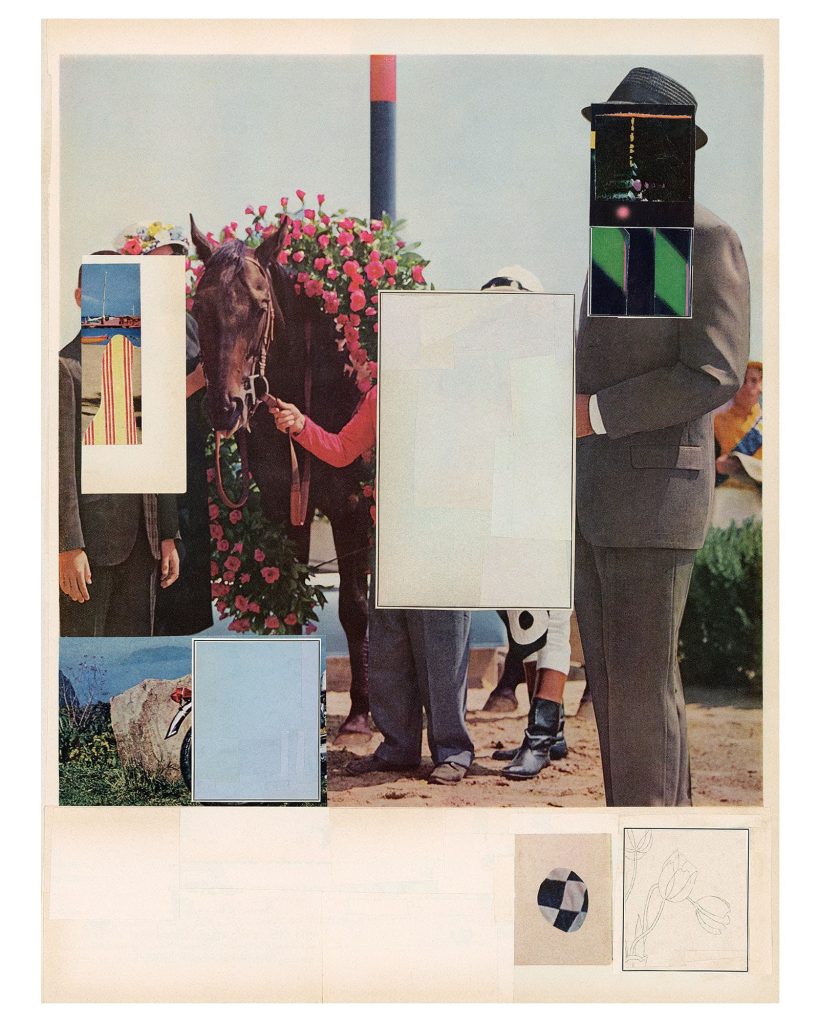
JF- When I flip through source material and find an image or page I want to clip out, the first thing I notice is what I want to remove or hide. Collage is an art dictated by found imagery. To regain ownership of the image you have to distort it or remove it from its natural environment. By hiding something you also control the focus of a collage. The hidden elements of my collages also offer a sense of unknown for the viewer. This allows the viewer to create their own meaning when viewing my collages because the main focus of an image is removed or distorted.
TWS- You use tape in interesting ways—not just as adhesive but as material. The white pulls when tape is removed, the act of obscuring. Can you talk about tape as a visual element in your work?
JF- This was something that occurred accidentally that I immediately was drawn to. In collage, the material aspects of the paper you use is just as important as the image itself. Magazines and books use wide arrays of paper, some cheaper than others. When you add a strip a tape and then rip it off, you get these beautiful streaks of white that almost look like paint. It’s an uncontrolled technique that adds a sense of unpredictability to the collage. At the same time, by removing the ink from a page with tape, the image or text from the opposite side of the page begins to bleed through and mesh with the top part of the page giving the image on top a more abstract tendency.
Available in 4 sizes
Edition varies by size
Buy this limited edition print on TWS Gallery
TWS- You’ve said your collages explore connections between visual artwork and poetry, and that they gravitate toward a “grey area” where meaning is left up to the viewer. How do you think about this relationship between image and poetry? What does poetry offer that pure image doesn’t?
JF- Poetry offers a sense of covert abstraction that compliments collage nicely. The merging of images and texture provides the viewer with the ability to navigate the collage without being pinned down to a specific meaning or narrative. I studied poetry in college, and the relationship between poetry and collage is what drew me to collage in the first place.
Paper Collage
9.75 x 13 in
Buy this original artwork on TWS Gallery
TWS- Have you looked at the other artists in the exhibition? There’s this thread running through the show—artists who work with gaps, traces, and what’s left unsaid. Does that resonate with how you see your practice?
JF- Absolutely. I’m so honored to be included in this show alongside such talented artists. It almost doesn’t seem real when I scroll through the gallery and come upon my own work. I think there’s such a strong element of community in the collages in the exhibition.
TWS- The exhibition is called Phantom Tigers & Parallel Papers. Your work is full of ghosts—faint outlines, traces beneath layers, what persists after erasure. How do you relate to the idea of the phantom in your collages?
JF- The phantom is a perfect analogy for my collages. By subtracting or hiding elements of an image, you get a sense that something is missing, or not all-together right. You almost are haunted by these missing elements but can quite put your finger on what’s missing.
Available in 4 sizes
Edition varies by size
Buy this limited edition print on TWS Gallery
Find more about Jack Felice on his website or Instagram.
You can also acquire his original pieces or prints in the current exhibition of TWS Gallery
Lean more about Jack Felice at TWS:
Jack Felice’s expressive work unravels the subtle language of erasure
Jack Felice: The Sources. Making new connections and creating space.