TWS –Is there something that you would like that our readers know about you first?
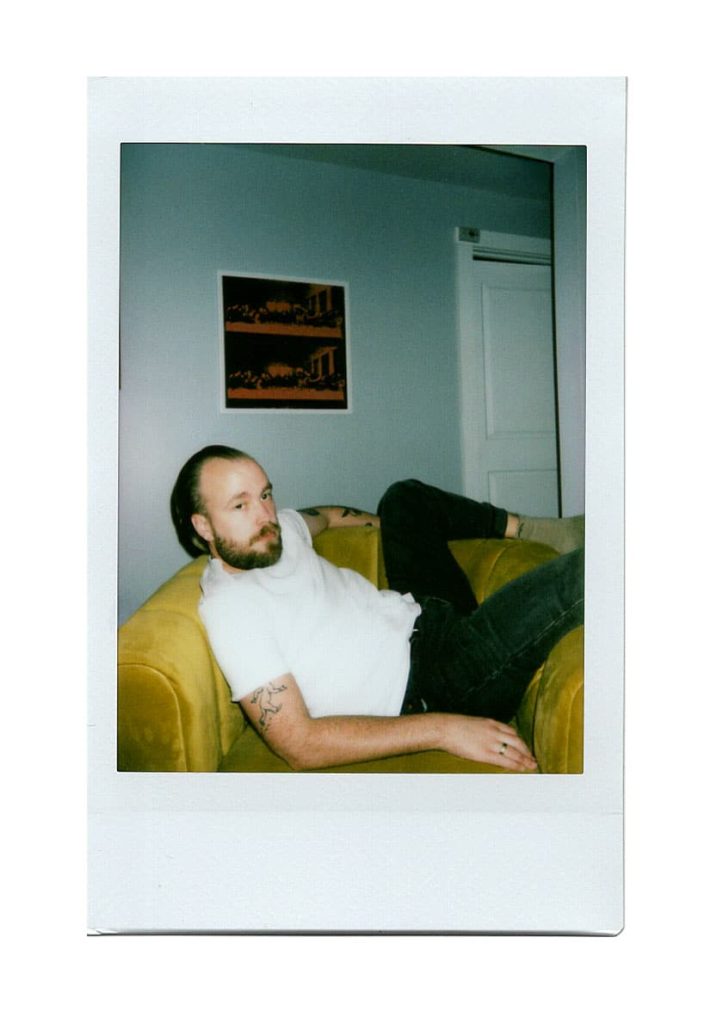
RE –Hello. I’m Ryan Evans, an artist living in South Jersey, close enough to Philadelphia to feel implicated by it. By day, I work as a freelance art director and designer, which means I spend a lot of time solving problems efficiently and cleanly. My art exists in opposition to that. The practice started as an escape from the monotony of work.
TWS –What did you draw when you were a child? Have you ever stopped drawing since then?
RE –As a kid, I mostly drew my dog Spot, a Dalmatian who deserved way more portraits than he got in real life. I also drew my father constantly, almost always in red crayon, which feels psychologically loaded in hindsight. Beyond that, it was a steady output of silly faces and vaguely threatening monsters.
I don’t think I ever really stopped drawing. Doodling has always been a way for me to disappear for a moment, to step outside whatever room I’m in mentally or physically. Even now, drawing feels less like a skill and more like a reflex. Something closer to meditation than intention.
TWS –What was the popular culture that informed your youth? Did art have any important space in those days?
RE –I grew up the youngest of five, which meant I inherited culture secondhand and all at once. My older siblings were constantly passing things down, music, skateboarding, video games and I absorbed all of it without much discrimination. I didn’t have a single lane, I had a pile, and I loved that.
Movies, though, were the constant. They were my first real obsession and still feel like the most powerful cultural delivery system we have. Nothing compares to the collective experience of a movie theater.
I was always compelled to make things alongside consuming them. I made electronic music, messed around with turntables, shot low-budget, Jackass-style videos with friends. The medium didn’t really matter. What mattered was the act of making, of responding to culture by producing something back. That impulse never went away.
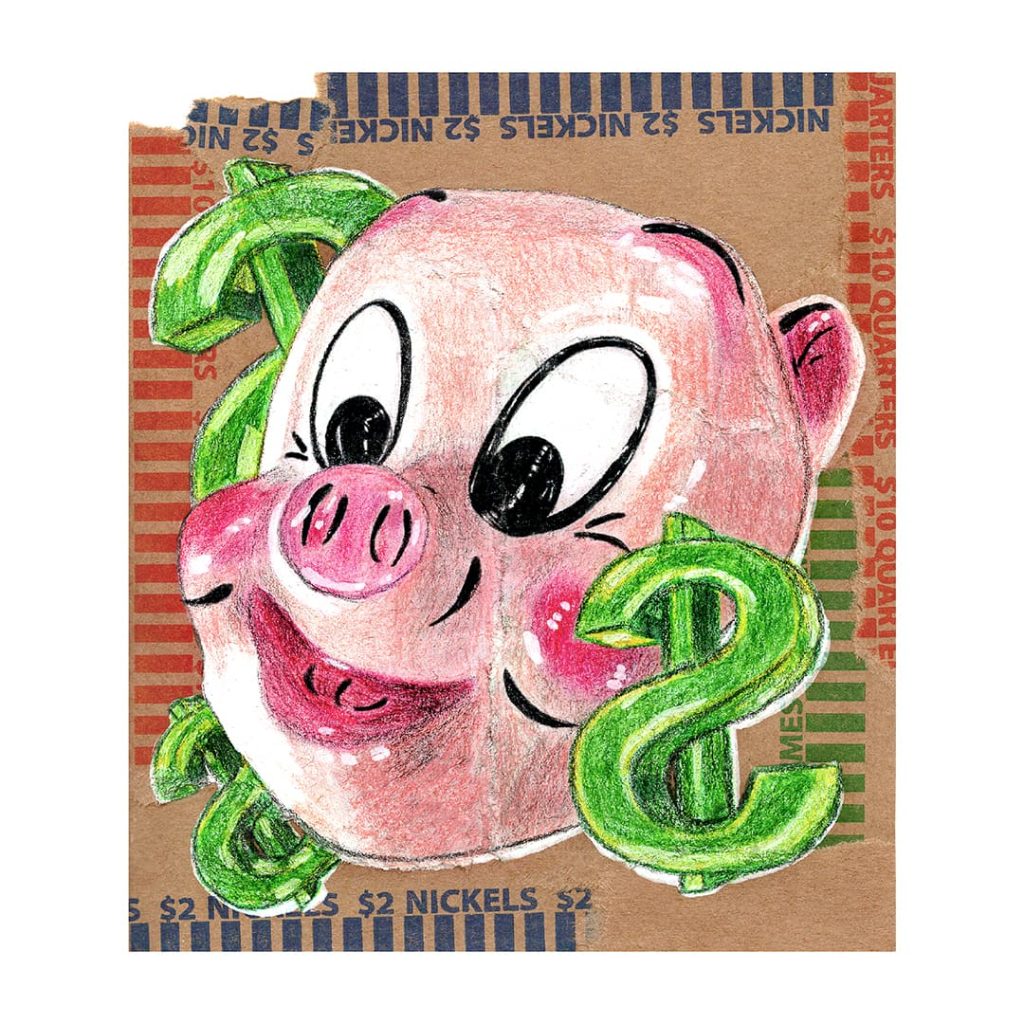
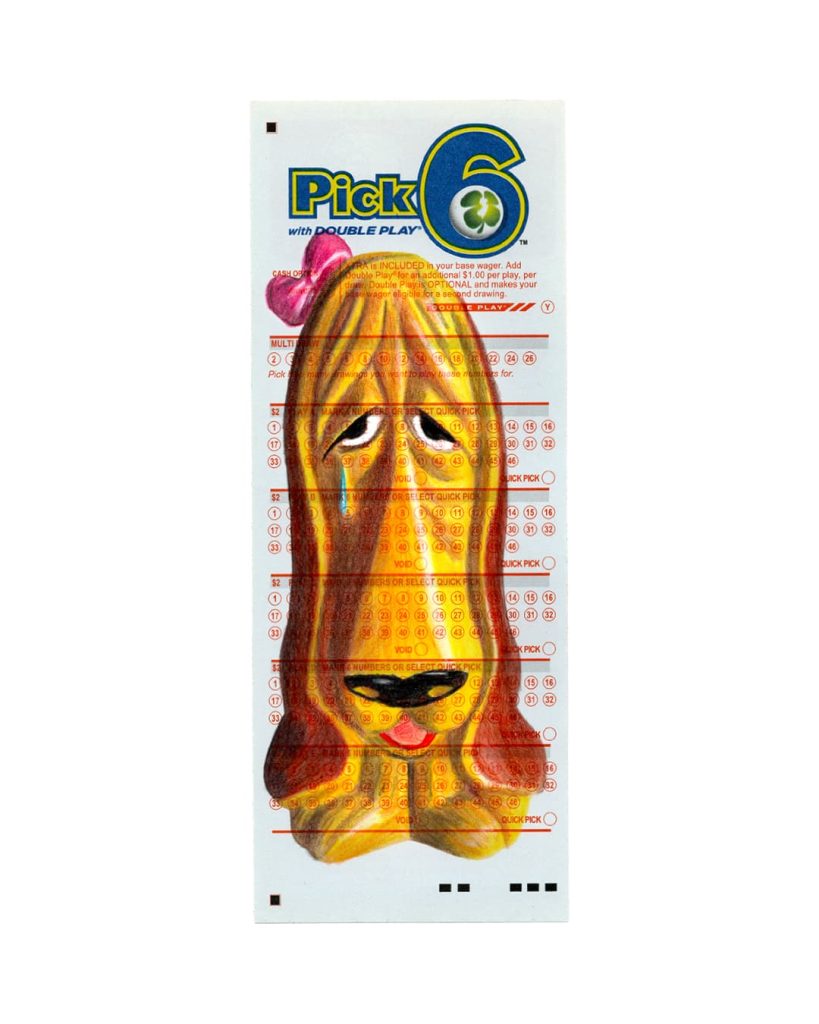
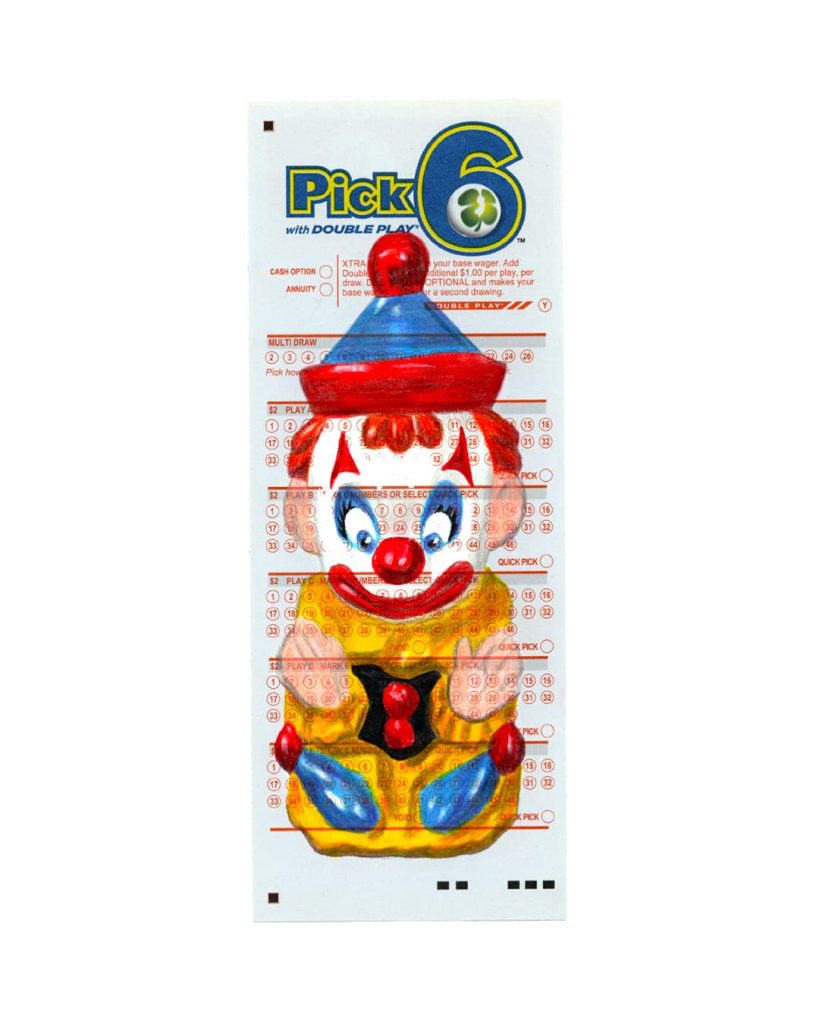
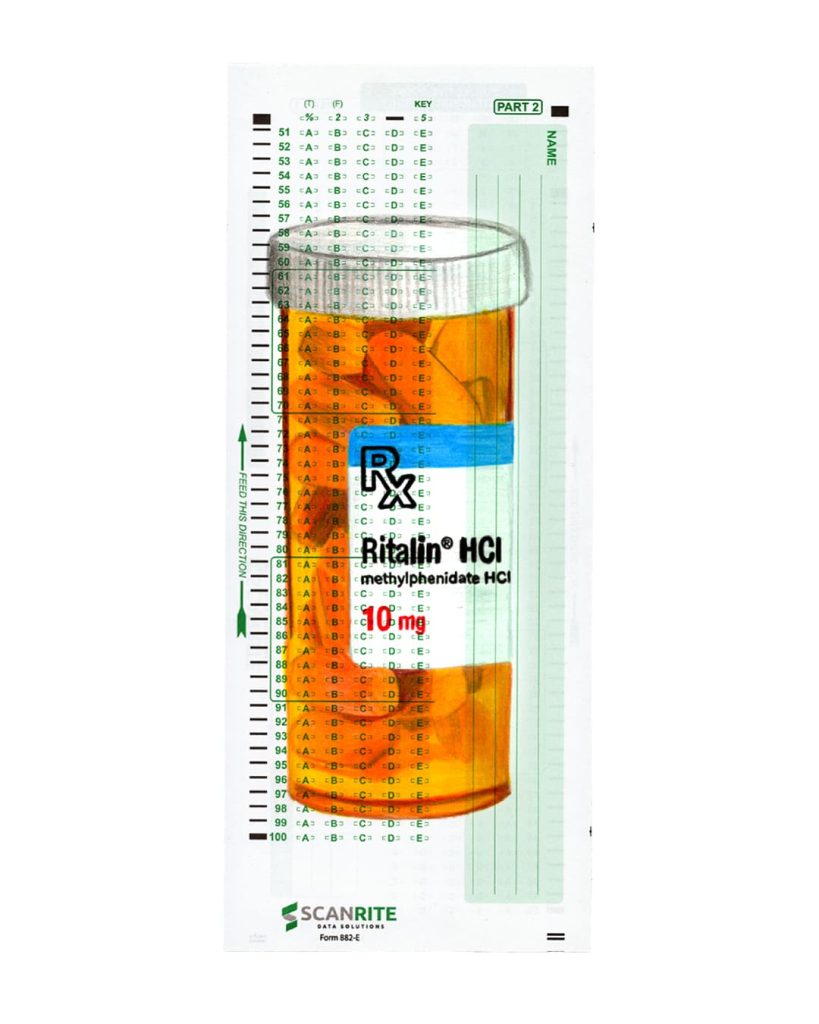
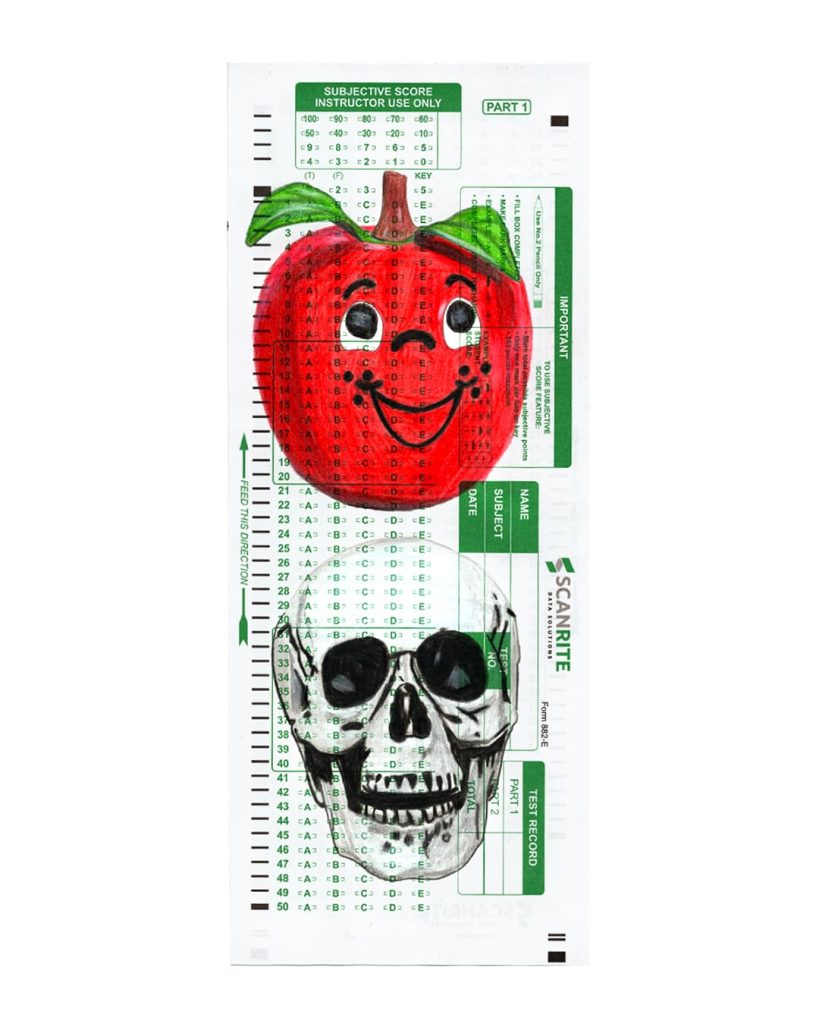
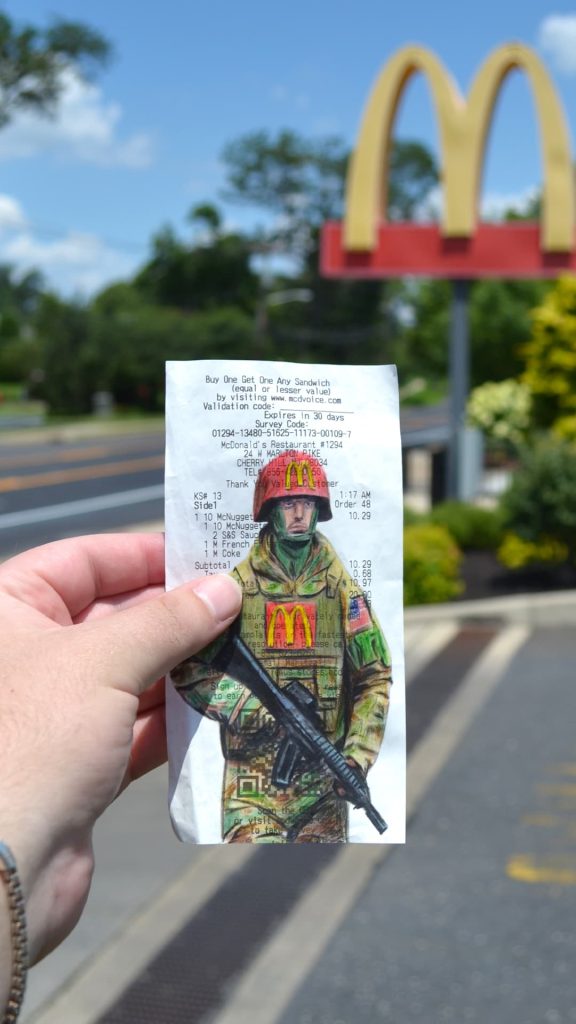
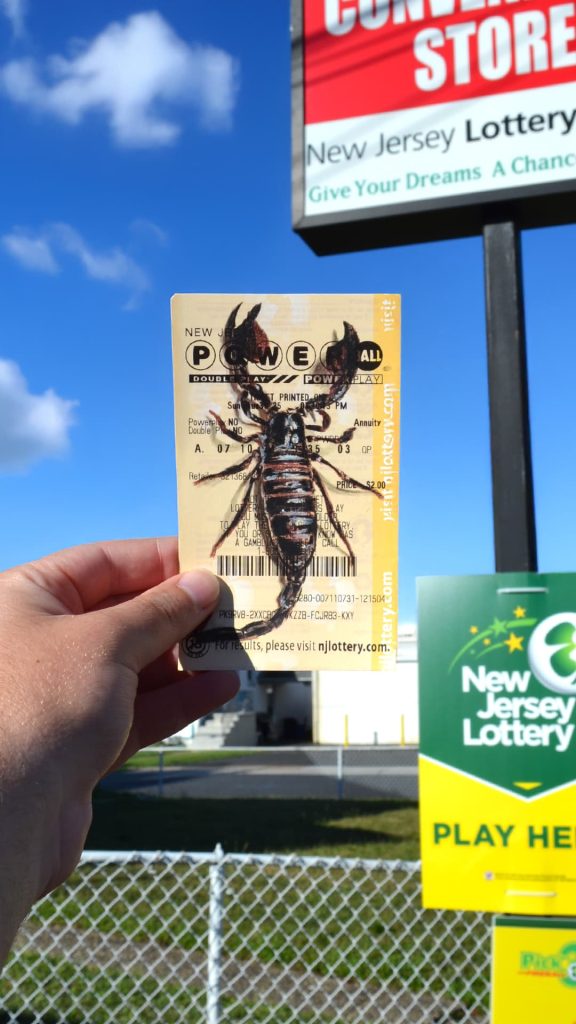
TWS –The idea of support for your work is completely open: McDonald’s receipts, cardboard boxes, prescription pads, lottery tickets, parking tickets. What led you to work on ephemera – things “meant to be used once and forgotten”?
RE –I’ve always been drawn to ephemera because these objects already carry so much meaning. A McDonald’s receipt or a parking ticket isn’t neutral, it’s loaded with systems, habits, guilt, boredom, routine. Working on them excites me because they immediately activate a set of cultural associations before I’ve done anything at all. By placing art on top of it, I’m able to hijack that conversation and to subvert the object. Slow it down, and sometimes even elevate it into something worth keeping. I like the tension between what’s supposed to be forgotten and what suddenly asks to be looked at twice.
TWS –Why colored pencils and acrylic specifically? What do these materials give you that others don’t?
RE –I move around a lot materially. I’m not especially loyal to any one medium, I also love oil pastel.
Colored pencils, in particular, are incredibly forgiving. They invite repetition and layering, and they reward patience. You can work something to death and then bring it back. There’s a quiet, almost obsessive quality to them that I respond to.
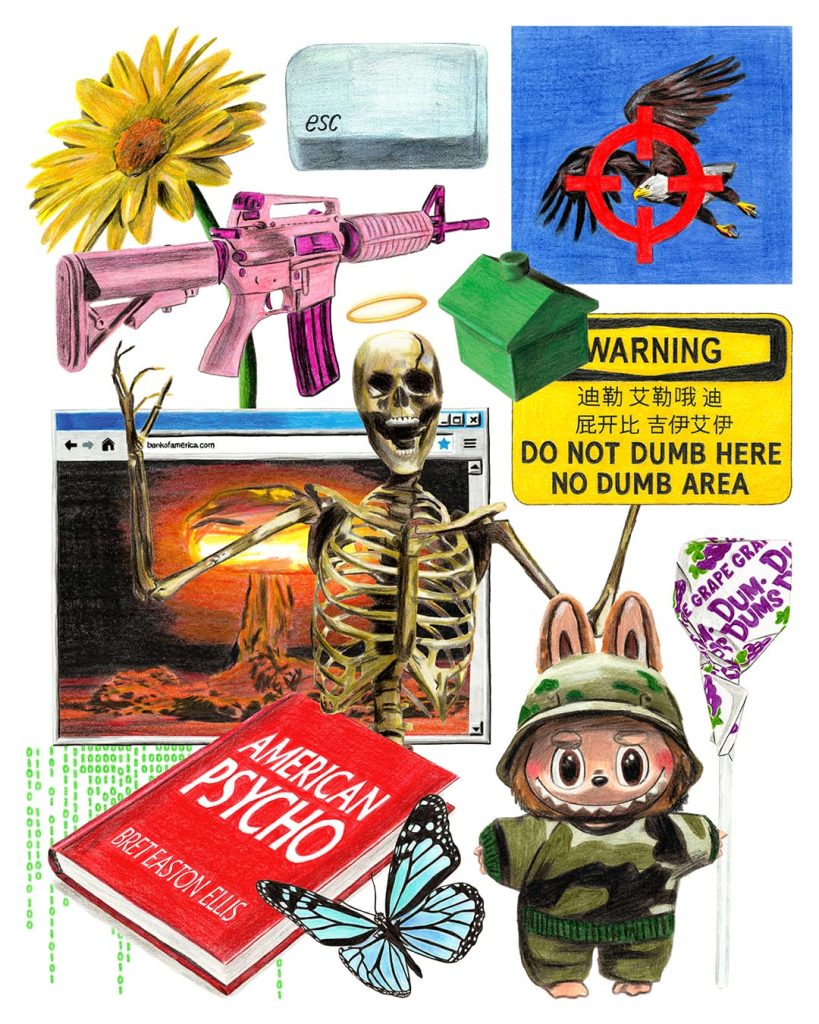
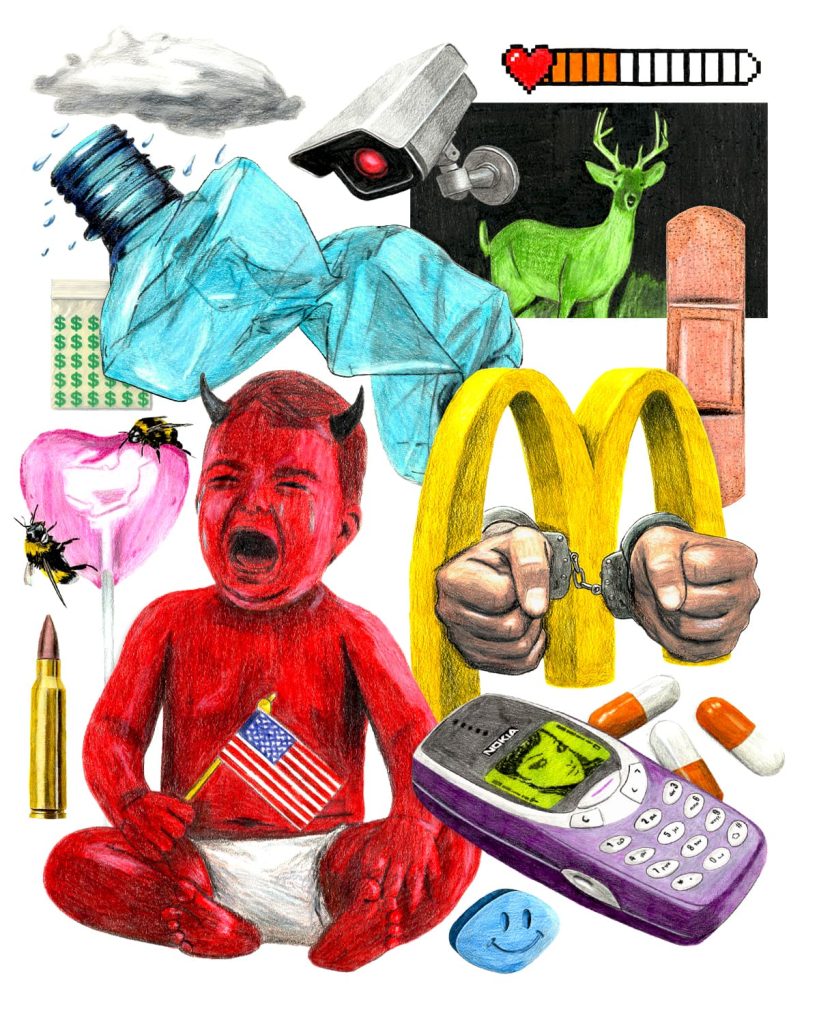
TWS –Walk me through how you build one of these compositions. When you’re cramming together a militarized Labubu, a sunflower, a Monopoly house, and a pink assault rifle, how do you decide what belongs together?
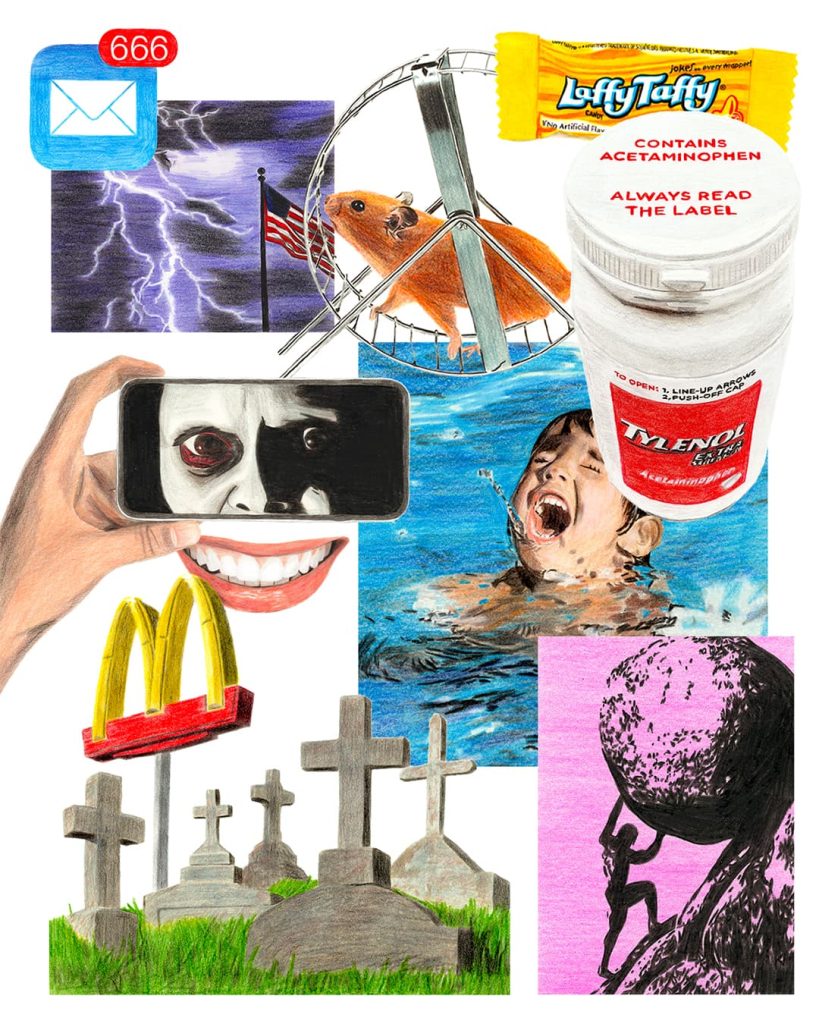
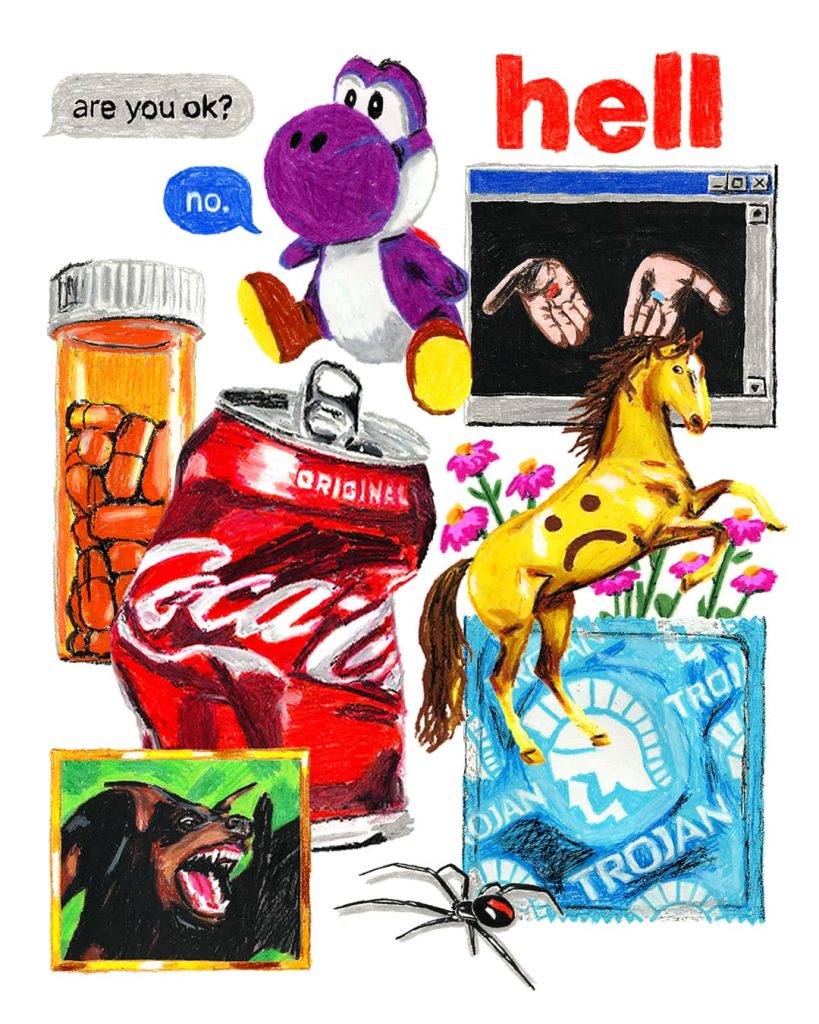
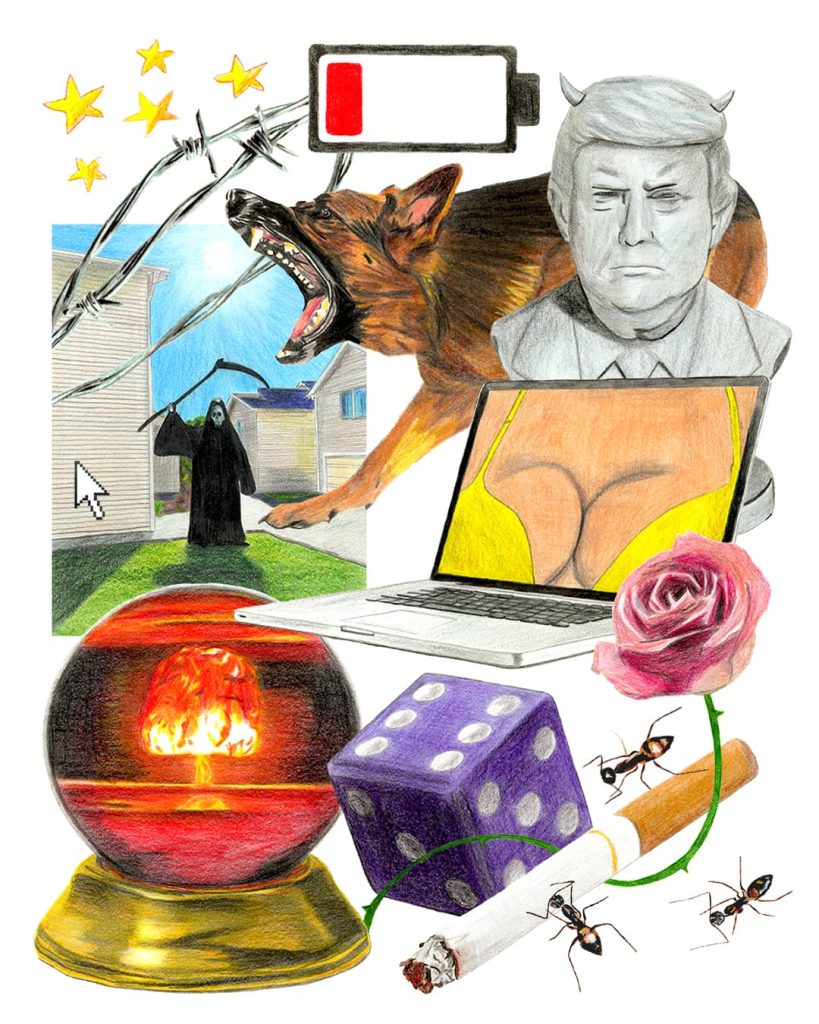
RE –The process is less about logic and more about tension. When I’m building a composition like that, I’m constantly thinking about color and subject matter first, how certain hues vibrate next to each other, how familiar symbols start to behave differently once they’re crowded together. Juxtaposition is an overused word, but it’s still the right one.
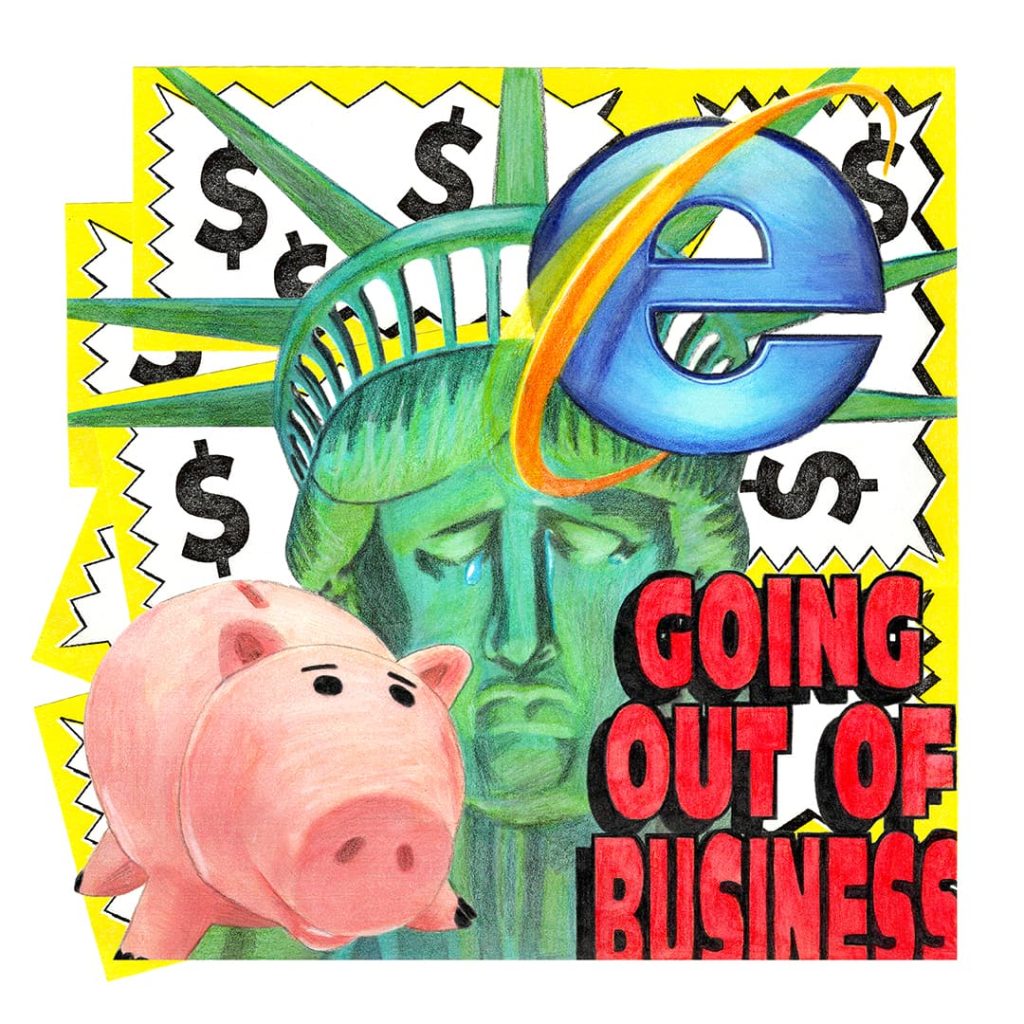
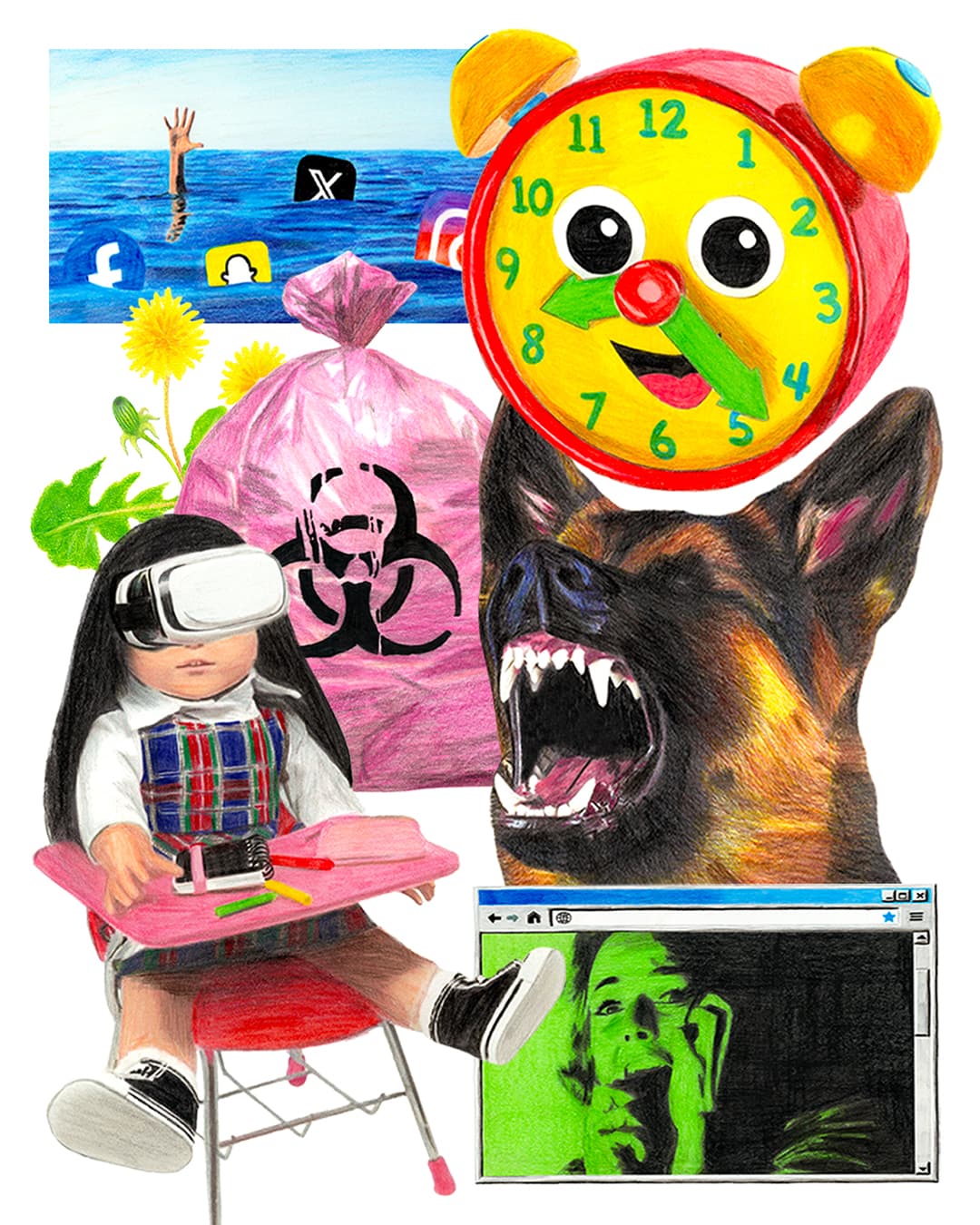
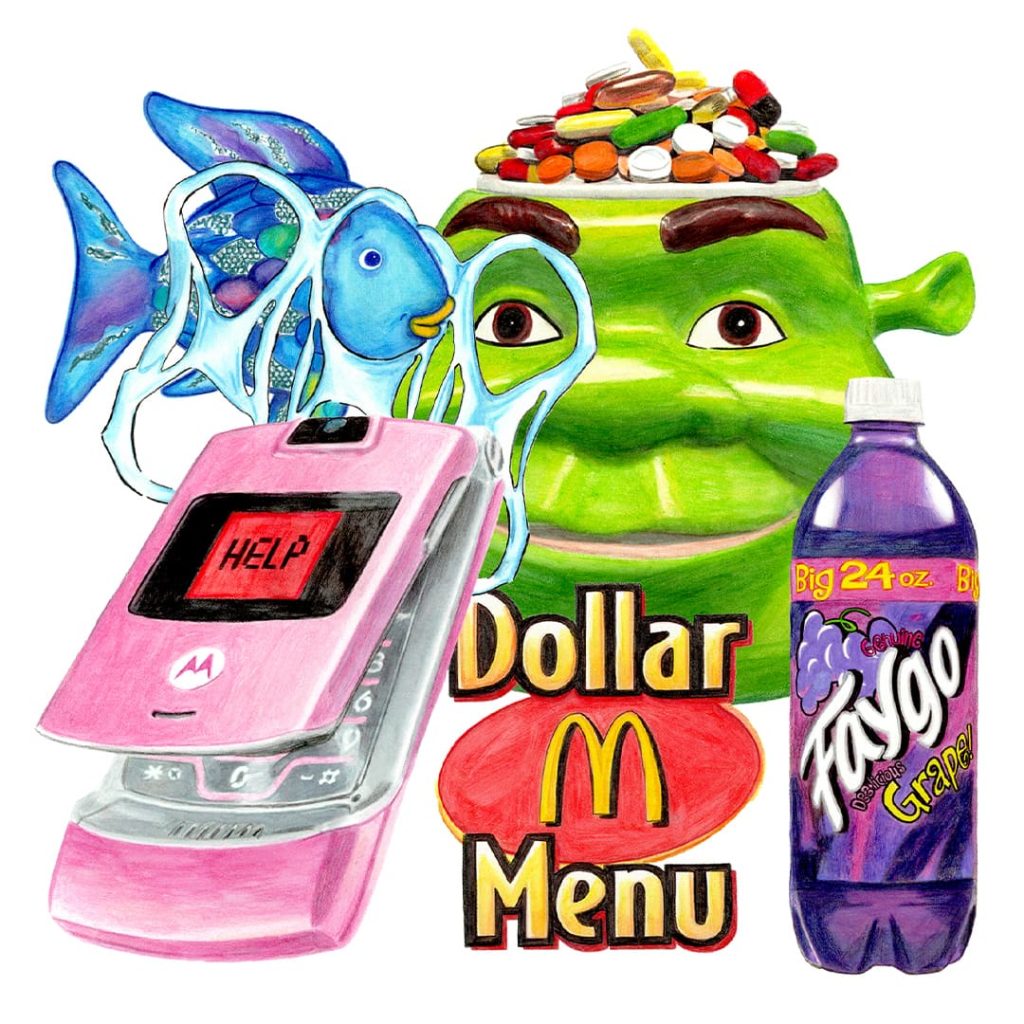
I’m paying attention to how shape, tone, and cultural weight bounce off each other. A cute figure becomes unsettling when it’s militarized. Something innocent like a sunflower can suddenly feel loaded when it’s sitting next to a weapon or a symbol of greed. None of the elements are meant to dominate; they’re meant to reflect and distort one another.
TWS –There’s a lot of popular culture and daily life detritus in your work – memes, smartphone icons, candies, browser windows, toys. How much of your own life are we seeing versus a condensed version of what the world looks like right now?
RE –It’s both. Every piece is, in some way, a self-portrait, but not in a literal sense. They’re emotional snapshots, records of how it feels to exist inside this moment. I’m not just depicting my own life so much as filtering the world as it passes through me.
I feel like I’m constantly consuming, even when I’m trying not to. Images, alerts, brands, jokes, interfaces, there’s no off switch. Everything is over-stimulated, over-saturated, and slightly frantic. The work becomes a way of taking in all that noise, all those radio waves, and boiling them down into something more concentrated. A silent scream.
TWS –Your work lives somewhere between sincerity and satire. Where’s that line for you? When does visual culture shift from something you’re honoring to something you’re mocking?
RE –I’m tempted to give a cop-out answer, but I honestly think sincerity and satire are often the same thing. I don’t really believe in guilty pleasures. If something moves you, excites you, or sticks in your brain, that matters, regardless of how disposable or ridiculous it’s supposed to be.
I try to be careful with irony. Lewis Hyde wrote that “irony has only emergency use. Carried over time, it is the voice of the trapped who have come to enjoy their cage,” and that idea sticks with me. I’m not interested in standing above visual culture and mocking it from a safe distance. I’m inside it. We all are.
The work is less about critique than reflection. I’m holding up a mirror to what I see and feel, and if it reads as satire at times, it’s because the world itself has become increasingly absurd.
TWS –You talk about being drawn to “the parts of life that feel both ridiculous and terrifying” – algorithmic abysses, existential dread, consumerism. But the work itself is vibrant, even joyful. How does humor operate as a survival mechanism in your practice?
RE –Thank you, I genuinely take that as a huge compliment. For me, humor isn’t a way of dismissing those darker ideas, it’s how I survive them. I don’t think the good exists without the bad, and I don’t trust work that pretends otherwise.
I’m sad and angry a lot. I’m also deeply grateful that I’m capable of feeling those things so intensely. There’s something strangely beautiful about dread, about fear, about recognizing how overwhelming the world can be and still choosing to engage with it. Humor becomes a pressure valve, it lets the work stay open instead of collapsing under its own weight.
Ultimately, I think part of the artist’s job is to locate beauty where it isn’t supposed to exist, and then insist on it. To take what’s terrifying or absurd and build a temple around it.
TWS –Do you think of yourself as working with a collage mindset, even though you’re drawing rather than cutting and pasting?
RE –Absolutely. Even when I’m drawing, I’m thinking like a collagist. In the larger compositions especially, it’s pretty evident. Everything is assembled rather than composed in a traditional sense.
Collage is a huge part of how I understand making things. It’s about collecting, arranging, compressing, and letting disparate elements coexist without fully resolving. That mindset mirrors how we actually experience the world now too, layered, fragmented, and constantly interrupted.
Learn more about Ryan Evans’ work on his Instagram