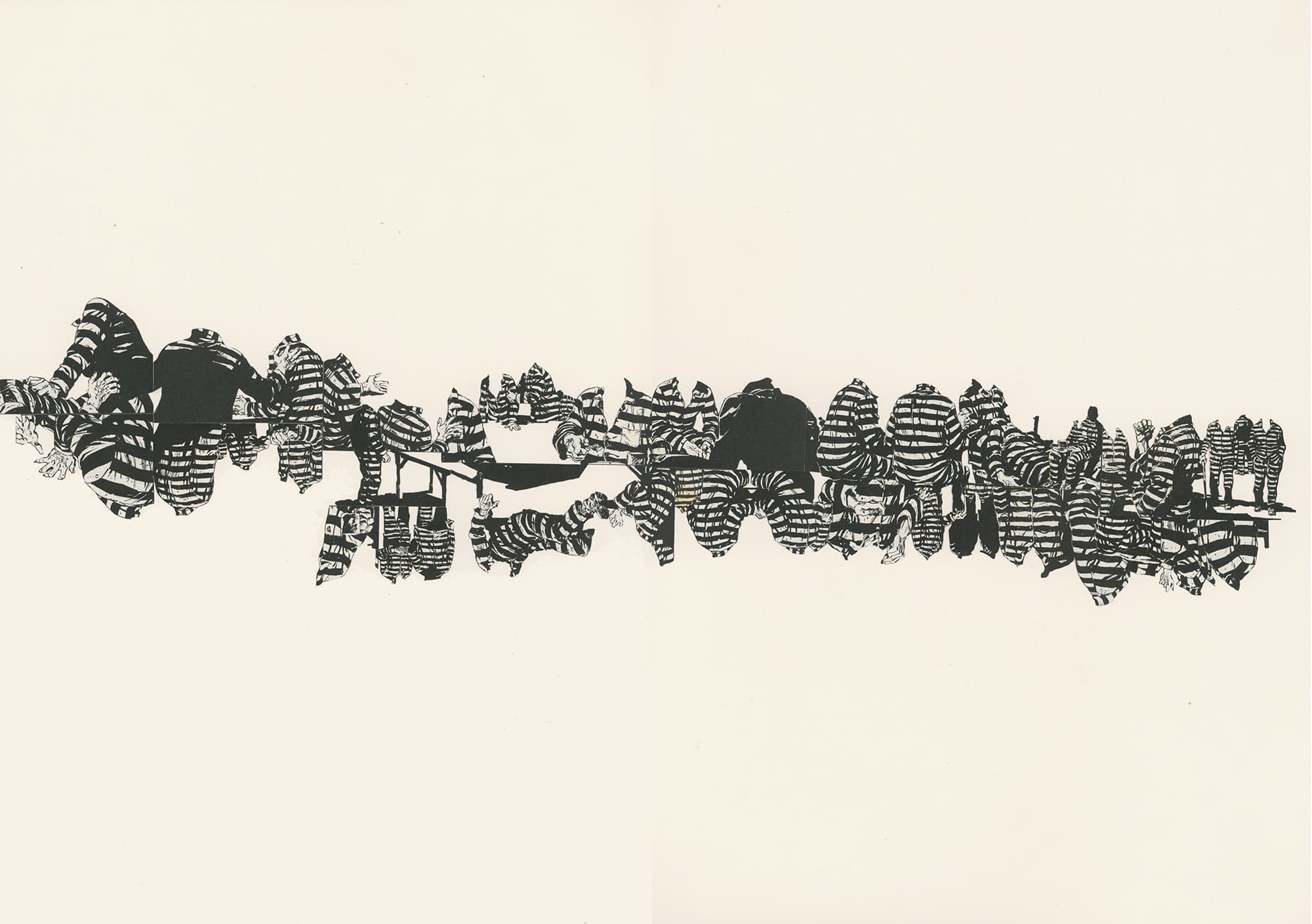
Phil Scott told his careers advisor he wanted to play when he grew up. After four years at LEGO Design teaching 350+ designers about “Learning through Play,” he now applies those principles to collage and curation.
His process—Find, Cut & Paste—extends what Hannah Höch and John Heartfield started: using propaganda against itself. But Scott adds structure. Rules that unlock creativity instead of limiting it.
Here’s Phil Scott on why Dada needs rules, play as methodology, and curating galleries like playgrounds.
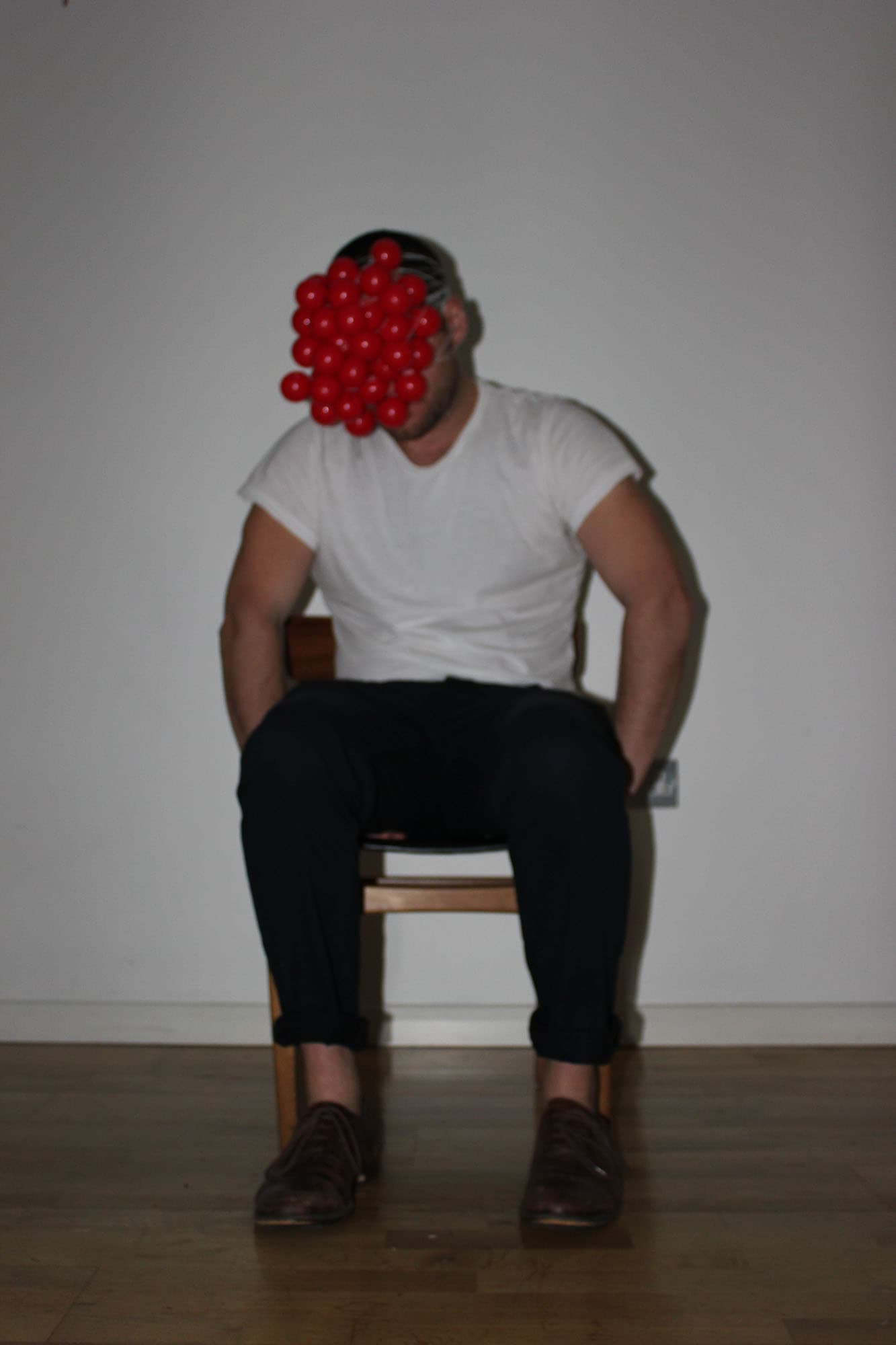
TWS –You are an artist, curator, writer, educator. Which is the one you feel more identified with?
PS –That’s a tough question. I think you are also missing, designer, but for me they are all one and the same. Labels are really important for some people. But for me the ability to transcend between titles is how we evolve. At least how I evolve. The umbrella that all the titles fit under is creativity. I feel that the ability to jump around and apply thinking to different processes and media is so important to remain relevant and to strive to find the ‘new.’ For me that is what all good, or great writers, artists, curators and educators do to keep their ways of working relevant – not necessarily for the here and now, but for the future.
TWS –Which is the one you wish you spend more time doing?
PS –Again, good question. I feel that it is difficult to balance them all equally. I’ve never been diagnosed, but I feel like I have high functioning ADHD or something. I once heard a lecture by Anders Morgenthaler, the Danish artist, activist, filmmaker, illustrator, writer – more than me, eh? He was super inspirational to me, and he has been diagnosed with ADHD. His comments on creativity helped me in forming a different opinion on a condition I had always seen – through the way I was taught as an educator – in a negative way. But in effect it is actually almost a super power. It helps you to make connections where others wouldn’t, and allows you to develop fresh ways of working. I feel this is really important to how we develop, creatively. I recall a conversation with my supervisor at Central Saint Martins (where I studied), in which I recommended that I remove myself from the situation, and observe the world through fresh eyes – not focusing too much on the problem or ‘the creative block.’ That was advice that I still use to this day and it is usually how I direct people when they have similar problems. Sorry, I didn’t answer your question.
TWS –That is fine.
PS –I think I spend the most amount of time at the minute writing, but the answer is always art. Art transcends everything, and it often feels like the one that can be the output for most of the experiences and observations I go through in my other roles. There is also the elephant in the room, which is money, and often that dictates what we spend most of our time doing – yeah, artist would be the one I would choose if pushed.
TWS –You worked as Creative Community Manager at LEGO Design for four years, teaching 350+ designers about “Learning through Play.” How did working inside that system change how you think about play in your own art practice?
PS –I have such respect for the company and the ethos behind what they do. That is rare in a capitalist society, and we have been educated to think in that way due to the institutions that dictate our societies. I don’t think it changed the way I work. At school, I recall having a conversation with my careers advisor, and they asked what I wanted to do when I grew up. I said, “I want to Play,” and I didn’t think about it too much at the time – I suppose most kids would say the same thing, but it is what we should be aiming to do. For one reason or another we lose that as we grow older, and I guess working at the group allowed me to research and unlock what that statement really means. The system is super structured at the LEGO Group, and this feeds into LEGO Design also, where I worked. The research into Learning through Play, and the Characteristics of Learning through Play is the treasure that makes the product so successful, and could enable its growth in the future. The scary word in the phrase Learning through Play is “Learning,” and I think that sometimes allows decisions to be made that unfortunately do not enhance the experience of the products. The phrase should be Play equals learning. We have so much we can learn from the way children interact and play. The breaking down through play of inhibitors and blockades allow learning, discourse, interaction and knowledge sharing to be elevated. That was my ultimate aim when I worked for the company, both through the way I produced learning experiences, with the aim was always that it would be applied to the products and experiences that we produced, that you would ultimately see on the shelf in toy stores around the world. The position the company is in, is so refreshing compared with all the other things going on in society at the minute, and in theory they have the potential to lead the way and be the beacon, so we all learn through play.
TWS –As you have said, LEGO play is highly structured. There are rules, constraints, specific ways bricks fit together. Your collage work also has rules. What’s the relationship between structured play and creative freedom?
PS –Another great question Max. I recall talking about Play with colleagues. What does the word Play mean? It’s a difficult question to answer because the view and experience is different for all of us. I used to laugh; often in an adult’s head they replace the 4 letters P-L-A-Y with another 4 letter word, Mess. But that is a superficial view of what play is. It is structured. It has rules. Free play happens, but if you carefully observe kids kicking a ball against a wall, playing tag, hide and seek, or house, they always make their own rules. What can I do and what can’t I do? This is really important and enables us to unlock creativity. I feel like in my practice applying rules or a box to work in is important to start the creative process. It’s the ‘white canvas syndrome.’ You’re often afraid to make the first mark on the page, the rules enable the leap into the void to be easier. You can always step outside of the box, break the rules, but as a starting point I feel rules and parameters are essential.
TWS –You’re finishing an MA on applying “Learning through Play” to curatorial experiences. What does playful curation actually look like in practice?
PS –I think I need to break this down into two parts. Curating fascinates me. Everyone uses the term today. Everyone is a curator. You curate your instagram account. You curate your Spotify playlists. But actually understanding the tools at play are crucial to the curated experience, resonating with an audience that is not you. It is the same with your artwork. As soon as it is shown, your hope is that the meaning and presentation has the impact and effect you desired when creating it. The application of the Learning through Play Characteristics is one of the tools that I believe will enable the experience of visiting a gallery or museum better. It plays on those memorable experiences. The LEGO Foundation developed the Learning through Play Characteristics based on their observations of children playing. They broke it down into experiential outcomes that they witnessed children going through. These were
- Joyful: The sense of satisfaction, the joy of the play, a challenge and ultimately the achievement that brings a smile to your face.
- Meaningful: The big why, asking the questions relating the experience to things you already know or have seen others doing, making conceptual connections to your own life and the world.
- Actively Engaging: Becoming intoxicated by the play, the situation or environment, losing the concept of time, an engagement and focus that children (and Adults) can become immersed in.
- Socially Interactive: The bond you make with another person, the humanity of play, the desire to connect with another person, to share an experience and reflect upon.
- Iterative: The creative process of trial and error, developing and transforming the play, experimenting with more and more, until you feel like you have got it right.
These are wonderful principles and as I said before, I see my role as applying these characteristics to enhance experiences – in my case when you enter a gallery – but they can be applied to everything from a day trip to playing with a toy. The challenge as I see it is trust, play is outside normal activities, but that is exactly why the majority of people go to see art exhibitions. Researcher of play methodology, Stuart Brown said “The result is that we stumble upon new behaviours, thoughts, strategies, movements, or ways of being.” Sounds great if you ask me, and exactly what the experience of visiting a gallery should entail.
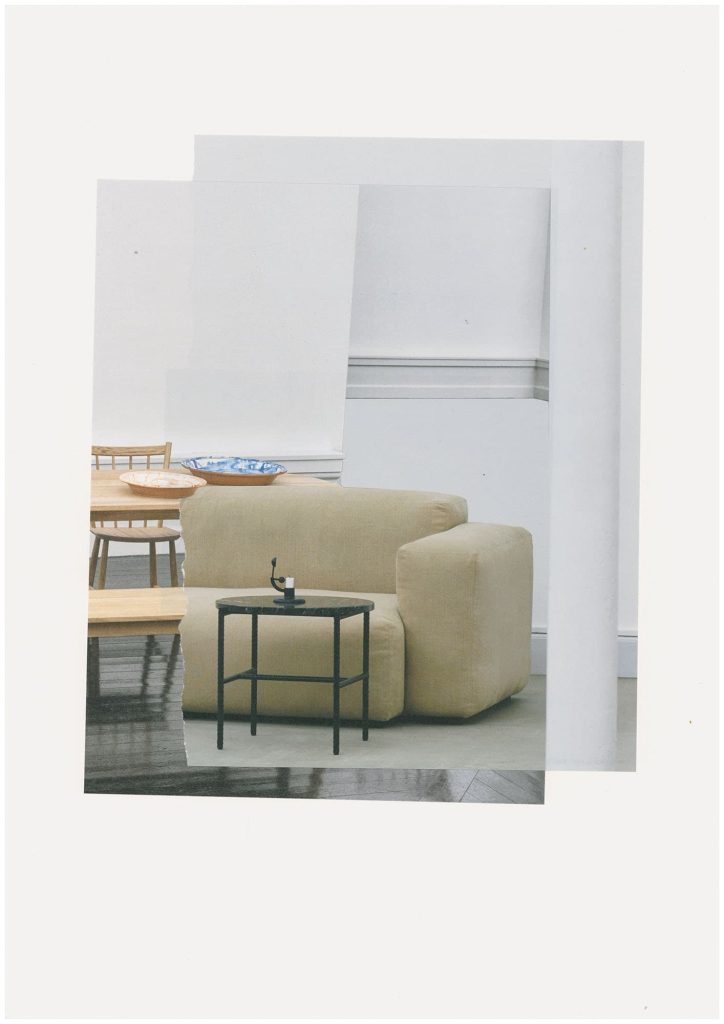
TWS –Tell me about “A Thousand Words Say a Picture”. How did that project work in the context of the Too Many Chefs Curate: Curating Emotion, Collaboration and Emotion conference, in Oslo?
PS –I have been collaborating with a number of super talented international curators for some time now and we always intended to host a symposium to discuss all of our methods and thoughts on the act of curating. The title was a funny one. As you have probably experienced, getting a number of creatives in one room together to discuss a topic, can be a challenge. We all have opinions on what we wanted the symposium to embody. The joke was “Too Many Chefs: Curating Emotion, Collaboration and Emotion,” based upon the phrase “too many chefs spoil the broth.” It was an invite to see whether we could collaborate. It’s very similar to the way we curate. A number of stakeholders and opinions that need to work together. A bit like a playground, now I think about it. The result was so fascinating, all of the different opinions, considerations, methods and approaches were highly inspiring, and a useful learning curve for all in attendance.
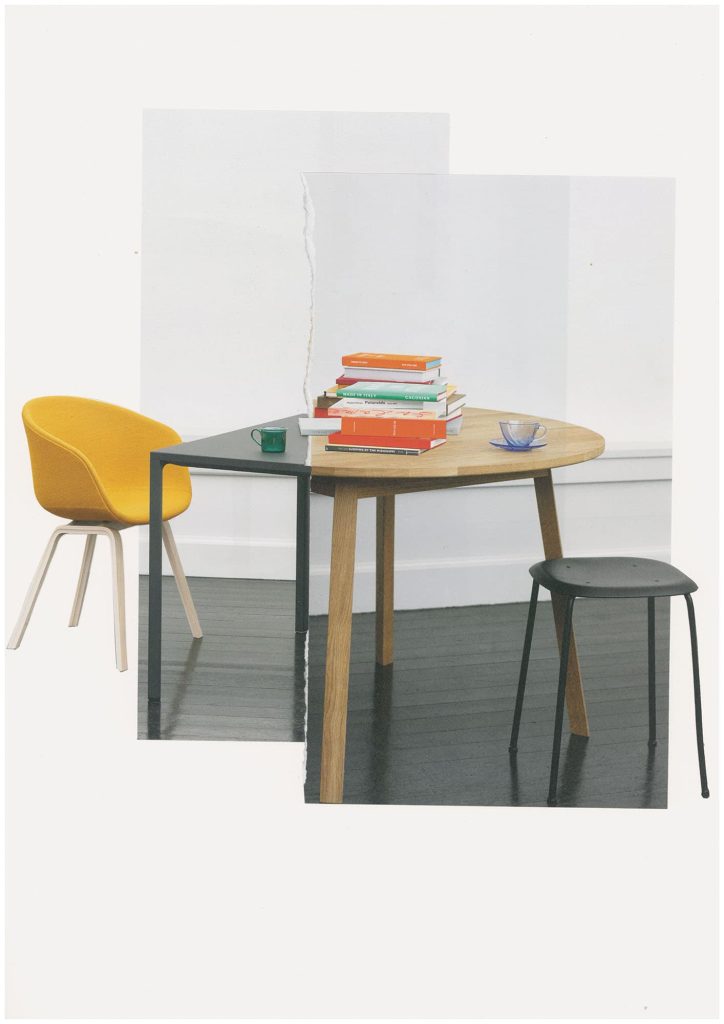
My contribution was to challenge the convention of curation. I wanted to produce two different presentations, one a book “Two Pieces of Paper” and one a verbal presentation/performance “A Thousand Words Say a Picture.” The book was an exciting project. I was really interested first in the phrase “A Picture says a thousand words,” and I playfully wanted to work with that – there’s that word again. Similar to what we have discussed with my own art practice I wanted to see how a selected group of artists might respond to the brief or a set of rules: ‘submit two images that, when placed together, create a visual conversation – exploring narrative, juxtaposition and sequence without the use of text.’ A bit Dadaesque, it left a lot up to chance. I firstly engaged with the 100+ artists I invited to take part. Secondly the unknowing of what would come back. As a curator you tend to select, but the multidisciplinary nature of all the artists I invited, painters, sculptors, collage artists, video artists, textiles artists, made it quite unpredictable at the start of the process. The outcome was amazing though, the work that each of the artists contributed was outstanding. I was more than happy, and unfortunately due to the number of intended pages in the publication I needed to edit some artists from the final print. I was so thankful to all who contributed, and engaged in the tasks and I have even got into future collaborations with a number of the contributing artists. In the symposium it was really well received. Watching the audience engage and discuss the works in the book, and the autonomy it enabled from the audience to create their own narratives was exactly what I intended. So, yes I was very happy with the work – who knows there may even be an opportunity for a Two Pieces of Paper II.
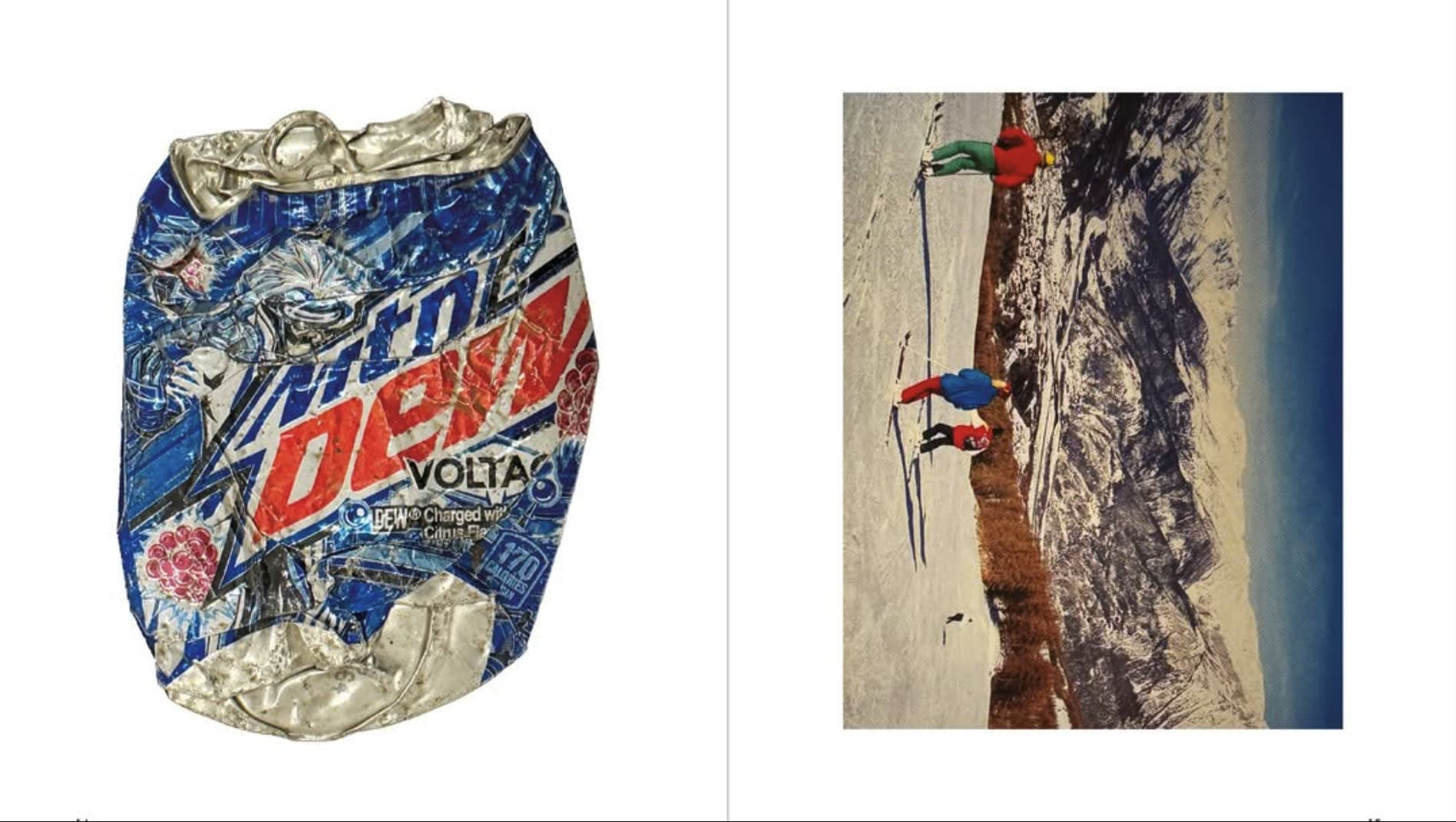
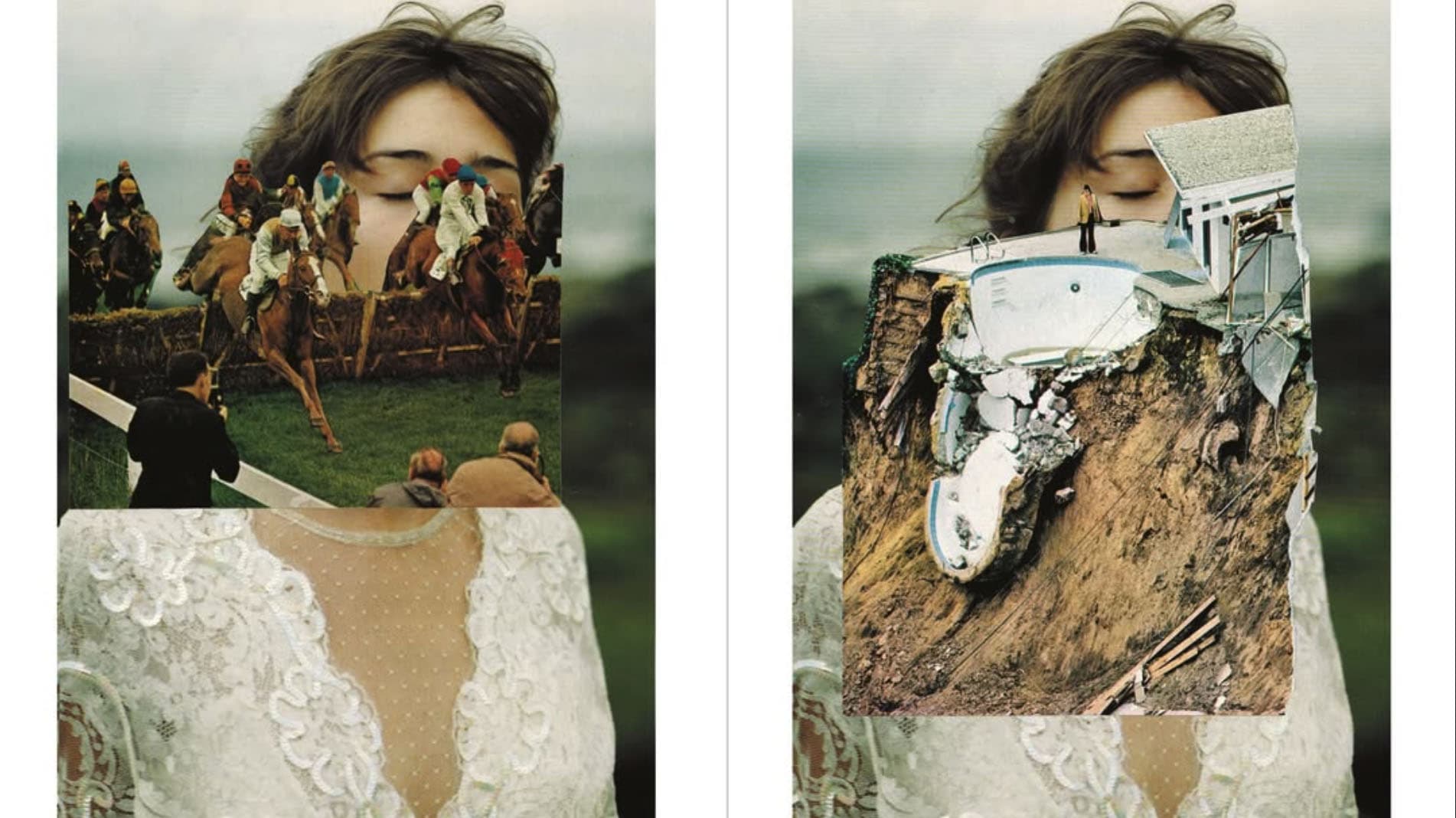
TWS –“Find, Cut & Paste” is your process. That’s a specific sequence. How did this set of rules evolved over time. What happens if you try to work backwards?
PS –Ha! I haven’t tried that one. But I love the question it has got me thinking… I wrote a piece a while ago when I was teaching about taste and accidents “A Question of Taste.” It was based on whether an accident could become an artwork. And my conclusion, obviously, was of course. The idea of “Paste” first makes me think of advertising boards – there are some great ones in Berlin – they get layered and pasted. It would be interesting to go and collate a body of work based upon that, But technically the Find would come alongside the Paste. You have got me thinking…maybe I’ll get back to you on it.
The term “Find, Cut & Paste” came from a dialogue I had with a fellow artist Nicholas Lockyer back in the 2000s. We used to joke and play with the concept of what collage was. We would say to people asking about our practices (especially to artists who didn’t use collage), “All we do is Cut and Stick.” I think it derived from that. A simple action. It resembles the LESS methodology of Sergei Sviatchenko, a friend and also one of the contributing artists in the publication. I know we are in agreement about raising the bar for collage artists and the medium as a whole in the art canon. So I think it really is – in as simple terminology as possible an explanation of the process. The addition of “Find” to the “Cut and Paste” is simple, and goes back to the “Question of Taste” article. It is for the artist to make the decision to select an item to work with – in our case – and this is a fundamental part of the process. Thousands of people may have seen the same thing, but recontextualising it and altering the meaning is the way my art works. I want you to not recognise the subject, then rediscover it, maybe in a new context, with a new meaning.
TWS –Rules are important to your work. Where does improvisation fit in? Or does it?
PS –Improvisation. I always think of drama lessons or roleplay when someone says the word Improvisation. I think improvisation is unavoidable. I think if you know what the outcome looks like at the beginning something has gone wrong in the creative process. Life and art is about adapting – you can have a rule or a concept, you can have source materials that you want to work from, but things go wrong, some things don’t work, other things come out better than you expected. It is also another way we play. Iterating is a key part of improvisation for me. You need to write or create, then let it sit and simmer, and then return. That offers so many opportunities for improvisation. I have an intention to start developing a series of 3D collages soon, and I can tell already that these works will require a lot of improvisation – and I can’t wait.
TWS –You describe your work as extending later Dada. Which Dada artists specifically, and what are you extending that they left unfinished?
PS –Dada by its nature is never finished. I was really interested in the concept and reasons for the movement initially. As a reaction to the atrocities and absurdities of the world, and the powerful people in it – it feels like it also resonates with a lot of what is going on in contemporary society. Artists like Hannah Höch and John Heartfield had a massive impact on me as a student. I loved the fact that they could use the media and propaganda that was meant to sway public opinion, but they used it against them. They reconfigured and presented it in a different way. That is ultimately what I believe great artwork does. Over time I became a massive fan of Marcel Duchamp, and his approach to art and his role as an artist. Although not directly related to collage, you can’t deny his input, as it reflects much of what we see and do today, in art and beyond. He is one of those artists that rewrote the rulebook – similar to what I was saying before about breaking out of your lane – so that they can challenge convention and upset the ways we process visual information. Another Dada artist who came later in my practice was Hans (Jean) Arp. I came across his work as a teacher, and wanted to enable the understanding behind his seminal works amongst my students, especially his early collage work. His work elevated the process, but with a Dada aesthetic. All of these works had an impact on the way I think about art, writing and curating. The methodology and processes of the Dadaists is especially relevant and I always find reading and deep diving their works an infinite source of inspiration.
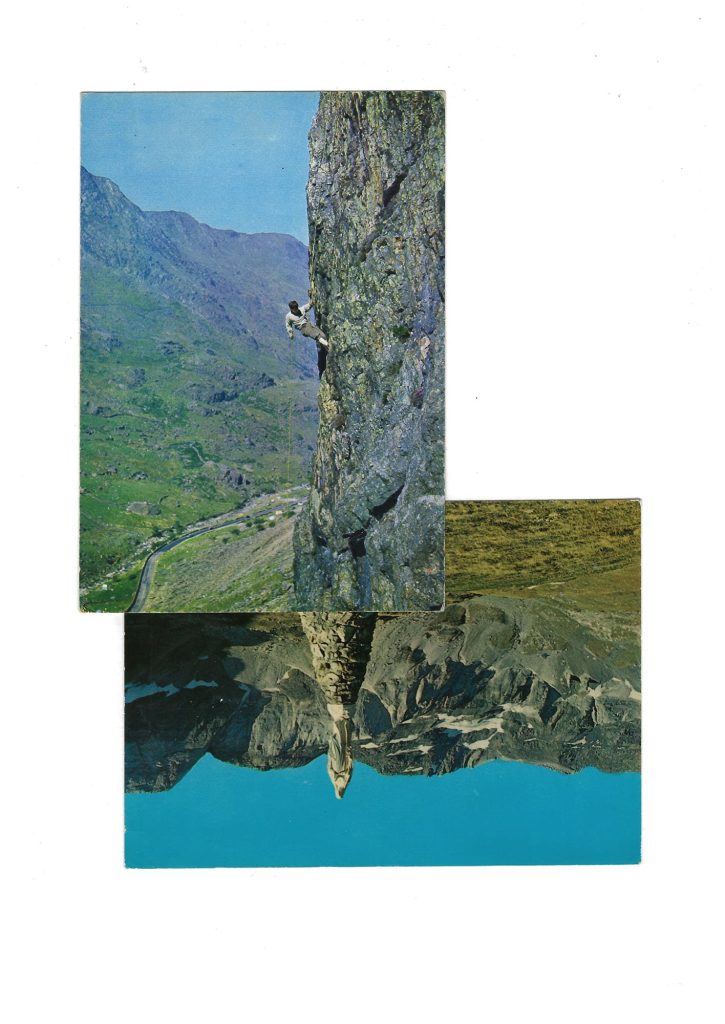
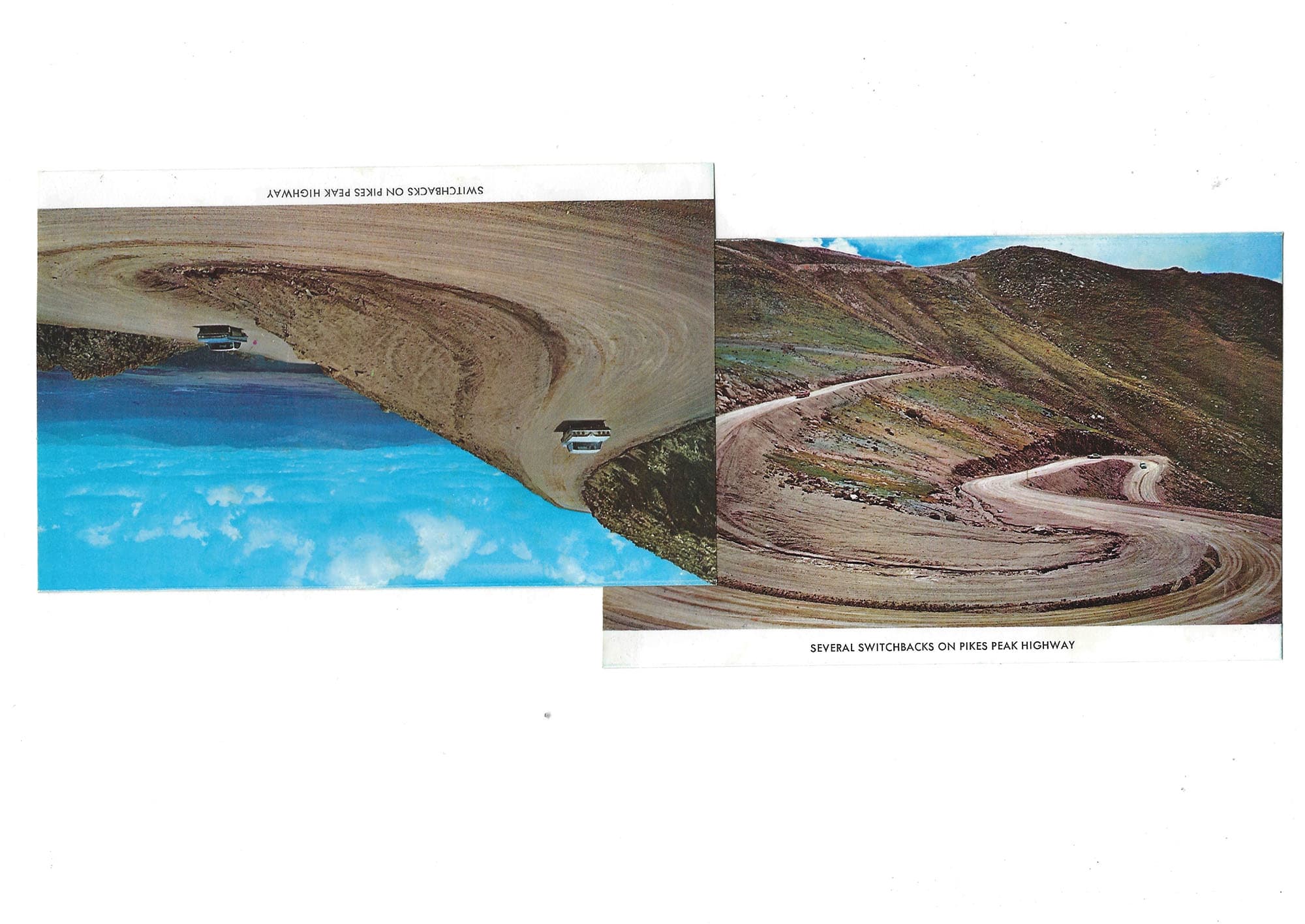
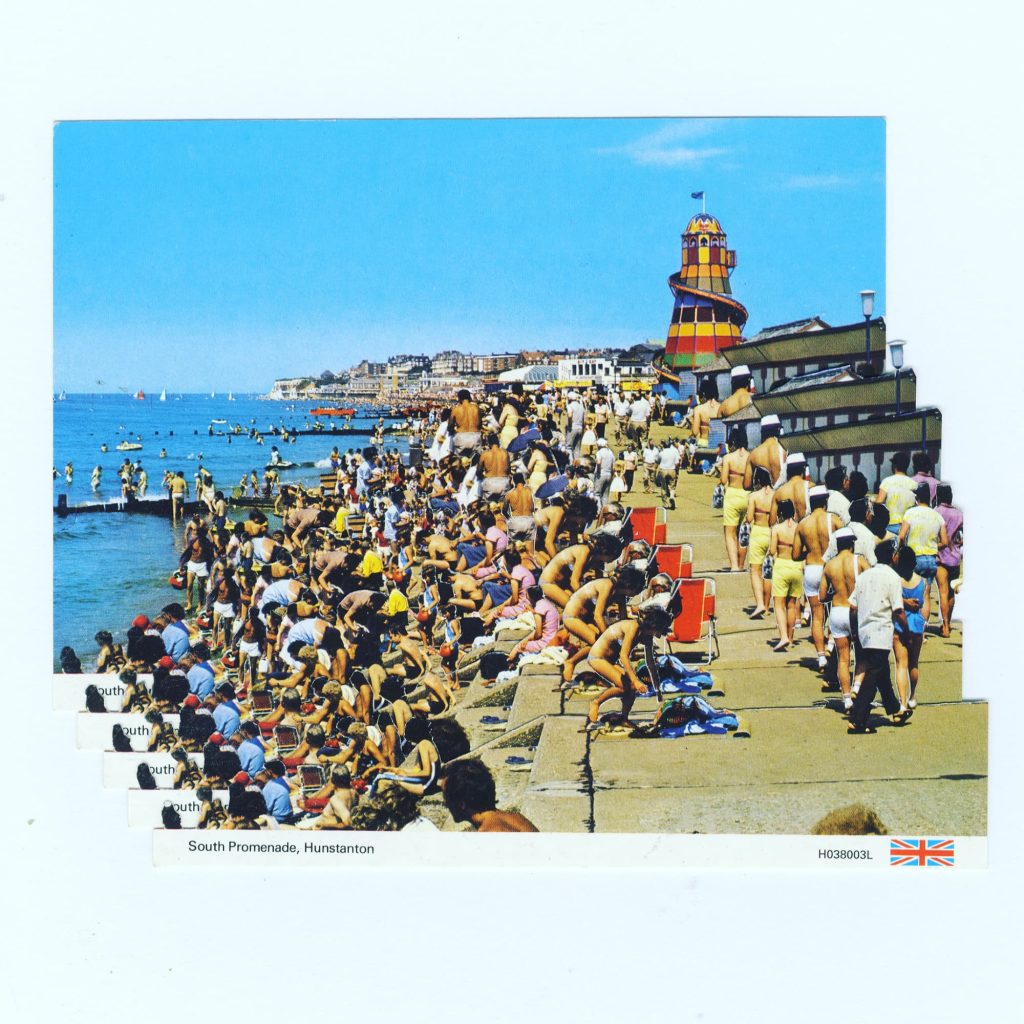
from the Deltiology series (2015-2025)
TWS –Your work examines power and hidden propaganda. How does that critical dimension function in your collages?
PS –I feel like I respond to what has an impact on my life and my environment. Sometimes this can be personal, and other times it can be political or global. I feel this can sometimes be the motivation behind the work, and it is interesting, because like Höch or Heartfield you are using the media that is being forced on us for an alternative means. Ultimately though the work is open to public opinion, as soon as it leaves my cutting board and my studio, it is for the audience to decide. I am a big believer in audience autonomy, and I see my role and the work I do as a catalyst to allow the viewers to decide for themselves.
TWS –Your collages strip away context to create new meaning. But you spent years teaching art history and providing context. How do you think about that contradiction?
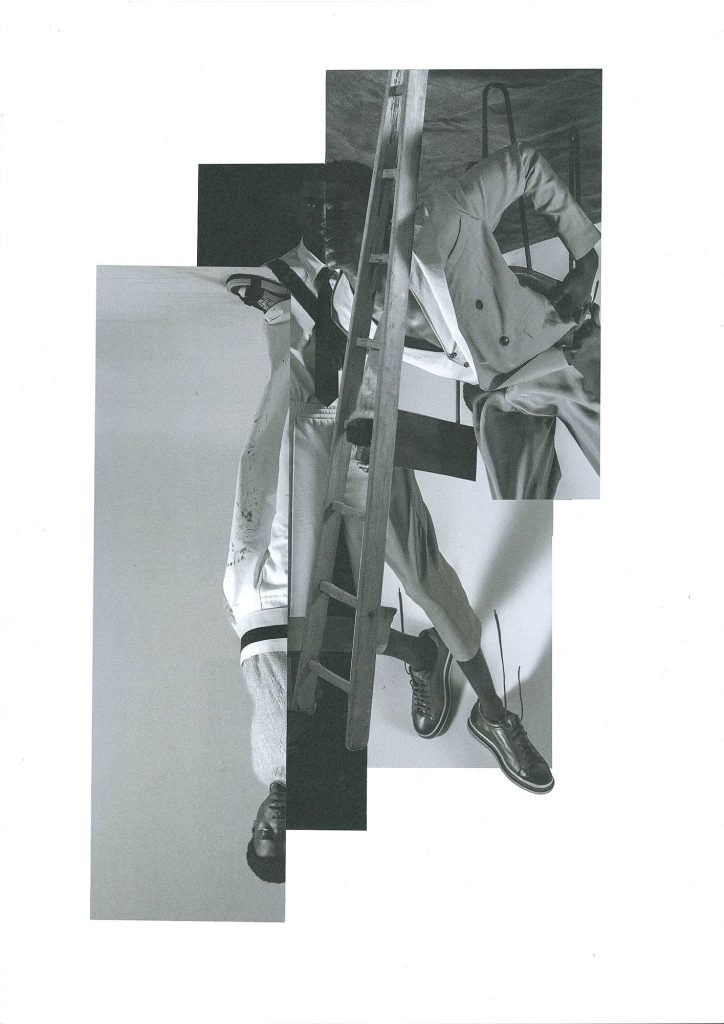
P – I feel this question leads on from the previous one. I see ‘stripping away’ as you put it happens in art history, and decisions that are made about art, and what we are exposed to are not always made by the audience. Colonialism, institutions and politics more often than not guide what we are allowed to see. You obviously can’t see everything. The context of the work is important. And often when we look at the work through a new more educated set of eyes, the work can take on different context. I made a body of work called Mænd Monstered (2023-24), in which I wanted to strip away context to reflect the way the media did the same. The work takes images of male models and repositions them through decisive cuts and reframing, much like the way people can be misunderstood through the way the media portrays them. I wouldn’t say the two areas as contradicting each other, more that they select what we see and often choose how we are expected to conform or respond to what we are shown. The main person in both these scenarios is and will always be the audience, and the question, why?