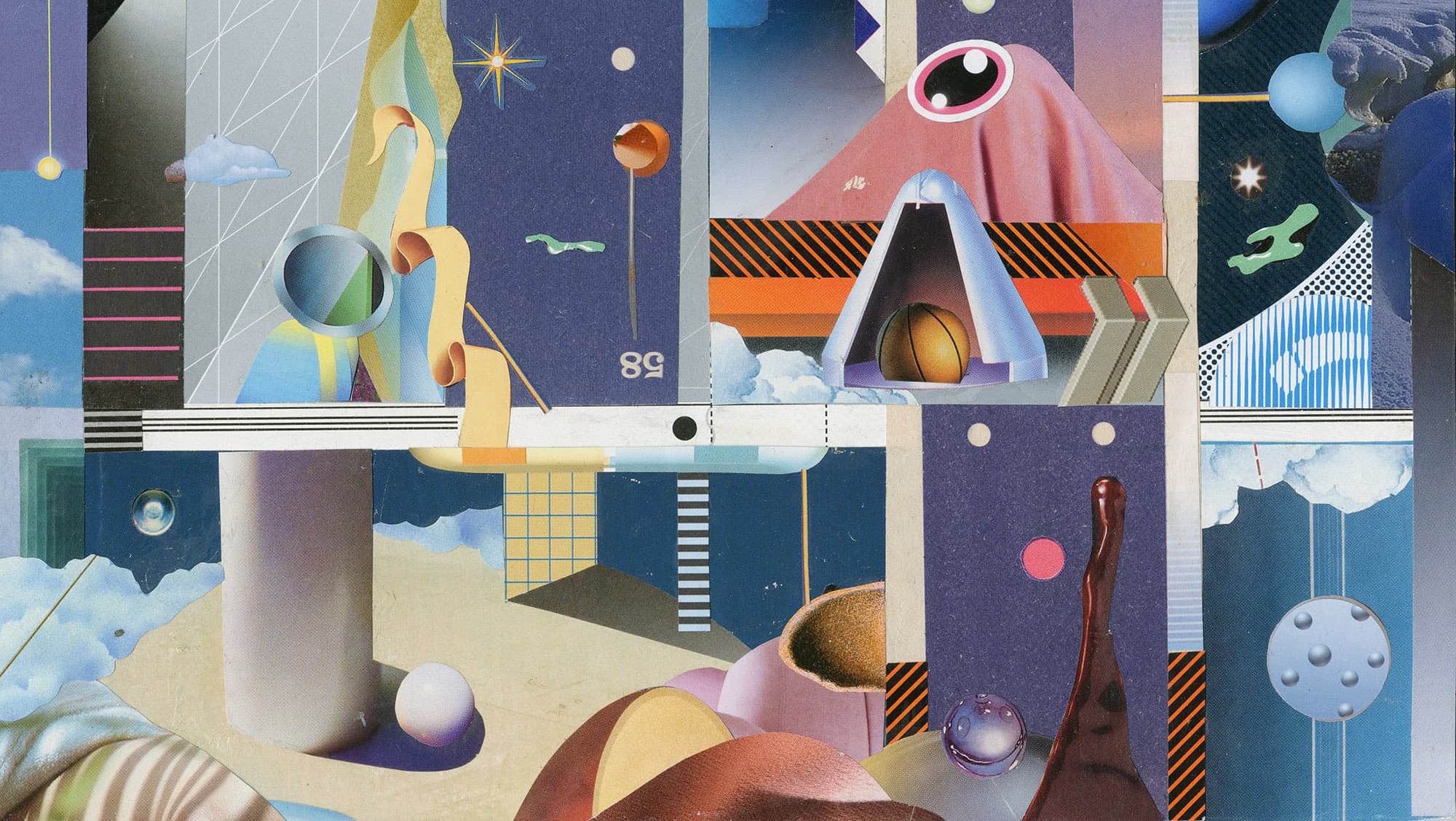
Miko Hornborg is an artisan painter, a beatmaker, and a self-taught visual artist. His collage practice centers on fictional landscapes that explore memory, perception, and place; visual echoes of something lost, half-remembered, or not yet found. With no visible cuts, no glue, no raw edges, he turns collage into camouflage. Take a closer look at his four limited edition prints and two original artworks exhibited in Phantom Tigers & Parallel Papers, at The Weird Show Gallery.
Available in 4 sizes
Edition varies by size
Buy this limited edition print on TWS Gallery
TWS- Hi Miko, how has 2025 been for you? What have been your highlights so far, and how does Phantom Tigers & Parallel Papers fit into your year?
MH-My day job has been keeping me pretty busy (and a little exhausted) this year. Most evenings and weekends, though, you’ll find me gluing things together and hunting for new materials. On top of that, my friend and I (as Koti6) have been putting the finishing touches on our new EP, which I’m hoping will see daylight sooner rather than later. I was genuinely excited when I was invited to take part in the very first Weird Show Gallery Exhibition and to be in such great company. So thank you for having me, and let’s hope for many more after this one!
TWS- You describe your collages as “playful and colorful messages from another reality.” What is that other reality? Where are these messages coming from?
MH-When talking about “another reality,” I’m referring to the place where imagination, chance, and a bit of nonsense all shake hands. It’s not a physical location, it’s the weird, shifting universe inside my head, where ideas tend to show up without a warning. They’re sparked by whatever I’m immersed in at the moment: the materials on my table, a film I’ve just watched, a comic or book I’m into, or something I’ve seen or experienced that day. The messages come from that inner world, a space where things don’t have to follow logic or rules, and where creativity can stretch out in any direction it wants.
Available in 4 sizes
Edition varies by size
Buy this limited edition print on TWS Gallery
TWS- Can you describe the pieces you’re showing in this exhibition? Walk me through what we’ll encounter.
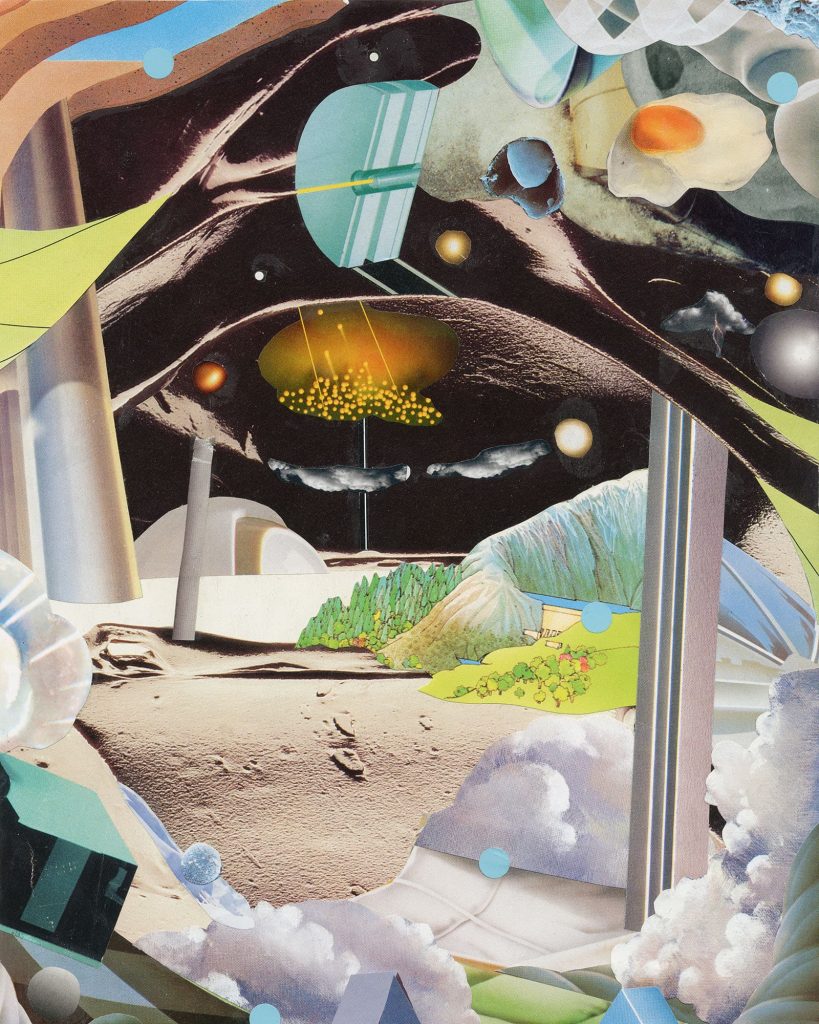
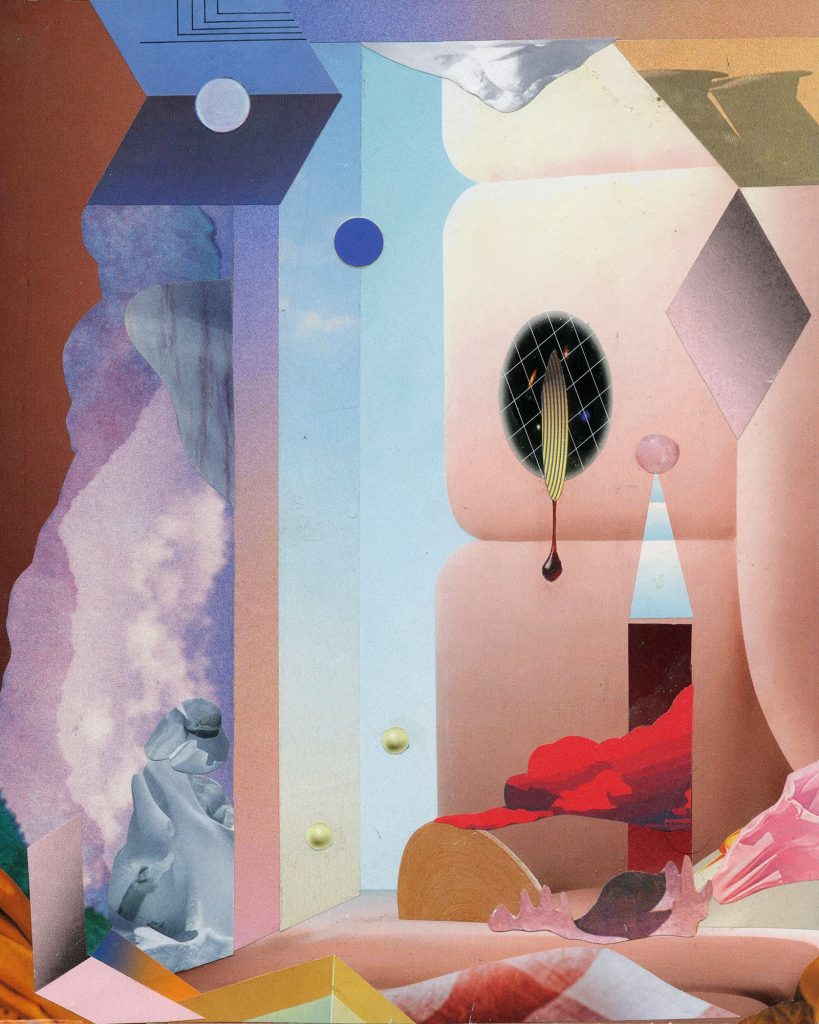
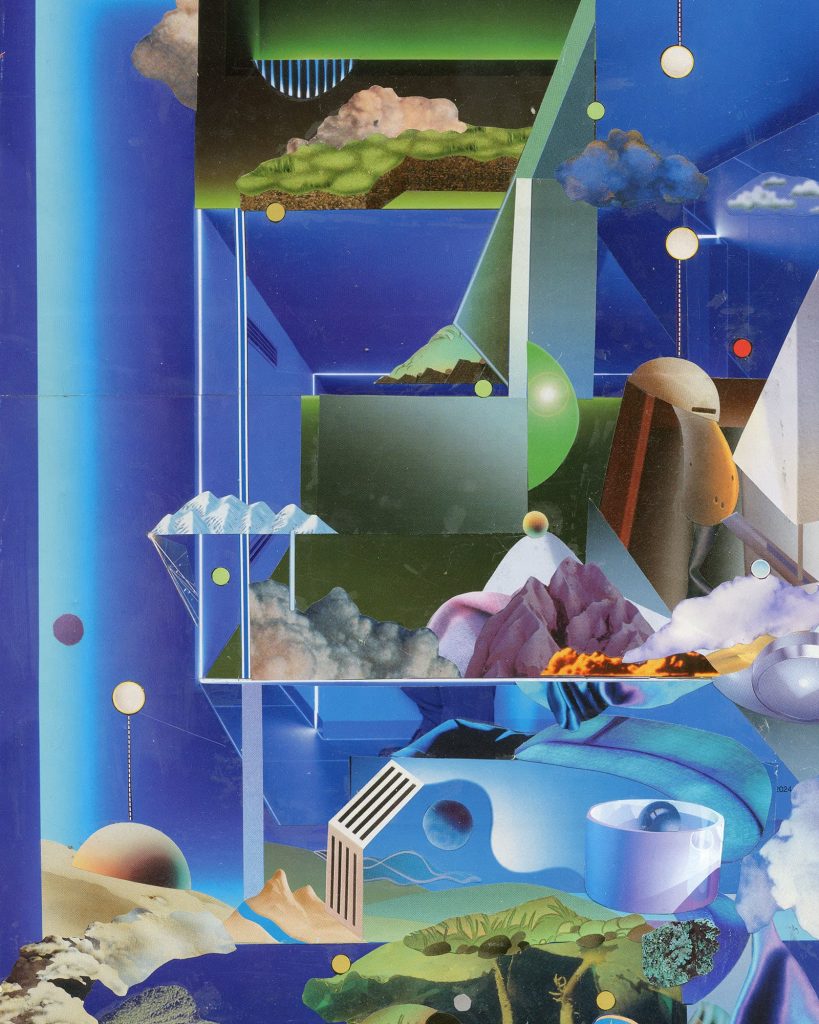
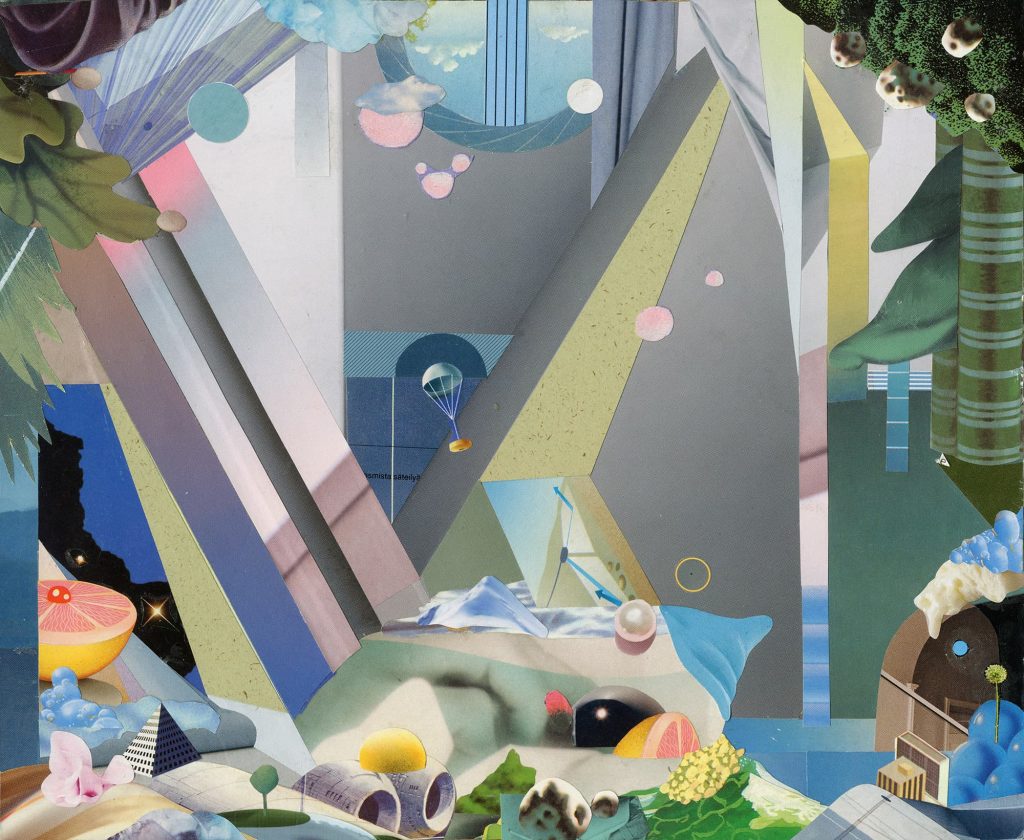
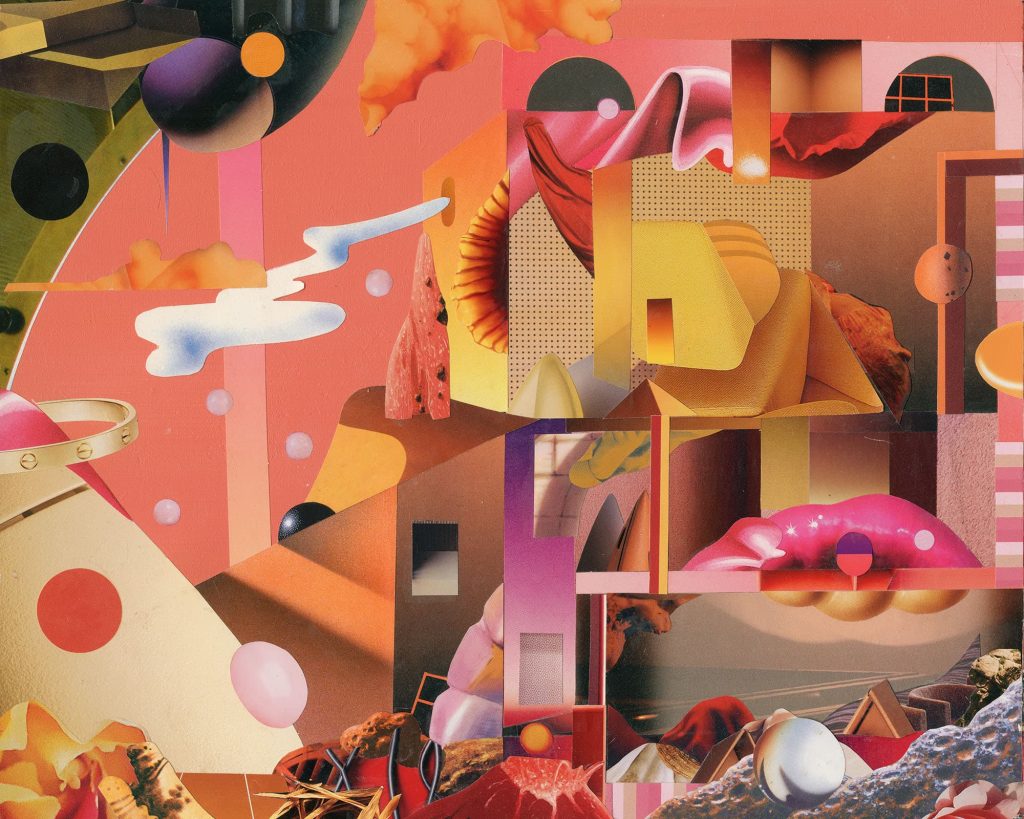
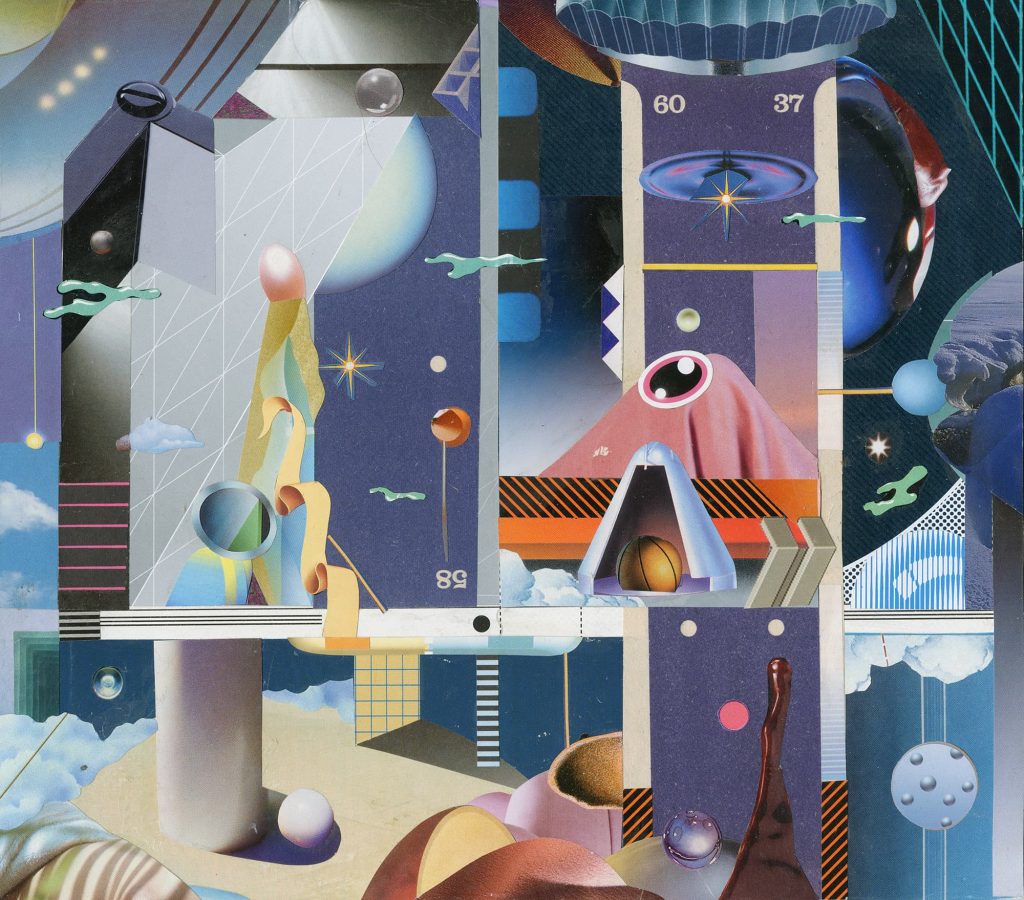
MH-The pieces in this exhibition come from my ongoing explorations of imaginary places made with paper and how the material behaves and how it transforms once I start working with it. There are two originals and four different prints available in four sizes. As you scroll through the works, you’ll come across images that feel almost familiar at first: a space, a structure, maybe even a kind of landscape. But nothing ever settles into one fixed identity.
I build the surfaces in layers that nearly erase the typical “collage” look. I like the seams to disappear so the images feel as if they’ve grown into their shapes instead of being assembled. Some works hint at soft architectural fragments; others feel more like half remembered scenes or drifting daydreams. They’re subtle, but there’s a quiet tension underneath them, as if they’re trying to present themselves as factual while also slipping into something more imaginary.
My process is very much about blending things until the construction becomes almost invisible. The layers merge in a way that makes the pieces feel like they simply became what they are, rather than being cut and pasted. Some of them look like bits of construction from another world, while others evoke past experiences you can’t quite pin down.
Available in 4 sizes
Edition varies by size
Buy this limited edition print on TWS Gallery
TWS- The curatorial text describes your work as existing “in the quiet zone where collage almost disappears” and as “collage becomes camouflage.” Does that idea of camouflage resonate with you? Are you trying to hide something or reveal something through hiding?
MH-Camouflage for me isn’t about hiding anything secret or sinister; it’s more like playing peek-a-boo with the viewer. Pieces might blend in or disappear at first glance, but the closer you look, the more details and connections emerge. It’s a way to surprise and engage, rather than conceal.
TWS- You mention your work depicts the borderland between figurative and abstract. How do you navigate that border? What determines whether something stays recognizable or dissolves into abstraction?
MH-I like to think of it as balancing on a thin line between reality and imagination. I let the work guide me rather than forcing it in any direction. Some elements remain recognizable because they hold a certain emotional or visual anchor, while others dissolve into abstraction when it feels right for the composition or simply because they refuse to behave. It’s a constant negotiation between giving the viewer something familiar and opening up space for imagination, between what’s recognizable and what wants to escape.
8,3 x 10,2 in
Paper collage on wood
Buy this original artwork on TWS Gallery
TWS- You approach your practice “without predetermined goals,” letting the material guide the process. Can you walk me through how that works? How do you know when to intervene and when to let chance take over?
MH-I usually begin with two to four larger background pieces, and I let them “speak” to me for a while. Once I feel a direction emerging, I begin to compose using pre-cut pieces (of which I have boxes and boxes), experimenting through trial and error. There’s no fixed endpoint; each piece unfolds in its own way, revealing itself as I work. I step in when a composition needs structure, balance, or clarity, but I also allow chance to take over, welcoming unexpected juxtapositions, happy accidents, and little surprises that bring energy and life to the work. In a way, the process is a dialogue between control and spontaneity, where the materials guide me as much as I guide them.
TWS- You’ve described your aesthetic as “Bauhaus on acid.” That’s a brilliant phrase—can you unpack it? What’s the Bauhaus part, and what’s the acid part?
MH-When I say “Bauhaus on acid,” I’m basically describing the balance I’m always chasing: structure meets chaos. The Bauhaus part is the geometry and functional composition I naturally gravitate toward. The “acid” part is everything that disrupts that: unexpected combinations, strange humour, surreal twists, and a willingness to let things get a bit odd.
And honestly, I think you described my style that way in an interview years ago, but I’m more than happy to adopt it as my own. I think it fits my work quite well.
Available in 4 sizes
Edition varies by size
Buy this limited edition print on TWS Gallery
TWS- You talk about creating spaces where viewers might “project their own memories, geographies or states of mind.” How do you cultivate that openness? How much ambiguity is enough?
MH-I cultivate openness by leaving room for the viewer’s imagination. I avoid over-explaining or defining every element, allowing shapes, colors, and textures to suggest rather than dictate. Ambiguity is about balance—enough to spark curiosity and personal interpretation, but not so much that the work feels chaotic or incomprehensible. I want viewers to feel invited to step in and find their own meaning, to bring their memories, geographies, and emotions into the space I’ve created.
TWS- Have you looked at the other artists in the exhibition? There’s this thread running through the show—artists creating alternate realities, working with illusion and transformation. Does that resonate with your practice?
MH-Yes, I’ve spent time looking at the other artists in the exhibition, and I’d actually been familiar with everyone’s work long before this show. That thread you mention, alternate realities, illusion, transformation, definitely resonates with me. We all approach those ideas in our own way, but there’s a shared curiosity about taking something familiar and pushing it until it behaves differently or becomes something unexpected.
What I really enjoy is that none of these alternate realities look the same, yet they still feel connected. It’s like each artist builds a different doorway, but they all lead into places where logic softens, and things can shift, blur, or transform. That’s very close to how I think and work as well, so being part of a show with that kind of shared energy feels like a natural match.
9,2 x 10,6 in
Paper collage on a book cover
Buy this original artwork on TWS Gallery
TWS- The exhibition is called Phantom Tigers & Parallel Papers. Your work creates “places that never existed” and deals with “something lost, half-remembered, or not yet found.” How do you relate to the idea of parallel realities or phantom spaces?
MH-I relate to the idea of parallel realities and phantom spaces because that’s exactly the territory my work occupies. I’m interested in creating places that feel familiar yet impossible, where memories, imagination, and fragments of experience collide. These are spaces that never existed but feel like they could, like traces of something just out of reach. I’m drawn to the tension between what’s real, what’s imagined, and what’s invented, and I try to leave openings for the viewer to wander in and explore their own phantom landscapes. In a way, my work is a map of the in between, the half-remembered, the not yet found.
Find more about Miko Hornborg on his Instagram.
You can also acquire his original pieces or prints in the current exhibition of TWS Gallery
Lean more about Miko Hornborg at TWS:
Miko Hornborg: Art that lies somewhere in between Bauhaus on acid and Berlin Dadaists on vodka.