Andrea Burgay creates collage-based works and collaborative projects that investigate paper and print media as sites of intimacy and connection. She is the founder and editor of Cut Me Up Magazine. Read about her four limited edition prints and two original artworks exhibited in The Weird Show Gallery’s inaugural exhibition, Phantom Tigers & Parallel Papers. This is not small; this is the first time Andrea has made prints of her artworks, so don’t miss out on the chance to hang one on your wall!
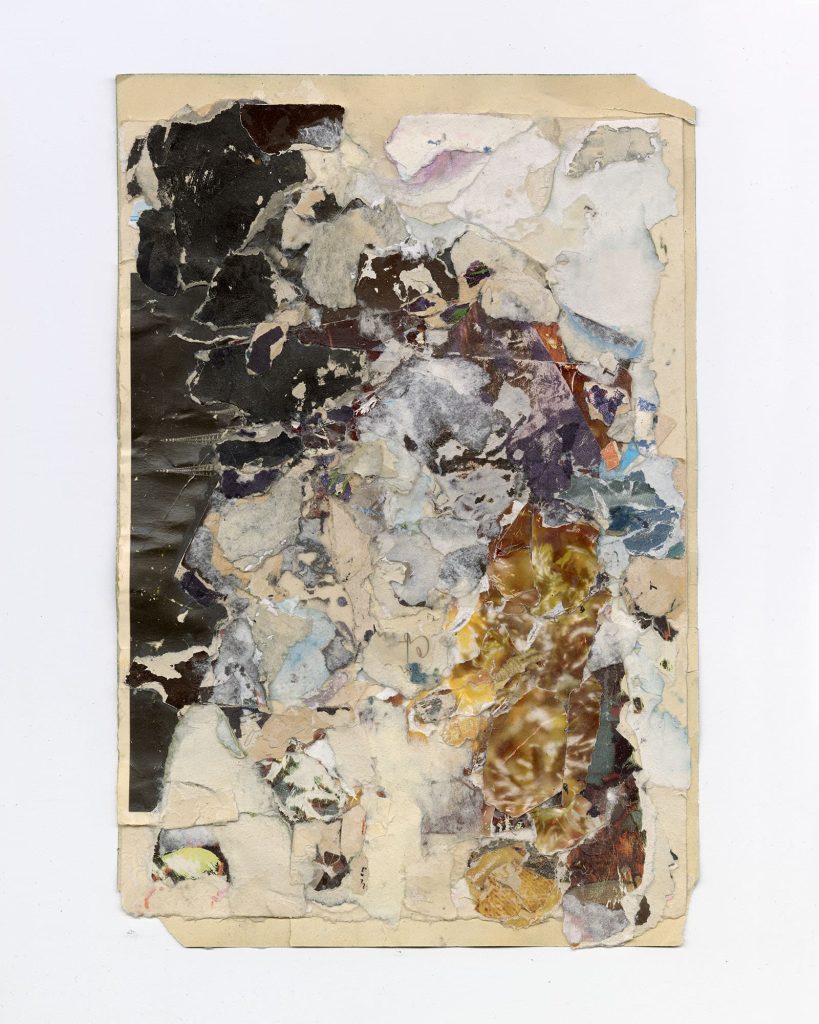
Available in 4 sizes
Edition varies by size
Buy this limited edition print on TWS Gallery
TWS- Hi Andrea, how has 2025 been for you? What have been your highlights so far, and how does Phantom Tigers & Parallel Papers fit into your year?
AB- This has been a year of many changes, but also many great opportunities to focus on. I’ve been fortunate to have my work included in exhibitions from upstate NY to Mexico and the United Kingdom. I spent a week in residency at Kolaj Institute in New Orleans, where I worked on large-scale pieces inspired by my time in one of my favorite cities and am also working on a new collection of small works inspired by, and using materials collected in the studio there. I also can’t believe that it was just earlier this year that I organized Cut Me Up: Transitions, an exhibition showcasing conversations that have emerged between artists’ works over the seven years since I founded Cut Me Up.
Phantom Tigers & Parallel Papers has been an exceptionally exciting exhibition to be a part of. As someone who began as a huge fan of The Weird Show, was later an interviewee, then a collaborator contributing studio-visit interviews, and now to be part of this first exhibition, feels especially meaningful. The theme of artists pushing the limits of materials resonates so deeply with my approach and I am thrilled to be alongside many artists I follow and admire! I am really just very honored to be a part of it and am enjoying getting to know all of the artists’ works more deeply.
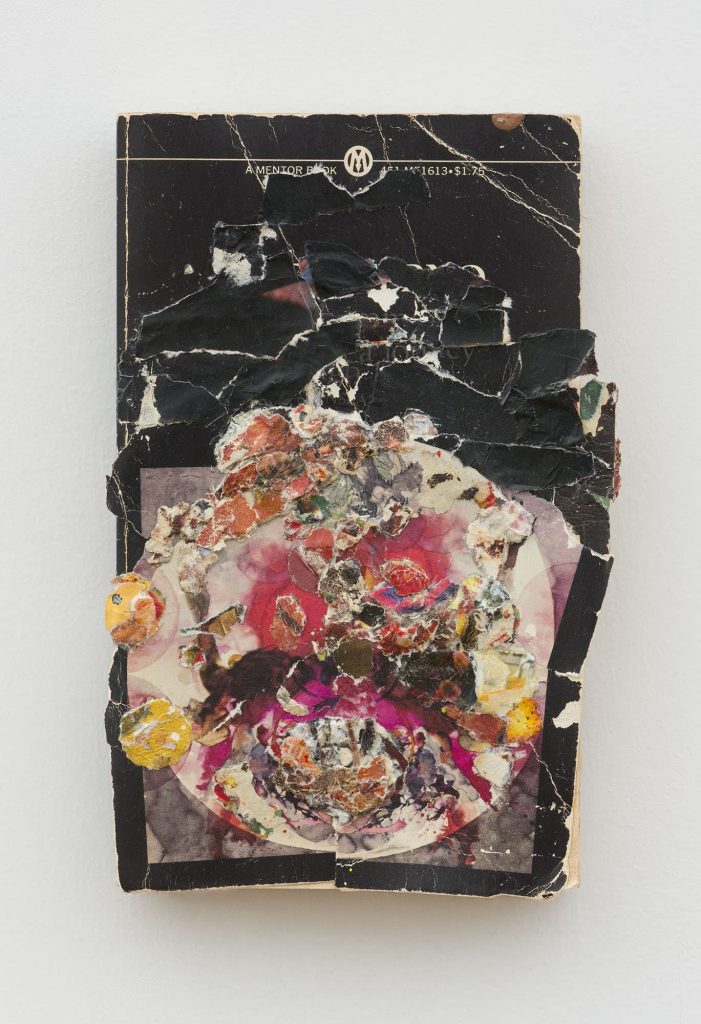
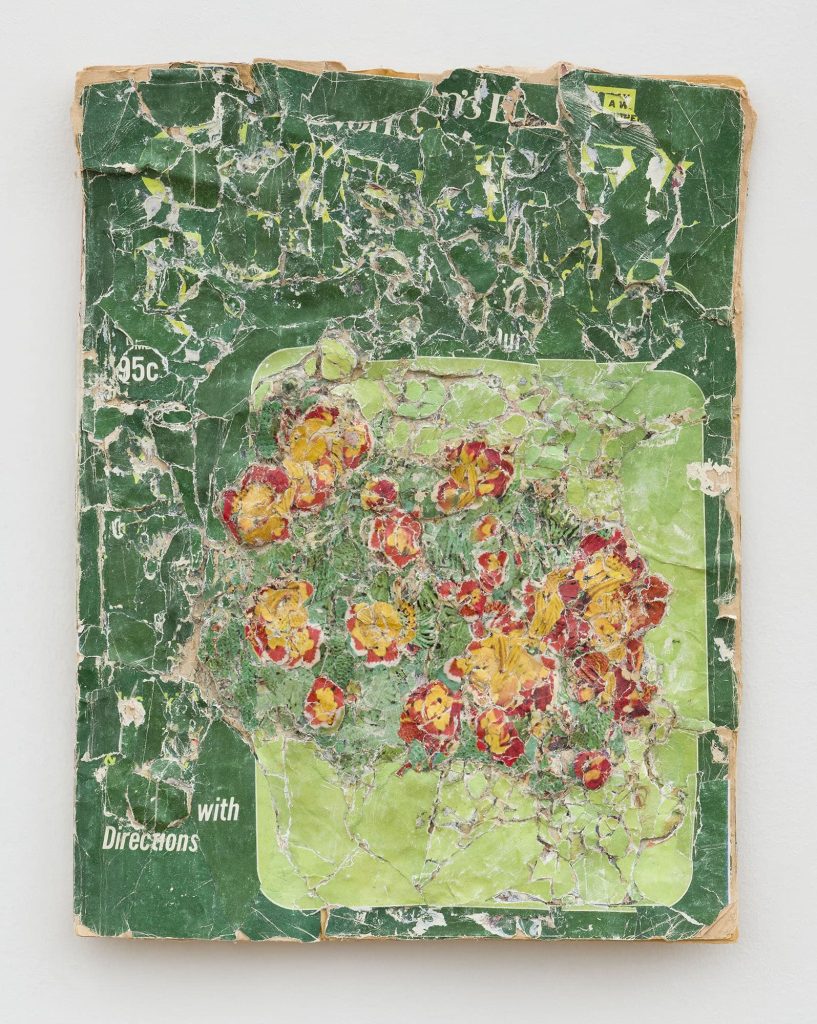
7.25 x 4.75 x .5”
Collage/decollage on paperback book
Buy this original artwork on TWS Gallery
TWS- You work with materials that already carry stories—old magazines, faded prints, discarded paper. What draws you to these particular objects? How do you know when something is “ready” to be transformed?
AB- I have always been a collector of paper ephemera and books. As a child, I collected postcards, pamphlets, ticket stubs, photos, books, magazines, and so on. I cut out and laminated the animals that were up for adoption in the Sunday paper, an early attempt at salvation through objects.
Working with paper ephemera allows me to exercise that desire to collect again, not just to save, but to engage with. I’ve always thought about the things we save because they’re too precious or valuable to use. We wait for the “right” time or keep them in the box. There’s a freedom to things that we don’t value in this particular way, because we’re free to interact with them as we please. We can use them when we want and try new things with them—they give us license to play. The bottom-of-the-barrel used books, posters, postcards, and other paper materials that I use in my work fit these ideas.
But of course, they are still selected because I find them beautiful. I am attracted to these color palettes that hint at other eras in time and deteriorating textures. I like objects that reveal the transformations that they have already undergone through the passages of time, nature, and the human hand. I find joy in finding these moments of beauty in something aged and discarded. Emphasizing the beauty I see while rescuing something left behind by time is a key element of my work.
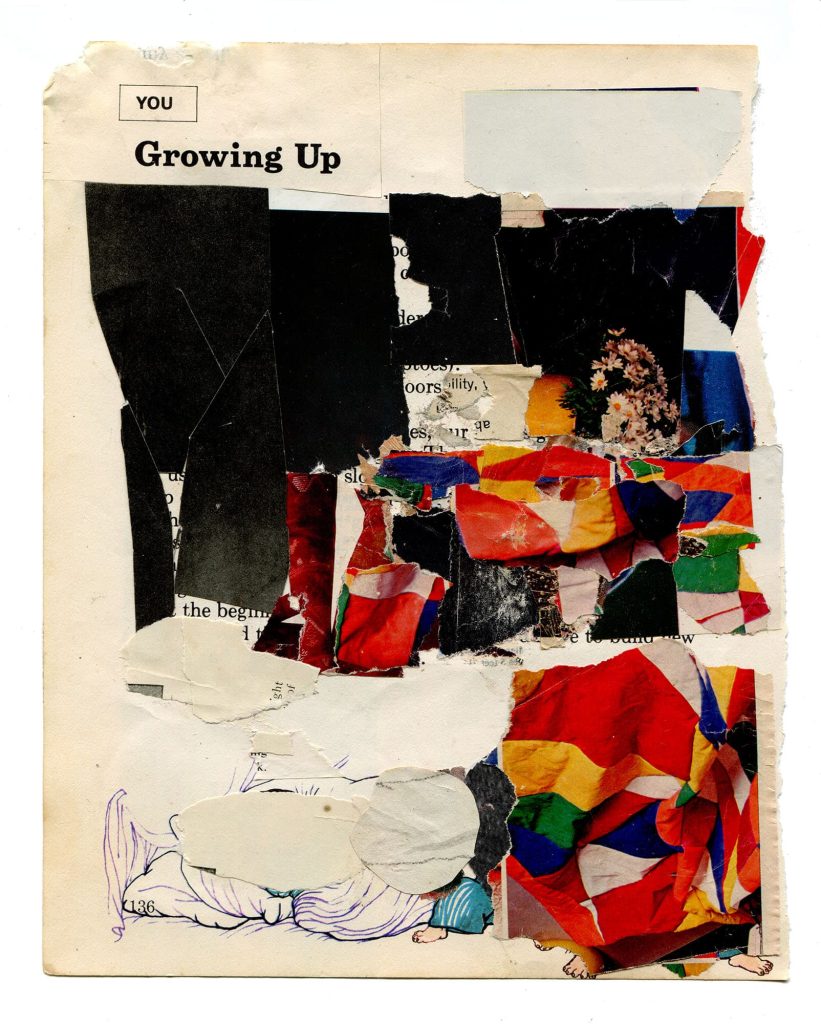
Available in 4 sizes
Edition varies by size
Buy this limited edition print on TWS Gallery
TWS- Can you describe the pieces you’re showing in this exhibition? Walk me through what we’ll encounter.
AB- In the exhibition, there are four special print editions and two original works.
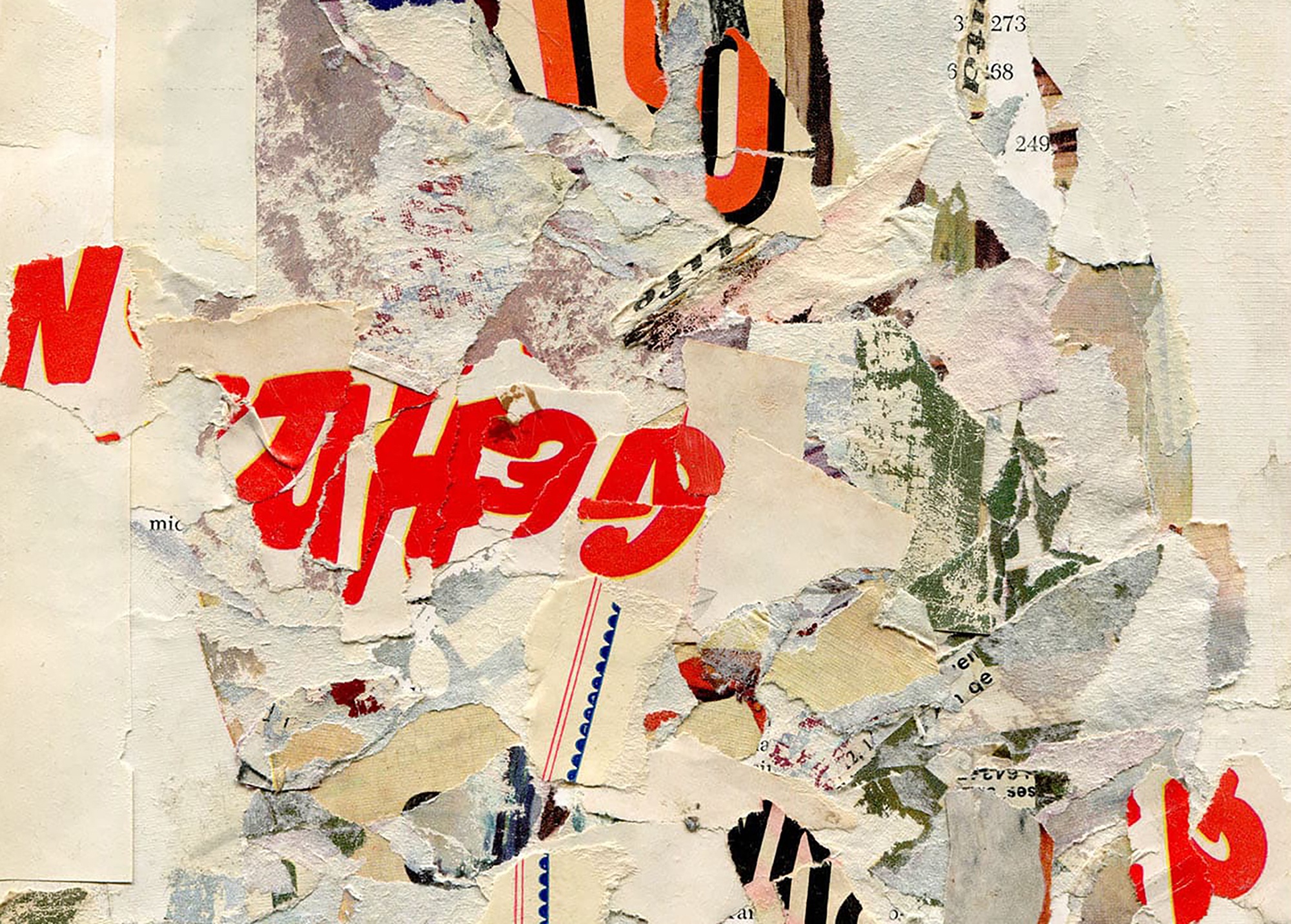
Of the prints, Imparting/In Parting, Growing Up (You), and False Starts—were made at communal collaging tables at Kolaj Fest in New Orleans. These embody the energy of working quickly, stealing scraps, and the surprise of new coming materials. They are layered images, hiding what’s below. In Imparting/In Parting flowers may be symbols, decor, an offering. Growing Up (You) explores perceptions of growth and development. False Starts merges text with color and form. They are, by turns, poetic, playful, and energetic.
Room to Dream is from a series of works that were deeply influenced by David Lynch. Areas of darkness and light flow throughout the piece. A photograph of a flower is embedded in the fragments. These allude to the theme of moving through dangerous worlds found in so many of his films, and the sense of innocence that often runs parallel to this. Room to Dream is the name of a David Lynch biography and an idea he espoused and lived—creating a place to imagine.
Infinite Torment (Inferno) and Granny Squares are the original works from my Fictions and Fictions: Periodicals series, respectively. Granny Squares was a magazine with patterns and inspiration to make crocheted textiles that has undergone a process of tearing apart, layering, and reassembling. This is a colorful piece with a cracked surface as if the object itself was in the process of deteriorating while becoming something else, with images breaking out of it.
Infinite Torment (Inferno) stands apart within the Fictions series as a book that has not been lost to time, but whose narrative shapes how we conceive of hell. My reworking of the book amplifies the slightly psychedelic illustration by expanding it beyond its frame and the confines of the book surface.
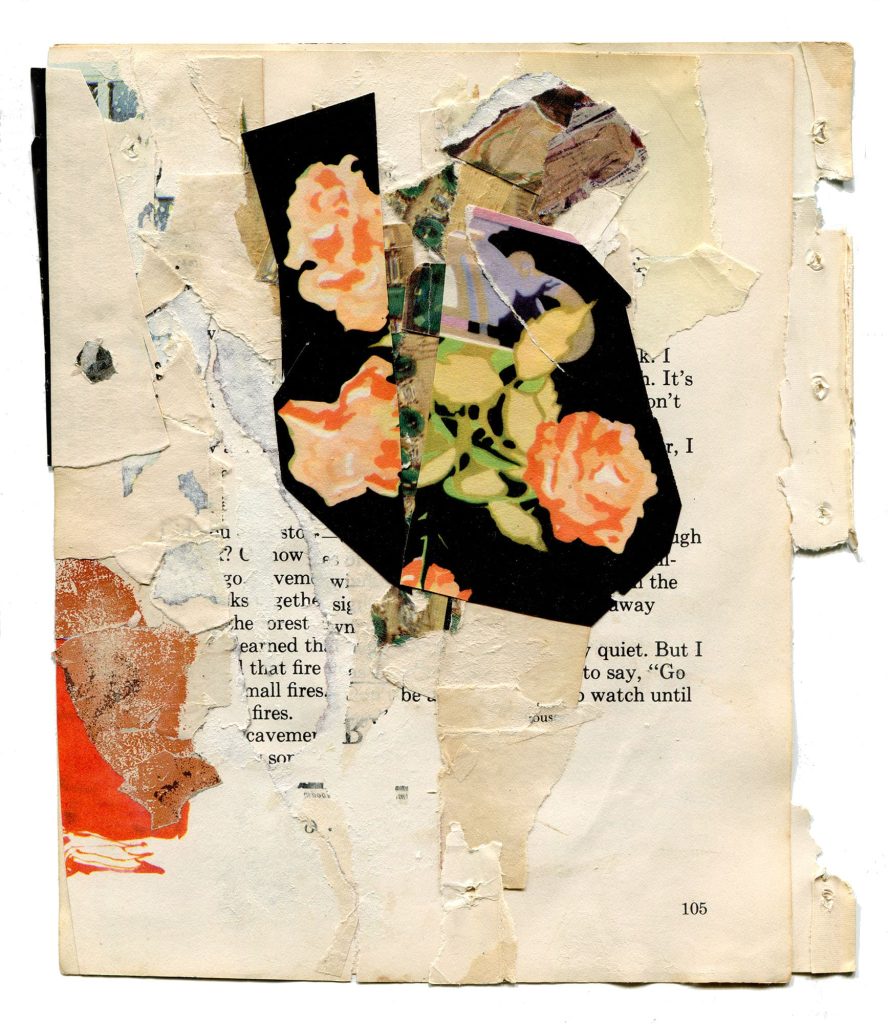
Available in 4 sizes
Edition varies by size
Buy this limited edition print on TWS Gallery
TWS- You’ve described your process as involving tearing, sanding, burying materials under new surfaces, letting time and touch decide what survives. Can you walk me through how you actually work? Where do you start, and how do you know when a piece is finished?
AB- I spend a lot of time moving materials around. This may be arranging fragments of one paper on another or arranging entire piles of paper media for more sculptural works.
I begin gluing fairly quickly and create an initial rearrangement, which is usually a variation on the original. Then, I take that arrangement apart, pulling the pieces off. I do this many times, building up the surface and wearing areas away, tearing and using sandpaper. I use an Exact-O blade to refine edges, create depth, and emphasize forms.
The fragments absorb wear throughout this process. Layers are built up along with bits of glue. The evident traces of the material’s destruction remain as a reminder of the difficult path of emergence into something new.
There are usually multiple compelling iterations throughout the process, but a piece is finished when it becomes something new while still reflecting what it once was. I often mention the story of the Velveteen Rabbit, or toys becoming real, as an influence on my work, specifically the idea of transformation from what something once was to a new, more “real” version.
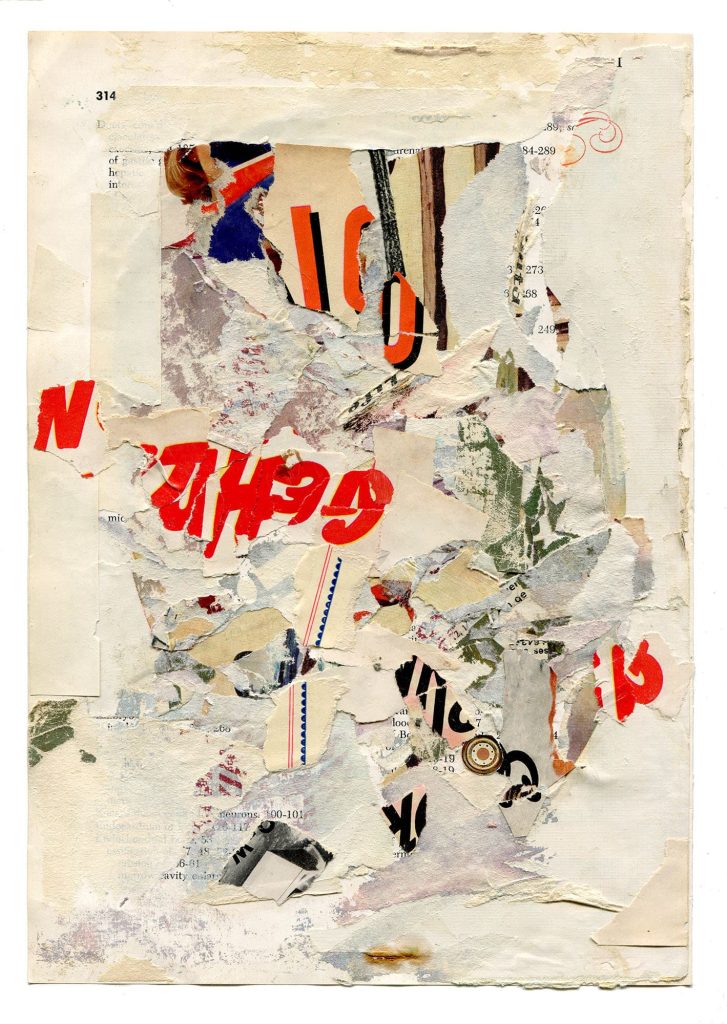
11 x 8.25 x .25
Collage/decollage of magazine pieces on layered pages
Buy this original artwork on TWS Gallery
TWS- You talk about paper behaving like skin in your work—holding traces of what has been removed. This idea of memory embedded in materials is powerful. Are you thinking about specific memories when you work, or is it more about the materials’ own histories?
AB- Several of my series—Fictions, Ruins, Wish You Were Here—respond to the real and imagined histories of found objects, while others—Requiems, Reliquaries—are personal reflections on specific memories or people from my life, often using materials related to these time periods or connected to the people and places I am conjuring. Whether relating to something relatively new to me or connecting with more personal histories, I try to bring forth the power or meaning that I find in these materials.
TWS- There’s something in your work about making decay and bloom coexist—pieces that look fragile but have a pulse underneath, like they’re between states. Is this tension something you actively pursue? How do you balance destruction and creation in your practice?
I want them to feel alive and in a state of becoming. Working with destruction and creation in my process, I have to gauge when to stop, when the sense of destruction feels overwhelming, or the sense of new beginnings becomes too cheerful. Preserving the moments when both are balanced conveys the idea that they are intertwined and both are needed to create the potential for something new.
TWS- You describe your process as “a kind of revival or resurrection,” and the curatorial text calls your work “a ritual of transformation.” Does the act of making feel ritualistic or spiritual to you? Is there a healing dimension to this work?
AB- I believe that making can be a spiritual process. Many parts of my process can be healing, from the drawing up of feelings related to specific experiences to deeply engaging with images, text, or physical materials to create meaning.
As someone who has always looked to art to mirror my own experiences in the world so that I felt less alone, I hope that my work can provide that for others. This type of connectivity is also deeply spiritual to me.
Available in 4 sizes
Edition varies by size
Buy this limited edition print on TWS Gallery
TWS- Your statement mentions that your works bear “the markings of these visceral transformations” and embody “both the pain of loss and the potential for growth.” Can you talk about that duality—how loss and growth show up in the work?
Experiencing loss, there’s often a sense of entropy or resignation. The potential for growth, however, is a way to move beyond being stuck in this single state. These often visually manifest in the work through contrasts. A composition that draws downward is counteracted by an upward thrust. Torn edges of decaying pages are met with vibrant colors. Marks that convey impulsive energy interrupt labored detail. Elements are met with their opposites to create a sense of balance between the two states.
TWS- Have you looked at the other artists in the exhibition? There’s this thread running through the show—artists who think in terms of transformation, layering, and reconfiguring materials and meanings. Does that resonate with how you see your practice?
AB- I deeply relate to these ideas in my own practice and am very interested in how this similar approach manifests in such different ways in the included works. From more painterly approaches to precise grids, there is a sense of deep investigation into the potential of the different materials used and a transformation that reveals surprising and new ways of looking.
TWS- The exhibition is called Phantom Tigers & Parallel Papers. Your work deals with traces, absences, what’s been removed or hidden under layers. How do you relate to ideas of the phantom—of things that are present through their absence?
AB- I love the idea of phantoms as metaphors for things that are present through absence, and I think of these as memories, feelings, or anything we don’t want to face. This reminds me of a quote by the great artist Clive Knights, “All things fully present but never fully revealed.” In my work, what’s buried, hidden, or removed is still there and played its part in leading to what the piece became.
Find more about Andrea Burgay on her website or Instagram.
You can also acquire her original pieces or prints in the current exhibition of TWS Gallery
Lean more about Andrea Burgay at TWS:
TWS Broadcast. Episode 08: Andrea Burgay. Time, decay and hope.
Cut Me Up (And Fold Me): A Dialogue Between Artists Michael Oatman and Andrea Burgay about Her Magazine, and How People Don’t like it When You Cut Up Books (for Any Reason)
Andrea Burgay and Max-o-matic talk about Cut Me Up’s issue #4 which they co-curated
The lock down chronicles: Andrea Burgay
Breakdown, an online show focused on fragmentation and rebuilding curated by Andrea Burgay.