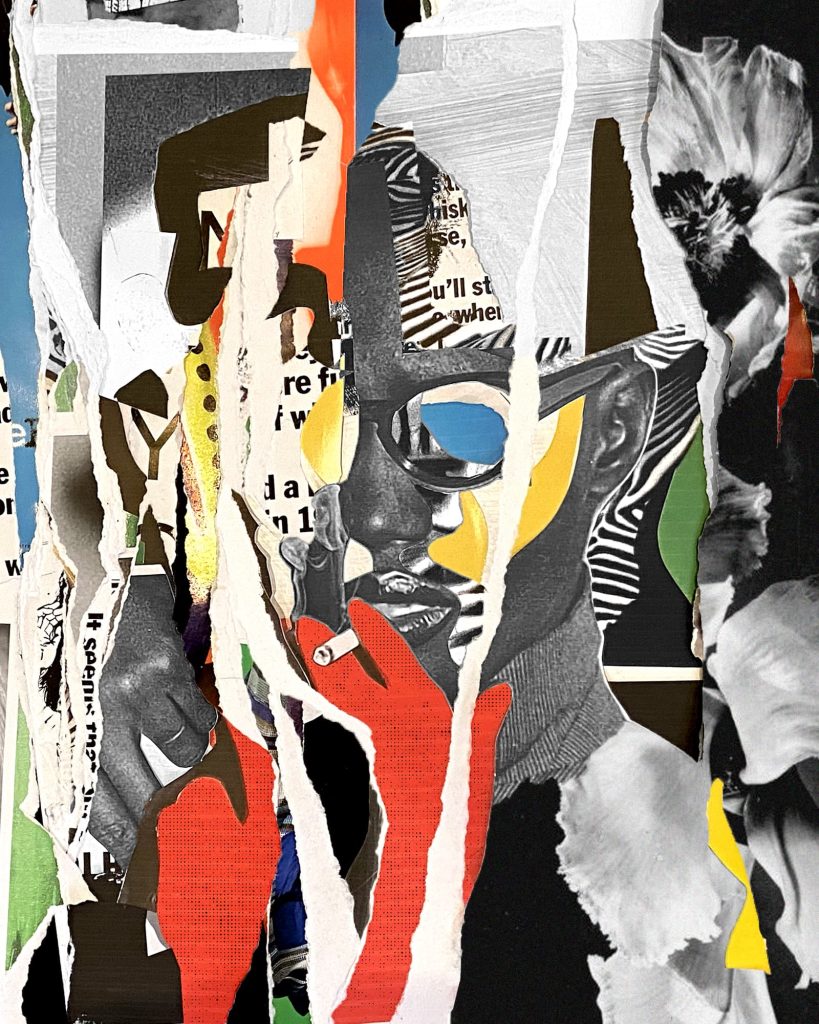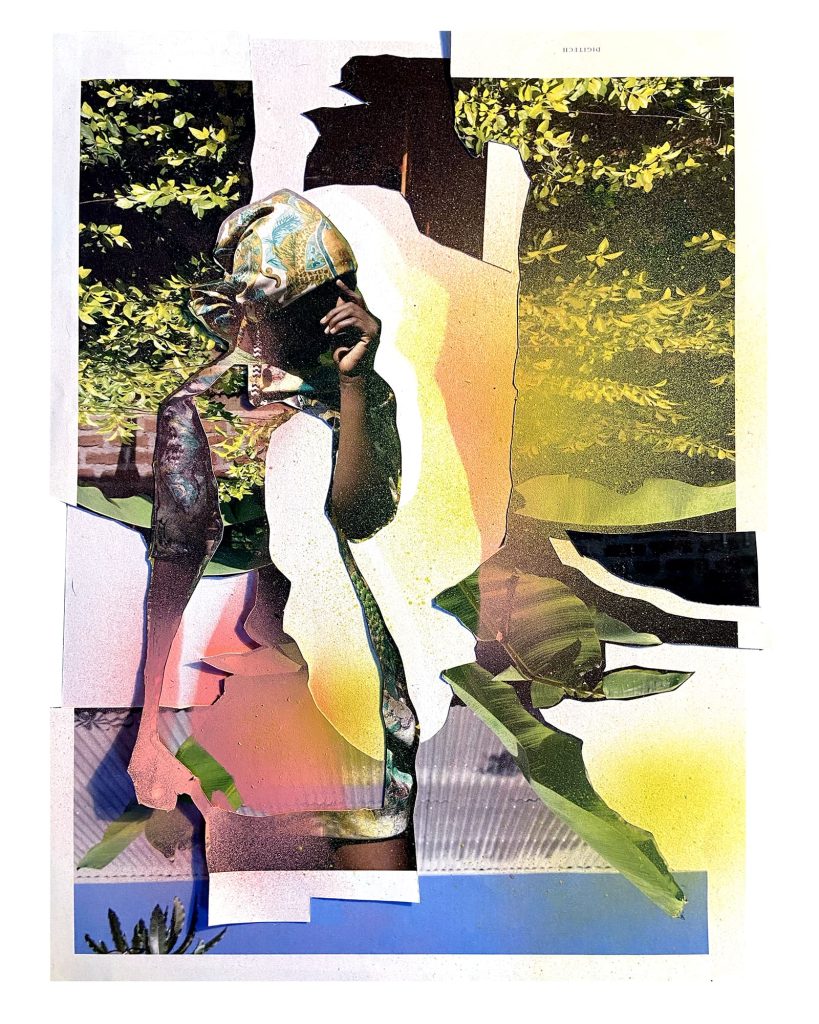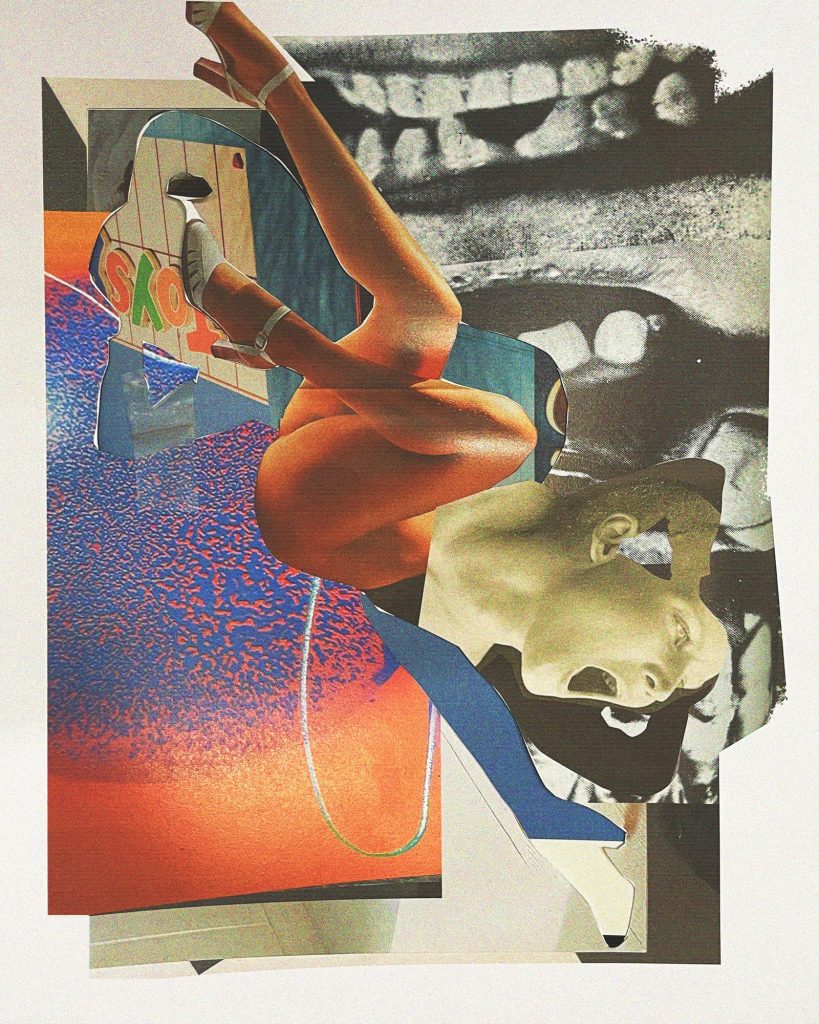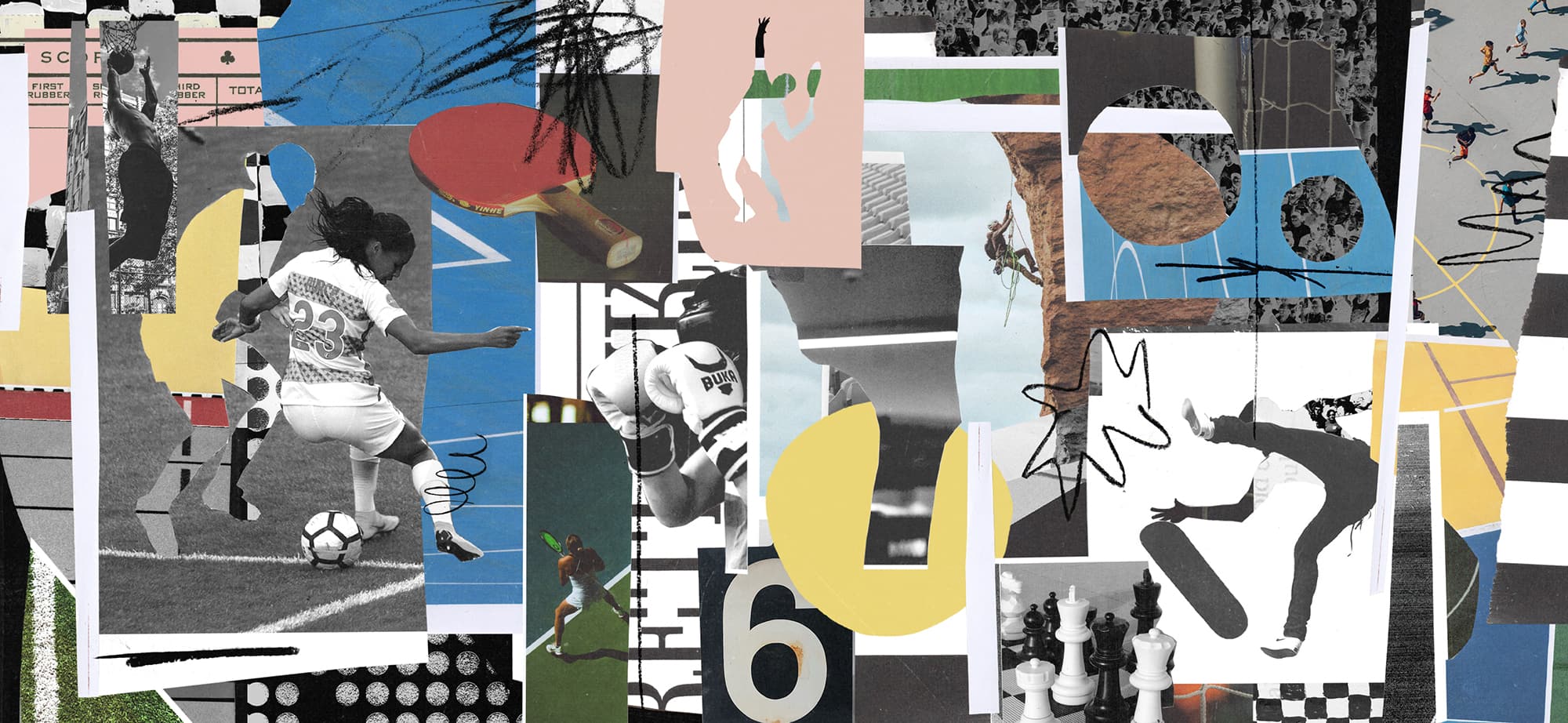
The British artist talks to TWS about motion, materiality, and pushing the limits of collage in her experimental and commercial work.
TWS –Hi Alice! What’s something you’d love our readers to know about you?
AI –Hahahaha, would you believe out of all the questions this is the one I struggled with the most!… I genuinely don’t know how to answer it!
TWS –So I’d say that the best to know something about you is playing this following video, there’s a lot to learn about your work on this piece.
TWS –Was there a “eureka” moment when you realized you wanted to become an artist?
AI –It was definitely a bit more of a slow burn rather than a eureka moment, like 33 years of slow burn really… I’ve had a very unconventional career path to getting where I am right now. I initially trained to be a make-up artist but then spent over 10 years working in the creative industry but in a more administrative / production capacity, before I finally made the move to go back to being creative myself.
But in terms of knowing I wanted to follow a ‘creative’ path rather than maybe a more ‘academic’ one – that was pretty apparent from a very young age!..
TWS –Was there a particular image, artist, or experience that made a strong impression on you as a kid?
AI –The first time I saw Salvador Dali’s work my mind was blown. As a kid at school we’d do pretty dull trips to the less exciting London galleries and we were shown a lot of the old masters and bunch of portraits with gilt gold frames which, at the time, were just so dull and did absolutely nothing for me! For so long that’s what my definition of ‘art’ was – being an artist meant being really good at accurately depicting something in paint – or at its most adventurous it was Van Gogh’s ’Sunflowers’ or Monet’s Bridge…. Then, I remember going to the Tate modern when it first opened in 2000 and that exposure to modern art really flipped things on its head for me – seeing Dali, Magritte, Hannah Hoch, the Chapman Brothers, Gilbert and George and load of other artists working in surrealism and dadaism and was so eye-opening. It was a bit like ‘are you fucking kidding? Ive been sold a lie, why have I been made to look at all this boring stuff when this amazing stuff existed?’
TWS –What drew you to collage as your primary medium? Why does it resonate with you?
AI –Ha! Well, for a couple of particularly un-sexy reasons…
I’m not great at drawing or painting – or more to the point, I’ve never made the effort to develop those skills. Specifically, when I made the decision to return to a more creative career (after years denying myself the option) I didn’t have the luxury of time to get better at something as refined and intricate as illustration. I was 33 when I made this big career change and needed to hit the ground running if I was going to make a career out of it. I needed to get good at something quick so I started by assisting another collage artist for a couple of years, which really helped me appreciate to the medium. While I assisted her I spent almost all my spare time experimenting with my own work and teaching myself to animate before I felt like I could fully branch out on my own.
Collage because it’s so completely instantaneous and incredibly accessible in a DIY context. You don’t need to learn any elaborate computer software, that part of the process can be as difficult as you want it to be!
I’m also a horribly impatient person so it meets those needs too. But aside from how easy it is to pick up, I was also drawn to collage because I have a huge love for fashion and editorial photography and getting to work with beautiful and impactful images and reworking these is just a no-brainer for me.
TWS –From your perspective, what are the key elements that define your identity as a visual artist?
AI –I’ve taken a while to really develop an identity that I’m currenlty happy with. I spent a long time just wanting to experiment, do EVERYTHING and being drawn to lots of different styles.
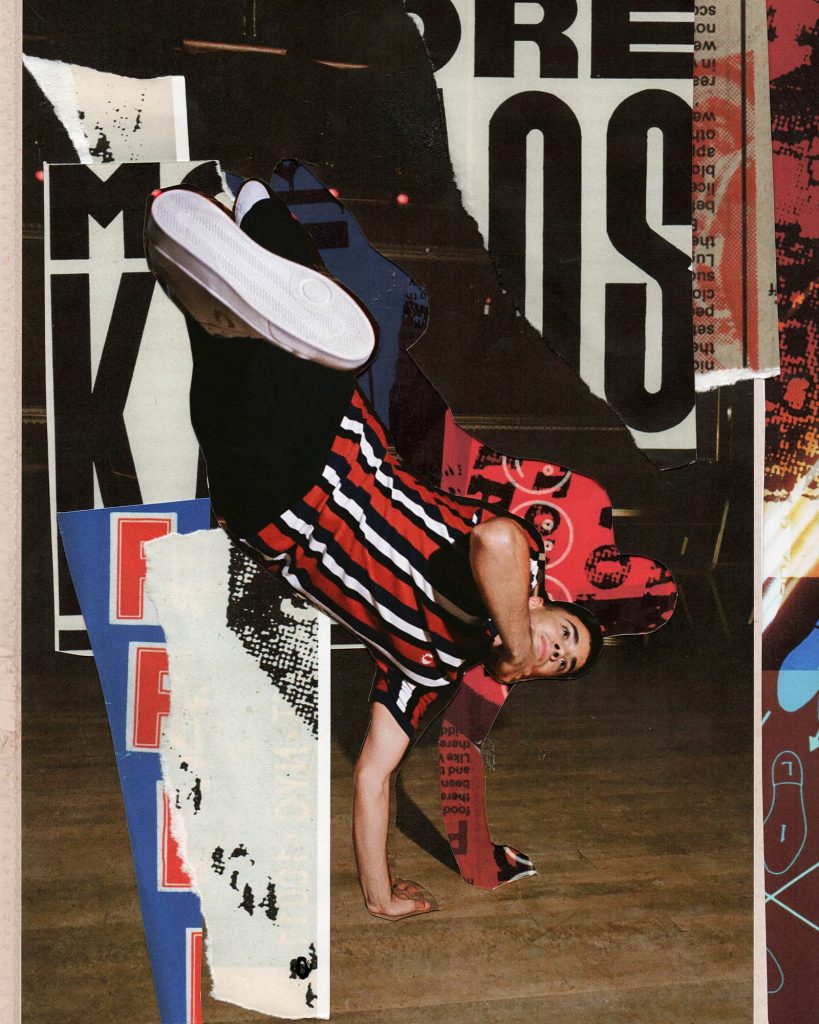
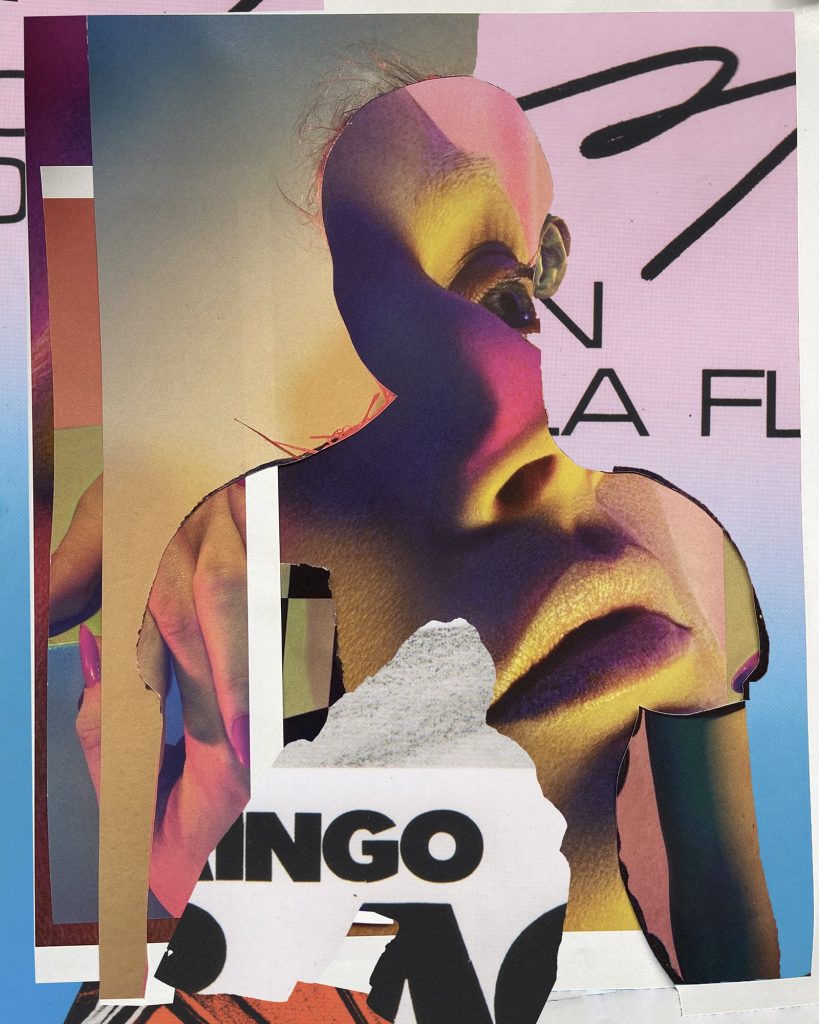
Now I feel like my explorations with 2D collage within a 3D space is something that has become very characteristic of my work and something I really enjoy doing. I love the idea of subverting the more traditional notion that collage is a flat, 2d medium that is literally ’stuck down’. By opening it up to 3D space presents that additional dimension that makes your brain kind of question what you are looking at. I’m also quite fixated with keeping the hand-made paper texture of the images that’s associated with an analogue process and how that’s juxtaposed within a digital medium.
I have a really strong focus on the face and the human form in general and its very out of my comfort zone to create something without those elements! Something else that’s become quite key within my work was the choice to try and use ALL of the images I’m working with. I keep and often incorporate all the additional pieces that other people might cut away and discard. I love the negative space and shapes these extra elements create.
TWS –If your journey to finding your artistic voice were told in a short film, what would be the two or three key scenes?
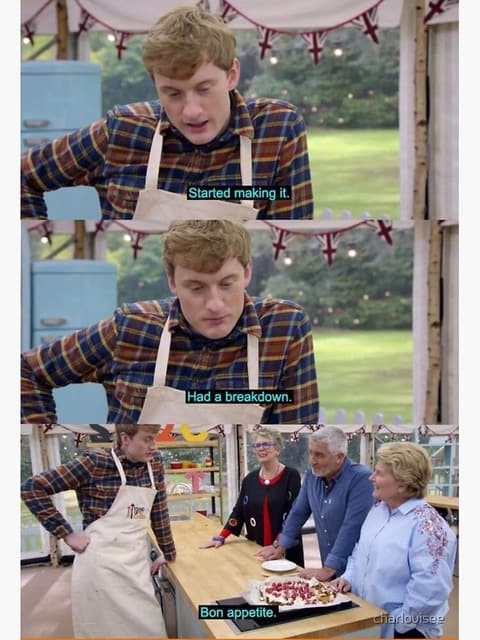
AI –There is a meme of James Acaster on Great British Bake off that I think sums this up perfectly….
– Started making it
– had a breakdown
– Bon appetite.
TWS –Your work strikes a great balance between experimental aesthetics and commercial appeal. Do you draw a clear line between personal and client work—or is it all part of the same creative flow?
AI –So much of my commercial work has come from clients seeing my personal experiments which means that having time to experiment is so important – but definitely not always possible! When I first started working with collage I think id made an unconscious choice to work with quite colourful very commercially viable imagery but the odd thing is that what I make is actually quite far removed from what my actual taste is! I’m prefer odd, obscure, darker, unsettling things… things that don’t necessarily conform to being the traditional notion of beautiful or aesthetically attractive – but broadly, these aren’t the things that are particularly appealing for clients or brands looking to sell a product!
I actually created a second instagram account to share my personal experiments that have more of this vibe, but I’m so busy I rarely get to make much for it. Although, recently Ive felt more comfortable introducing some of those slightly darker elements into work that I share publicly on my main work account just to see what happens.
TWS –Commercial clients often expect artists to repeat what has already worked. How do you create space for change, experimentation, and evolution in that kind of environment?
AI –It’s such a hard balance to get right and most of the time, it’s not actually something I feel like I’m in control of! Paid, commercial work always has to take priority but when I’ve been working on back to back client and commercial projects and with all the rounds of changes and creative compromises that go with that, I HAVE to make time to make something for myself as a bit of circuit breaker – because If I don’t I start feeling insane! Even if its just an hour to put something together…
But without that time to research, experiment and learn new things there is no progression and you can feel like everything is kind of stagnating…
I’m not a fan of doing the same work twice but this was a mentality that I had to overcome after I made the 3D collages for the Mercury Prize in 2023, they were so popular that I would have a new client request every week for me to make one (or five). I actually love making them now, I still love making them 2 years later! In general what I try and encourage with clients who reference a previous piece of work, is to suggest how we can build on that style they like, how can we make it unique for them?
TWS –Your practice blends both analog and digital techniques. How do these two approaches coexist in your process, and what does each one offer you?
AI –While I really enjoy working in both, analogue will always be my preference because physically making something is more rewarding for me, and aesthetically, the tactility of paper is unbeatable. But having said that, it’s so important for me to work across both processes. For my commercial work, everything has to become digital in the end and I’ve developed a few different pipelines that enable me to combine the processes in varying degrees to fit the brief I’m working with.
Sometimes (a lot of the time) budgets and timelines don’t support being able to achieve an analogue approach so Ive developed a way of treating digital imagery and footage to look like its analogue. I also have a huge library of analogue elements that I created that I can work into projects when timelines aren’t in my favour. But equally, some projects work better when you completely lean into a fully digital process, keeping everything is really clean and sharp and that has its own aesthetic value.
TWS –How do you translate your paper collage style to the motion pieces you create? How much space for planning and improvisation is there in both static and motion work?
AI –It’s actually quite rare for me to create work that is just static, animation is such a huge part of what I do and it’s become the place where my brain automatically goes to. I think in motion rather than statically so it’s a very considered approach whenever I start making something. I always consider how it’s going to move. Also, because I’m so heavily reliant on the imagery or footage that I’m working with I have to allow that to dictate the creative approach and think on my feet as to how to make everything look as interesting as possible. Sadly, too often there is zero time for planning, I rely on tried and tested approaches – especially with commercial work. Opportunities to spend time developing a new approach and creating something unique are the most wonderful luxury – they do exist, but are not common!
TWS –Collage is deeply connected to source materials. What types of imagery or materials are you most drawn to—and are there any you intentionally avoid?
AI –I spent 10 years as a make-up artist working with faces and I gravitate to imagery of the face and body and the different shapes you can create from these. It feels like that’s always my jumping off point.
Favourite materials to work with are editorial portraiture, beauty photography, unusual fashion editorials. I’m much more drawn to more modern and current imagery rather than something vintage looking. I’m obsessed with natures textures and patterns within photography and then contrasting those organic shapes with something more bold and graphic like typography.
I probably naturally avoid anything that feels overtly ‘retro’. But to contradict myself, I quite like what it looks like when you mix old with new….
TWS –What do you think collage as a medium offers in our current visual culture—especially in an age of constant image circulation and remixing?
AI –I think anything analogue is quite a welcome break from the saturation of digital art I’m seeing at the moment. I don’t dislike digital art at all, but I think when the world is on fire politically, economically, socially and erm, literally… its nice to be reminded that you can just make something with your hands and how much value there is in just being able to engage in that process.
TWS –Can you recommend three artists you’re currently excited about or recently discovered?
AI –Mia Anjoy – a truly incredible collage artist and designer, a phenomenal talent and she’s going to go far!
Toby Cato – In love with his original mixed media approach.
Laura Matikainen – She makes super bonkers collage animations often featuring herself – she’s one to watch!
TWS –Finally, how would you define collage in your own words?
AI –Collage is the creation of something out of both nothing and everything.
Learn more about Alice Isaac on her website or Instagram