Alma Haser uses paper as an element that creates shadows and echoes on her own skin and body; she shows that collage is about attitude. Working with her own photographs, she expands the dimensions of traditional photography into bewildering paper sculptures full of intrigue. Her work has been exhibited worldwide, and now we are privileged and proud to display a fresh body of her work in four limited edition prints that she made specially for our show Phantom Tigers & Parallel Papers at The Weird Show Gallery. Come, see & collect!
Available in 4 sizes
Edition varies by size
Buy this limited edition print on TWS Gallery
TWS-I just saw that we first published your work on TWS in 2013, then interviewed you in 2020, and here we are again. What’s changed in your practice over all this time?
AH- Wow. So back then, you shared my puzzle series Within 15 Minutes and Cosmic Surgery. Interestingly these works are still doing the rounds. I recently exhibited pieces from both projects at Paris Photo. The first thing that comes to mind is Motherhood. Before having kids, I could give all my time to making art, and that changed completely when I had my first daughter. Suddenly, my time was restricted. I actually took a couple of years out of work, and I think this time was incredibly valuable for me. It forced me to absorb art and get inspired, but hold the thought, and the thing I wanted to create in my mind. Becoming a mother also inspired me to make a project around it. My recent project based on German Idioms showcases a lot of different techniques and kick-started a new element of my practice, which is working with ceramics. I’ve always brought 3-D elements to my work, and I’m still having a lot of fun with interplaying dimensions.
TWS- Phantom Tigers & Parallel Papers is about artists expanding the idea of collage beyond traditional paper cutting and pasting. What’s your relationship with paper as a material?
AH- I see paper as having endless potential. Paper allows room for human impressions in a way that the digital world doesn’t. I’ve always been an artist that works with my hands, and it’s often the unpredictabilities, the errors of the material that are the element I like to run with. This past year I’ve been leading analogue workshops at local schools and colleges in my area. Put simply, the premise of the workshop is to show the kids the endless possibilities of paper and how you can make a million different images from one image. It’s inspiring to see the kids get so excited by paper, such an everyday thing, that brings the digital image into the physical realm – to be sculpted by eager hands.
Available in 4 sizes
Edition varies by size
Buy this original artwork on TWS Gallery
TWS- Can you describe the pieces you’re showing? Walk me through what we’ll encounter.
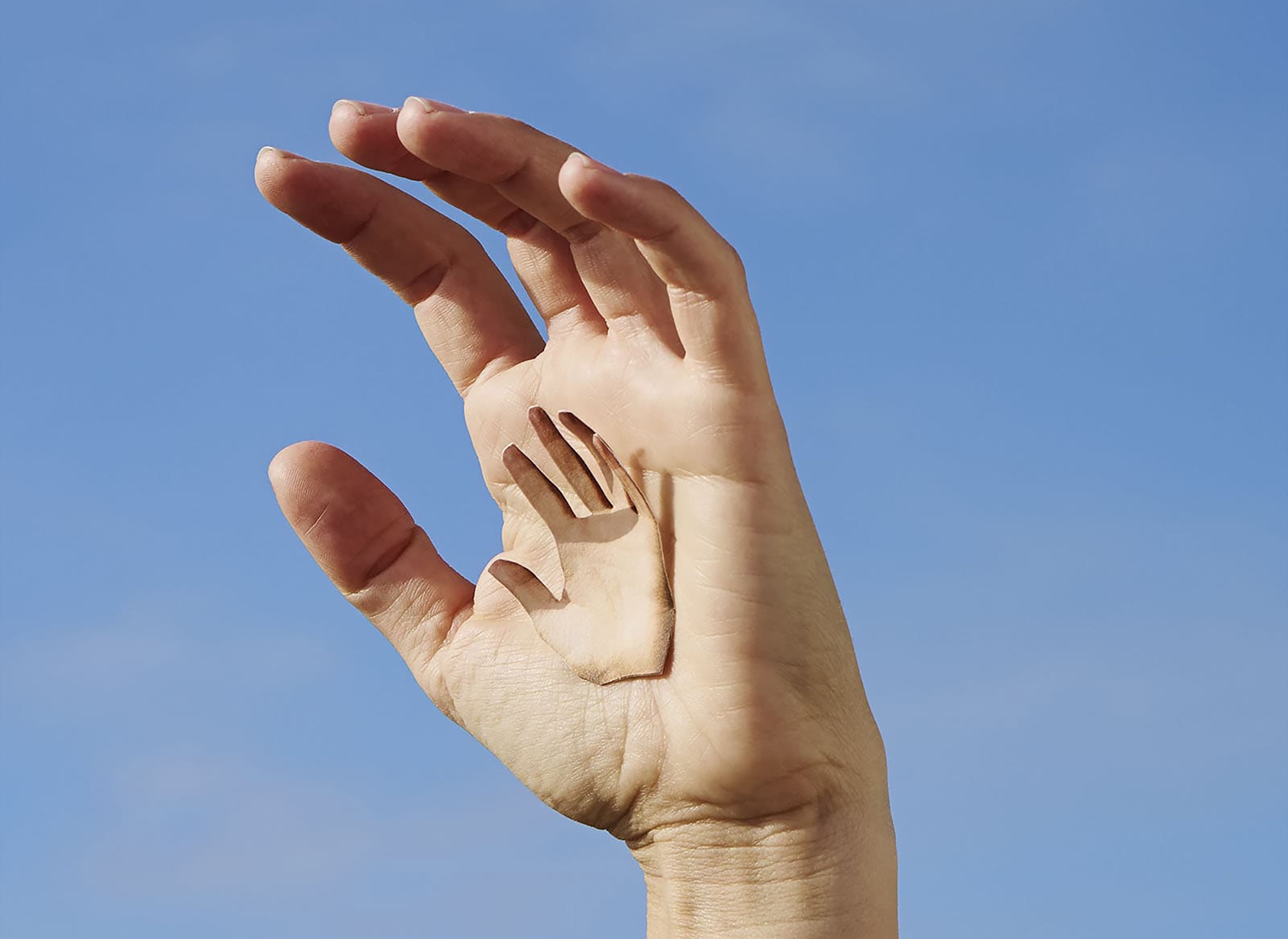
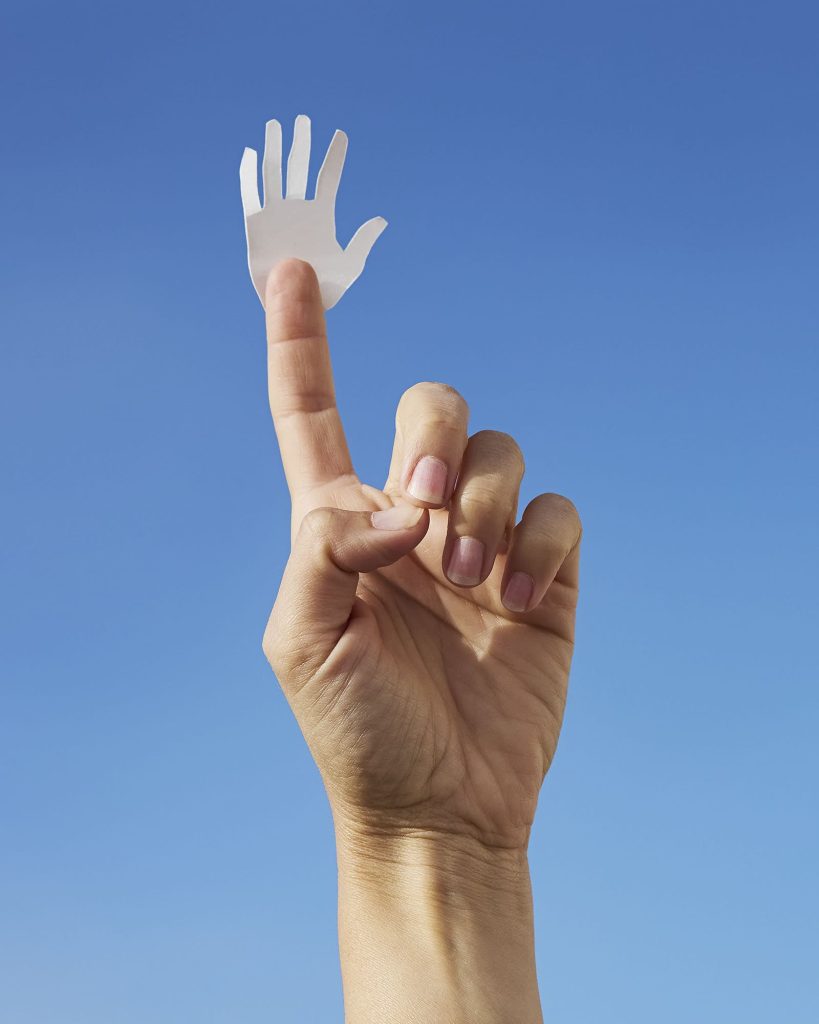
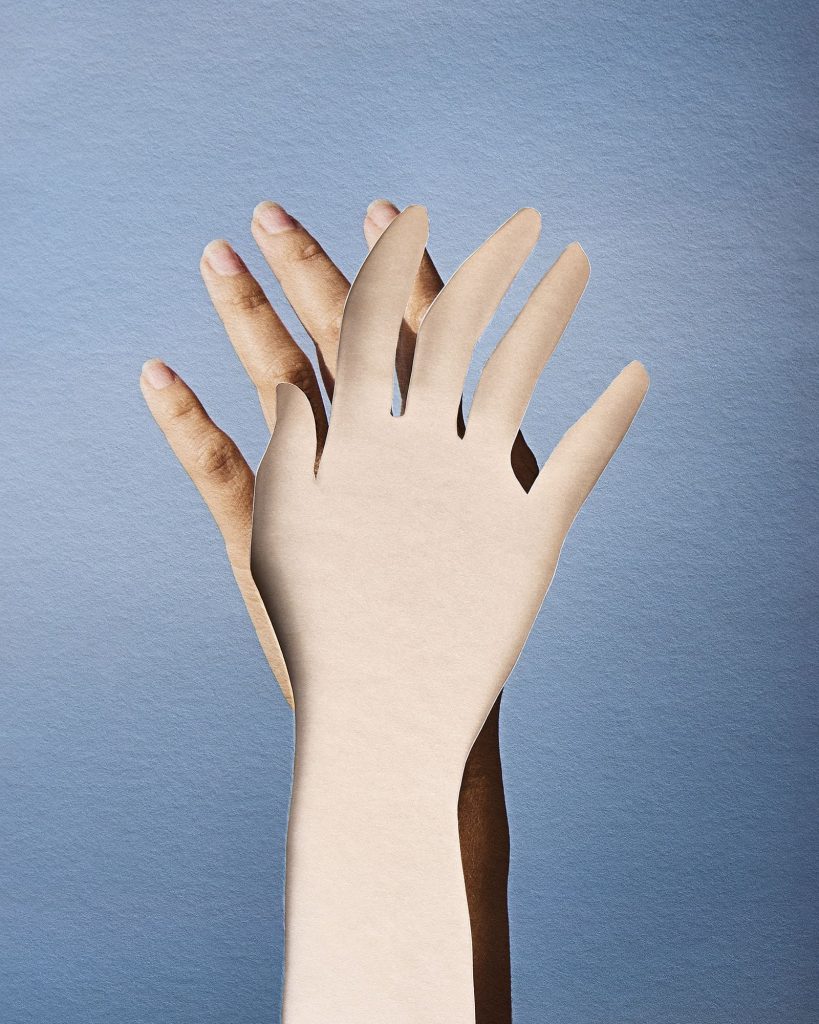
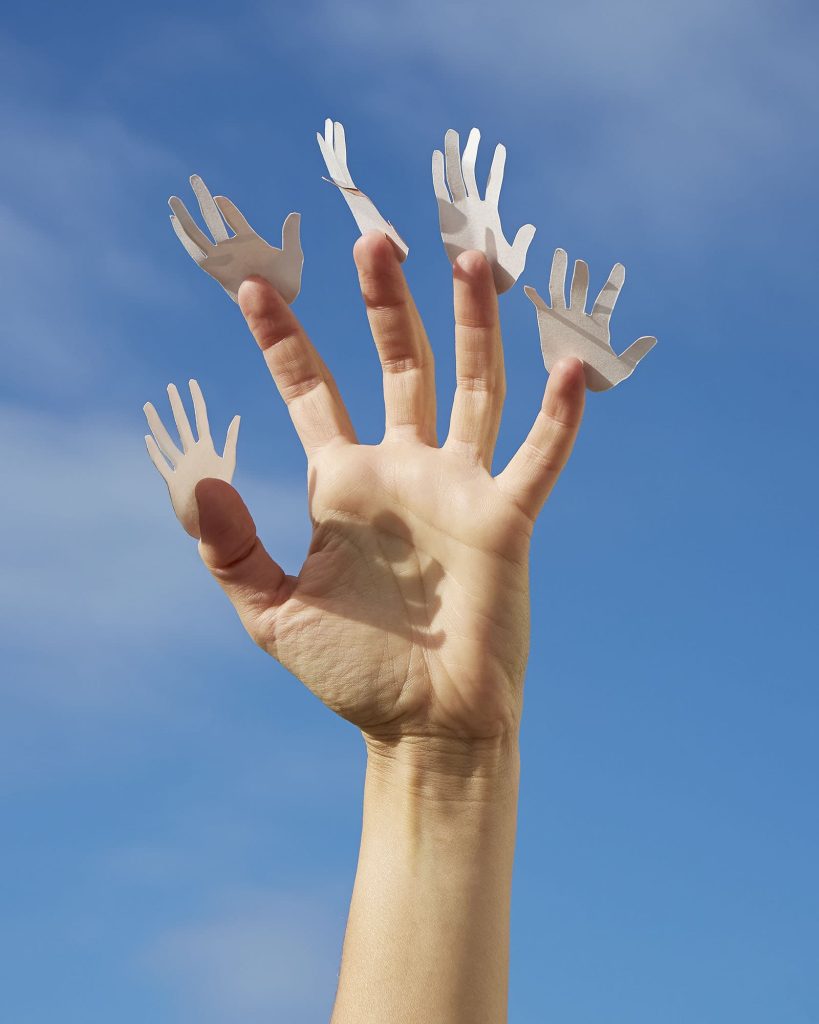
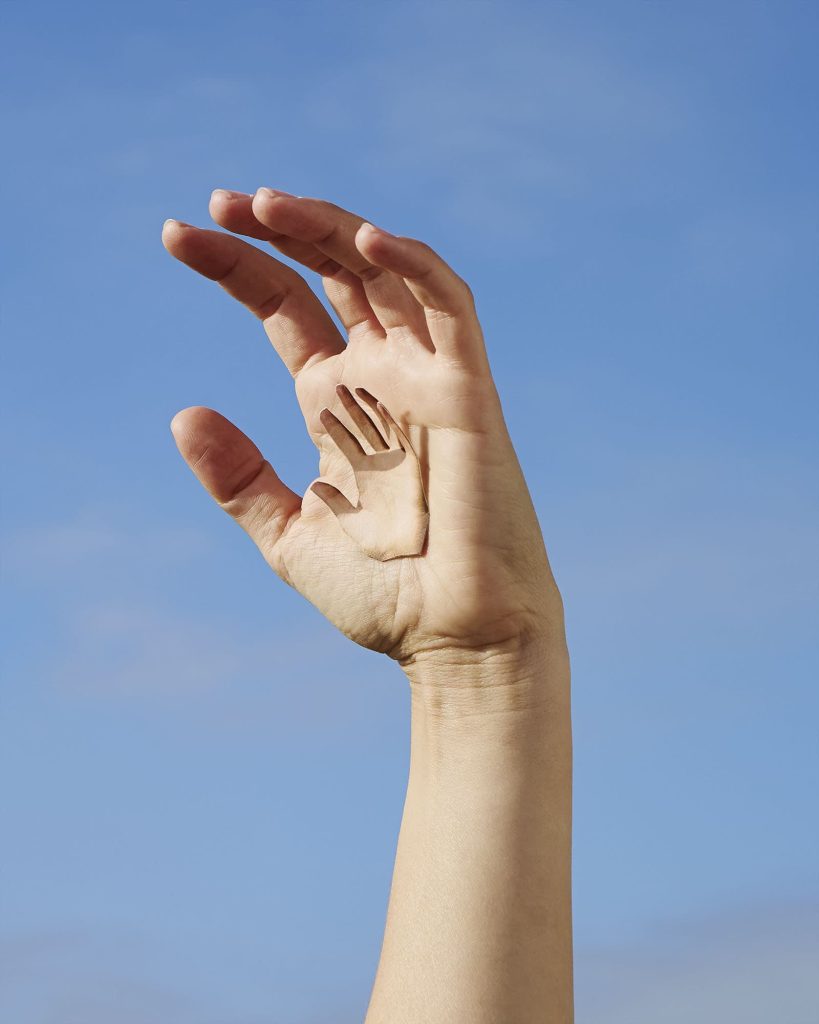
AH- I’m showing four pieces that were born from an obsession with hands. For me, hands are the most human thing. Interestingly, AI can’t go hands, which in short tells me AI can’t do human. This series plays with the idea of lucid dreaming and our hands being the ultimate indicator of reality. Supposedly, if you check your hands and take in every detail and do this habitually two to three times a day, you will then repeat this action in your dreams, which, when you realise you have a fifth finger and a second thumb, lets your mind know you are dreaming.
TWS-Can you walk me through your process for these pieces? Where do you start?”
AH- I’m constantly advocating for working instinctively and being playful in my approach. I started by photographing Laura – who has very nice hands! I then reprinted her hands in different poses, cut them out, and brought them back into the image.
Available in 4 sizes
Edition varies by size
Buy this limited edition print on TWS Gallery
TWS-You’re known for creating work that challenges traditional photography—adding 3D elements, remixing puzzles, and physically manipulating images. What led you down this path? What about straight photography felt limiting?
AH- Even calling myself a photographer feels limiting, or somewhat misleading. I’d say about 20% of my practice is created with a camera. It’s one of my tools, like an artist’s paintbrush, but so much more comes into play. There is a physicality to my practice which is essential. I often find I’m replicating the image, bringing it back into the scene, partially removing it. I’m a big believer in following our instincts as artists, and sometimes overthinking elements of a work before they are made can be quite restricting for me. Working with my hands and transferring an image to be sculptural and something I can interact with removes this element of overthinking. The analogue nature of my work brings scope to experiment and embrace the unexpected direction the work can often take without questioning it.
TWS- Your work has this quality of revealing hidden layers in everyday reality. Is that something you consciously pursue, or does it emerge naturally?
AH- I think this is something that emerges naturally, as I said, I think it’s really important to embrace an unconscious style of working.
Available in 4 sizes
Edition varies by size
Buy this limited edition print on TWS Gallery
TWS- Have you looked at the other artists in the exhibition? There’s this thread running through the show—artists who might not be cutting and pasting paper, but who think in collage terms. Does that resonate with you?
AH- The works in the show are tied in the sense that they all offer a rethinking of imagery, and an alternative in the ways of seeing. I remember seeing a work by Susana Blasco over a decade ago, in which she’d deconstructed and then restitched an image. I was very moved by it, it evoked something in me that I had to unpick, as if I was the image. I remember seeing her work and feeling so liberated and realising I didn’t have to take a traditional approach to image making.
TWS- The exhibition is called Phantom Tigers & Parallel Papers. How do you relate to ideas of the phantom or parallel realities?”
AH- I believe in the idea that we are always negotiating our given reality. This feels more prevalent than ever with the advances in AI. My work is always investigating “what is real?” Sometimes I like to show the viewer the construction, the false truth, and then take away the sense of security that gives them by adding another element to their given reality.
Find more about Alma Haser on his website or Instagram.
You can also acquire his original pieces or prints in the current exhibition of TWS Gallery
Lean more about Alma Haser at TWS:
Defying flatness in photography: Alma Haser’s awing sculptural portraits.